
Find the right pipes, vaporizers, and accessories for your setup
A basic smoking setup needs three things: a device to hold and heat your material, something to inhale through, and accessories to prepare and maintain everything. Hand pipes, bongs, and vaporizers cover the device category; rolling papers, cones, and grinders handle preparation; and Cleaning Supplies keep everything working well. This guide walks through every smoking accessories category so you can mix and match based on your preferences and budget.
What Smoking Accessories Do You Actually Need?
The minimum viable smoking setup covers three core categories: devices, preparation tools, and maintenance supplies. Each category handles a different part of the process, and none of them are optional if you want a functional setup.
- Devices: hand pipes, bongs, vaporizers, dab rigs, and e-rigs
- Preparation tools: rolling papers, pre-rolled cones, grinders, and rolling trays
- Maintenance supplies: cleaning solution, brushes, storage containers, and replacement parts
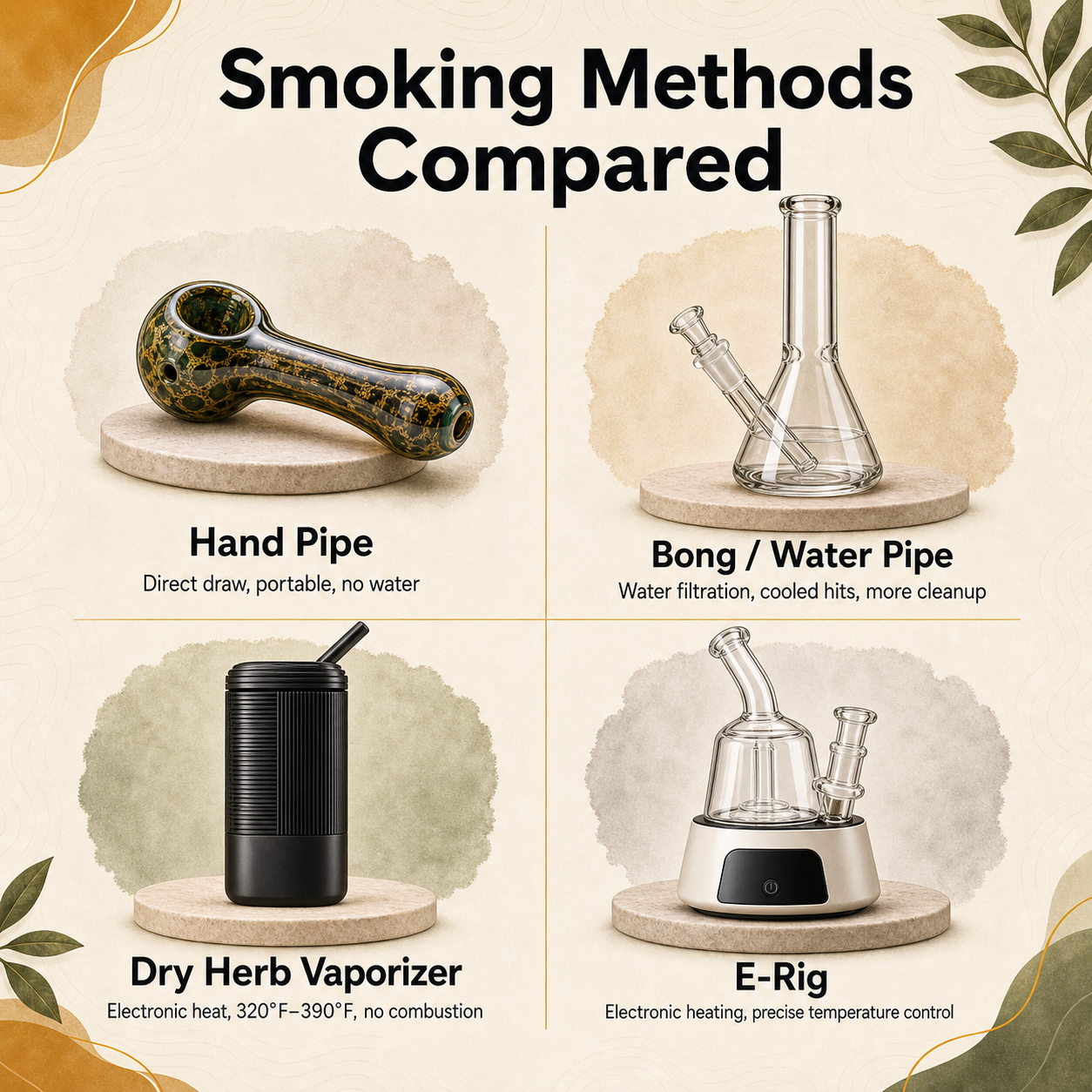
Devices are the centerpieces — the pipes, Bongs, and Vaporizers that hold and heat your material. Hand pipes are the most beginner-friendly device category. They require no setup, no water, and no batteries. Bongs add water filtration for people who want a different style of hit. Vaporizers add electronic temperature control for precise heating.
Preparation tools get your material ready before you smoke. Rolling papers and pre-rolled cones let you consume without a device. Grinders break your material into consistent pieces for even burning. Rolling trays keep your workspace organized and prevent waste.
Maintenance supplies protect your investment over time. Cleaning solution and brushes remove residue that builds up with use. Storage containers keep your Accessories protected between sessions. Replacement parts like screens and downstems cover components that wear out.
These three categories work together. Devices are the foundation. Preparation tools make them usable. Maintenance supplies keep them performing well over months and years.
What Types of Hand Pipes Are Available?
Hand Pipes are the most widely used smoking device category and include several distinct styles. Each style has a different shape, draw method, and user experience. Understanding the options helps you pick the right entry point for your preferences.
- Spoon pipes: elongated shape, direct draw, easiest to use and maintain
- Chillums: straight cylinder, no bend, flavor-concentrated draw
- Sherlock pipes: curved stem and rounded bowl, comfortable hand position
- Bubblers: integrated water chamber, cooled hits in a portable size
- Steamrollers: straight tube, large bowl, open carb, high volume draw
Spoon pipes are the most common hand pipe shape. They get their name from their elongated, spoon-like form with a bowl on one end and a mouthpiece on the other. The smoke travels through a small channel directly into your mouth. Spoon pipes are simple to use and easy to maintain.
Chillums are straight, cylindrical pipes with no bend. They are among the oldest pipe designs and are typically held in the hand with the bowl facing up. Chillums deliver a direct, unfiltered draw that some users prefer for flavor concentration.
Sherlock Pipes feature a curved stem and a rounded bowl, inspired by the iconic detective’s tobacco pipe. The curve provides a comfortable hand position, and the bowl holds the prepared material. Some Sherlock-style pipes also function as bubblers when a small water chamber is integrated.
Bubblers combine the portability of a hand pipe with water filtration like a small bong. They have a water chamber built into the base of the pipe. The smoke cools and filters through water before reaching your mouth, giving a different experience compared to dry hand pipes.
Steamrollers are straight tubes with a large bowl and an open end that acts as a carburetor. Drawing on a steamroller pushes smoke through the tube quickly, delivering a large volume of vapor in a short time. They are louder and less discrete than other styles but are straightforward to use.
Every hand pipe style delivers a different experience, and none of them require batteries, water, or complicated setup. This makes hand pipes the most accessible entry point for new users exploring different options.
How Do Bongs and Water Pipes Work?
Bongs, also called water pipes, use water in a base chamber to cool and filter smoke before inhalation. The water changes the temperature and particle density of the vapor before it reaches your mouth.
- Base: holds water and provides stability on flat surfaces
- Tube: carries cooled smoke from the water chamber to the mouthpiece
- Downstem: connects the bowl to the water for smoke diffusion
- Bowl: holds material and controls airflow into the downstem
- Mouthpiece: sealed lips draw vapor through the tube
A standard bong consists of five main parts. The base holds the water and provides stability. The tube extends upward from the base and carries smoke toward the mouthpiece. The downstem is a narrow glass tube that connects the bowl to the water in the base. The bowl holds your material and controls the rate of draw. The mouthpiece is where you seal your lips to draw vapor from the tube.
Percolators are additional filtration components inside a bong that create extra bubbling action as smoke passes through. They add surface area and drag to the draw, which changes the density of the vapor. Common percolator styles include tree percolators with multiple fixed arms, honeycomb percolators with a flat disc full of small holes, and showerhead percolators with a slotted nozzle at the end of a tube. Each style produces a different bubbling pattern and drag level. [1]
Bongs differ from hand pipes in three key ways. The water chamber adds weight and fragility. The longer draw path means bongs produce larger hits than most hand pipes. The maintenance requirement is higher because the water needs to be changed after every session and the percs require cleaning.
Borosilicate glass is the most common material for bongs because it tolerates high temperatures without degrading. It does not transfer flavor to smoke, so the taste of your material comes through cleanly. Many bongs also use scientific glass, which is designed for durability and function over decorative form.
What Is the Difference Between Vaporizers and Combustion?
Combustion and vaporization are two distinct heating methods that produce different outputs. Combustion burns the material and creates smoke. Vaporization heats material to a temperature that releases compounds as vapor without burning.
- Vaporization: heats cannabis between 320°F and 390°F, releases compounds as vapor without combustion
- Combustion: burns plant material, produces smoke through open flame
- Dry herb vaporizers: electronic temperature control, designed for flower
- E-rigs: electronic heating, designed for concentrates, precise temperature control
Dry herb vaporizers heat cannabis flower to a temperature between 320°F and 390°F. At that range, the device produces vapor without the material catching fire. This temperature window is the key characteristic that separates vaporizers from combustion devices.
Vaporizers and e-rigs use electronic heating elements to maintain precise temperature control. Torch-heated Dab Rigs work differently — they rely on a flame to heat a nail or banger, which creates a less controlled temperature profile. Electronic devices let you set and hold a specific temperature throughout your session.
E-rigs are electronic devices designed for concentrated material. They function like a vaporizer but are built specifically for wax, shatter, and other concentrates. The key difference from a torch-heated dab rig is the electronic heating element, which eliminates the flame and allows for temperature precision.
Whether vaporization or combustion is right for you depends on your preferences. Vaporizers appeal to users who want consistent temperature control and no flame. Combustion appeals to users who prefer a traditional flame-based setup. Both methods are widely used, and the choice is personal.
Which Rolling Papers and Preparation Tools Should You Choose?
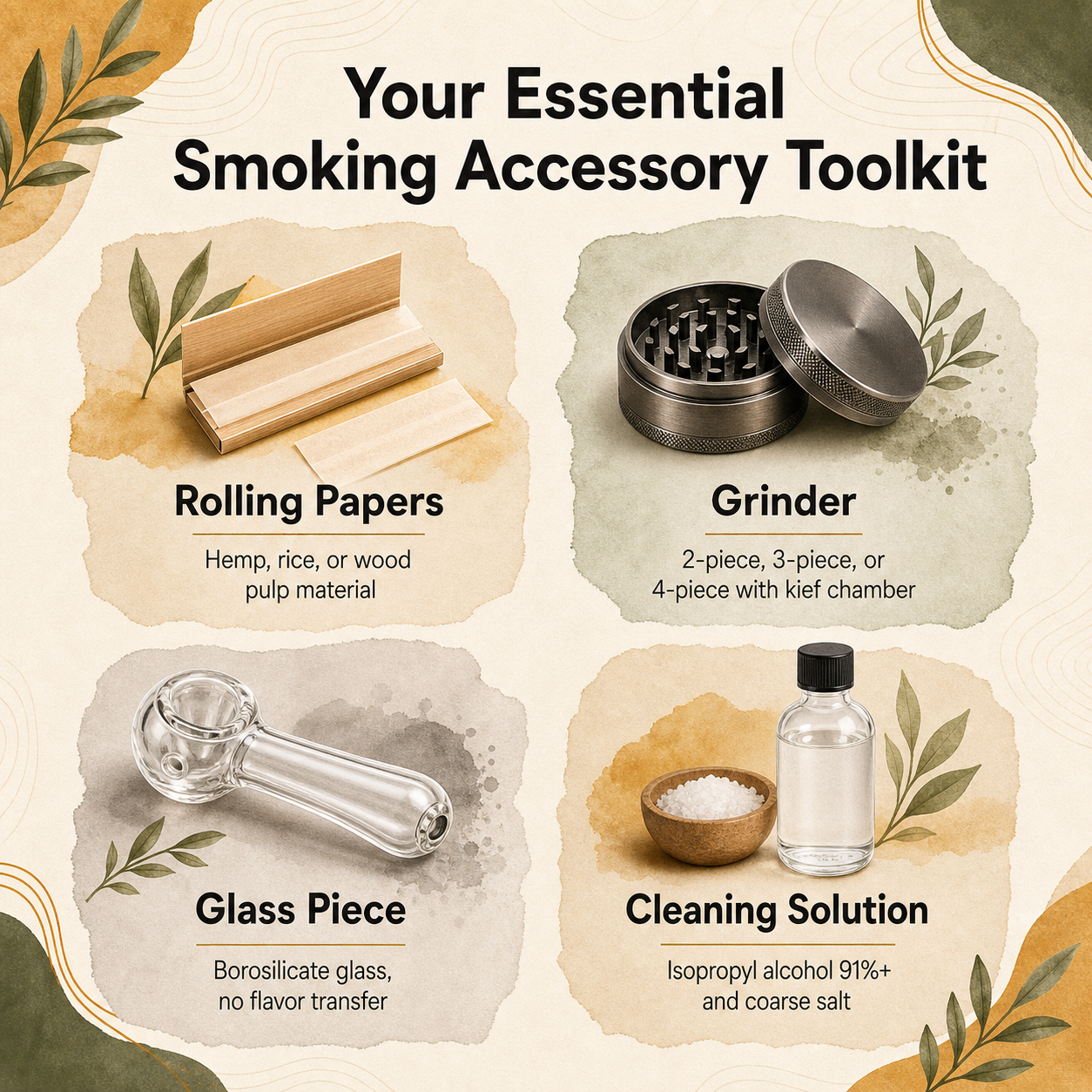
Rolling papers come in three main material types: hemp, rice, and wood pulp. Each material behaves differently in three areas that affect your experience: burn rate, flavor transfer, and ease of rolling.
- Hemp papers: slow burn, minimal flavor transfer, plant-based and renewable
- Rice papers: ultra-thin, nearly flavorless, faster burn, requires more rolling skill
- Wood pulp papers: stiffest, fastest burn, easiest to roll, good for beginners
- 2-piece grinders: basic grinding and collection, no kief separation
- 3-piece grinders: add screen layer for kief collection above the main chamber
- 4-piece grinders: include a lower chamber for collecting sifted kief
Hemp papers are plant-based and burn slower than wood pulp. They add minimal flavor to your draw, which makes them a popular choice for users who want the taste of their material to come through. Hemp is a renewable resource, which appeals to environmentally conscious users.
Rice papers are ultra-thin and nearly flavorless. The thinness means they burn faster than hemp or wood pulp. Rolling with rice paper requires more practice because the paper is delicate and can tear easily. Many users prefer rice papers for the unobstructed taste experience.
Wood pulp papers are the stiffest of the three materials and burn the fastest. They are the easiest to roll, which makes them a common starting point for beginners. Some manufacturers use the terms French roll or orange roll to describe wood pulp papers, while all-natural or organic typically indicates hemp-based papers. [6]
Grinders break cannabis into fine, consistent pieces for even burning. 2-piece grinders separate ground material from the collection chamber. 3-piece grinders add a screen layer that catches kief. 4-piece grinders include both the screen layer and a lower chamber that collects the kief that sifts through. [2]
Pre-rolled cones eliminate the rolling step entirely. They come filled and ready to use — you pack the open end and light the other. Cones are useful when you want consistent size and shape without developing rolling technique. They are available in the same material types as rolling papers.
How Do You Clean and Maintain Smoking Accessories?
Regular maintenance keeps your accessories performing well and extends their usable life. The most important cleaning task is removing residue that builds up from regular use.
- Rinse your piece with hot water after each session to prevent residue from hardening
- Deep clean with isopropyl alcohol (91% or higher) and coarse salt whenever residue builds up
- Change bong water after every session to limit residue accumulation
- Clean the bowl and downstem regularly to maintain unrestricted airflow
- Store glass pieces in padded cases to prevent breakage between uses
Glass pipes and bongs are typically cleaned using isopropyl alcohol (91% or higher) and coarse salt. The salt acts as an abrasive that scrubs the interior surfaces while the alcohol dissolves residue. The method works by submerging the piece in the solution, shaking it to loosen buildup, scrubbing with brushes, and rinsing thoroughly with water until no residue remains.
Bong water should be changed after each session to limit residue buildup inside the base. After each session, empty the base, rinse it with warm water, and refill with fresh water just below the percolator if your bong has one.
The bowl and downstem require regular attention because residue collects there and affects draw quality. Clean the bowl after several sessions or when the holes become restricted. The downstem can be soaked in isopropyl alcohol to clear the internal channel, which is difficult to scrub directly.
Storage best practices protect your accessories between uses. Keep glass pieces in padded cases or dedicated storage areas to prevent breakage. Store accessories in a cool, dry location away from direct sunlight, which can degrade certain materials over time. Use separate containers for different accessory types to keep your setup organized.
A portable cleaning kit makes maintenance easier when you are on the go. Small bottles of isopropyl alcohol, packets of coarse salt, and disposable brushes take up minimal space and let you clean pieces quickly. Building this habit prevents residue from hardening, which makes cleaning much harder.
What Are Common Questions About Smoking Accessories?
What’s the difference between a hand pipe and a bong?
A hand pipe is a single unit you hold and draw from directly. A bong uses a base filled with water to cool vapor before it travels through a long tube to your mouth. Bongs generally produce cooler hits; hand pipes are more portable and require less maintenance.
Which rolling paper material is best for beginners?
Wood pulp papers are the easiest to roll and stay lit reliably, making them a good starting point. Hemp papers burn slower and add minimal flavor. Rice papers are ultra-thin and nearly flavorless but require more rolling practice.
Is vaporizing better than smoking?
Vaporizing and smoking produce different experiences. Vaporizers heat cannabis at 320°F–390°F without combustion, which many users say preserves more of the original flavor. Combustion burns the material and creates smoke. Whether one is better depends on personal preference — this guide helps you understand both so you can choose.
How often should I clean my glass pieces?
Rinse your piece after each session and do a deep clean with isopropyl alcohol (91% or higher) and coarse salt whenever residue builds up. For bongs, change the water after every session to limit residue buildup.
What does a percolator do in a bong?
A percolator is an extra filtration component inside a bong that creates additional bubbling action as smoke passes through. Common styles include tree percolators with multiple fixed arms, honeycomb percolators with a flat disc full of small holes, and showerhead percolators with a slotted nozzle at the end of a tube. Each style produces a different bubbling pattern and affects how the vapor feels.
How Do You Choose the Right Smoking Accessories for Your Needs?
Smoking accessories fall into three clear categories: devices, preparation tools, and maintenance supplies. Devices like hand pipes, bongs, and vaporizers each deliver a different experience, and none of them are inherently better than the others. Your choice depends on your preferences for portability, maintenance, and session size.
Preparation tools like rolling papers, grinders, and storage containers matter more than many beginners expect. The right preparation tools make your devices easier to use and produce better results. Low-quality papers or an unground mixture can undermine an otherwise solid setup.
Maintenance supplies protect the performance of your devices over time. Regular cleaning with isopropyl alcohol and salt, timely water changes in bongs, and proper storage all contribute to accessories that work well for months and years rather than weeks.
Start with the basics and add categories as your preferences develop. A hand pipe, a grinder, and a cleaning kit cover more ground than you might expect. From there, exploring bongs, vaporizers, or different rolling paper materials helps you narrow down what fits your life. The right setup is the one that matches how you actually use it.
Where Does This Smoking Accessory Information Come From?
- Weedmaps: A Beginner’s Guide to Functional Glass: Choosing, Using, and Appreciating the Art of Smoke
- Stoops: Your Cannabis Accessories Starter Pack: Trays, Pipes and Papers
- Chameleon Glass: Your Guide to the Types of Glass Pipes
- Daily High Club: The Ultimate Bongs for Beginners Guide
- Hemper: Dry Herb Vape vs Smoking: Entirely Different Experiences
- Zig-Zag: Best Rolling Papers: Rice, Hemp, or Wood Pulp?
- Smoke Cartel: Hemp vs. Rice vs. Wood Pulp: Choosing the Right Rolling Paper