

The Easiest Way to Get Residue-Free Glass
The fastest and most reliable way to clean a glass pipe is to seal it in a bag with isopropyl alcohol and coarse salt, shake it for 30–60 seconds, then rinse thoroughly with warm water and let it dry completely. This alcohol-and-salt method works because the alcohol dissolves sticky resin while the salt provides an abrasive scrubbing action that reaches into nooks and crannies. <cite data-source="src-001"></cite> You can also soak a heavily built-up pipe for up to 12 hours before shaking for even better results. <cite data-source="src-001"></cite> If you do not have isopropyl alcohol on hand, hydrogen peroxide, white vinegar, baking soda, or boiling water are all viable alternatives, though each has trade-offs in effectiveness or risk. <cite data-source="src-002"></cite> [1]
What Do I Need to Clean a Glass Pipe?
Before you start, it helps to know what you already have and what you might need to grab from a store. The alcohol-and-salt method requires just two items, and most people have at least one of them at home already.
- Isopropyl rubbing alcohol (any concentration; 99% cleans fastest) <cite data-source="src-001"></cite>
- Coarse salt such as kosher salt or sea salt (table salt works but is less effective) <cite data-source="src-003"></cite>
- A resealable plastic bag large enough to hold the pipe
- A small bowl or separate bag for each piece if the pipe has multiple parts
- Pipe cleaners or cotton swabs for detailed scrubbing after the main soak
- Warm water for thorough rinsing and a clean towel for drying <cite data-source="src-001"></cite>
The two essentials are isopropyl rubbing alcohol and coarse salt. The alcohol acts as a solvent to break down the sticky resin that builds up inside a pipe over time. <cite data-source="src-001"></cite> Coarse salt — such as kosher salt or sea salt — provides grit that scrubs the interior surfaces when you shake the bag. <cite data-source="src-003"></cite> Fine table salt works but does not scrub as effectively because the grain size is much smaller. [3]
You will also need a resealable plastic bag big enough to hold the pipe comfortably, a small bowl or container if your pipe has multiple parts, and pipe cleaners or cotton swabs for reaching tight spots after the main clean. <cite data-source="src-001"></cite> Warm water and a clean towel for the final rinse complete the setup.
If you shop for Cleaning Supplies, look for isopropyl alcohol in any concentration — 99% works fastest, but standard 70% rubbing alcohol still gets the job done. <cite data-source="src-001"></cite> A coarse salt grind size is what matters on the salt side. <a href="https://wordpress-production-3a6d.up.railway.app/shop/accessories/cleaning-supplies">Cleaning Supplies</a>
Having the right supplies ready before you start keeps the process smooth and prevents you from having to pause halfway through to hunt for something. <cite data-source="src-003"></cite> If you are new to glass pipes and want to see what styles are available, browse <a href="https://wordpress-production-3a6d.up.railway.app/shop/hand-pipes/glass-hand-pipes">Glass Hand Pipes</a> to get familiar with the range of designs before you need to clean one.
See WIG WAG SPOON PIPE as one current product example.
How Often Should I Clean My Glass Pipe?
Cleaning frequency depends largely on how often you use the pipe. The more you smoke, the faster resin builds up, and the more often you will need to clean. <cite data-source="src-003"></cite>
- Daily or near-daily users: clean every few days to prevent hardened buildup <cite data-source="src-003"></cite>
- Occasional users: a clean every couple of weeks is usually sufficient <cite data-source="src-003"></cite>
- A quick warm-water rinse after each session slows new residue from drying onto glass
- The longer resin sits, the more soaking and mechanical scrubbing it requires to remove <cite data-source="src-003"></cite>
For people who use their pipe daily or most days of the week, a quick clean every few days keeps resin from hardening into a thick coating that becomes difficult to remove. <cite data-source="src-003"></cite> Think of it like washing dishes after a meal rather than letting them sit for a week — a little effort often prevents a bigger effort later.
If you reach for your pipe only on weekends or for special occasions, you can usually get away with a deep clean once every couple of weeks. <cite data-source="src-003"></cite> The resin still builds up during those sessions, but it does not have time to harden into something rock-hard if you stay on a regular schedule.
What happens if you skip cleaning for too long? Resin buildup narrows the airway inside the pipe, which means you have to pull harder to get vapor through. <cite data-source="src-003"></cite> Old resin also changes the flavor of what you taste, and it can be harder to light and keep burning evenly. The longer you wait, the more soaking and scrubbing the pipe will need to restore it. For a broader schedule that covers all your smoking accessories, see <a href="https://wordpress-production-3a6d.up.railway.app/blog/complete-guide-cleaning-smoking-accessories">The Complete Guide to Cleaning Smoking Accessories</a>.
Regular maintenance between deep cleans also matters. Rinsing a pipe with warm water immediately after a session prevents fresh residue from drying and sticking to the glass. <cite data-source="src-003"></cite> Even a quick 30-second rinse makes the next full clean noticeably easier. If you want to understand more about how these accessories work in the first place, <a href="https://wordpress-production-3a6d.up.railway.app/blog/complete-guide-hand-pipes">What Are Hand Pipes and Bubblers, and How Do They Differ?</a> explains the different designs you may already own.
Read What Are Hand Pipes and Bubblers, and How Do They Differ? for more detail.
How Do I Clean a Glass Pipe with Alcohol and Salt?
This is the most widely used method because it requires only two supplies and takes only a few minutes for a normally dirty pipe. <cite data-source="src-001"></cite> The combination of chemical solvent and mechanical abrasion does the work — you provide the shaking.
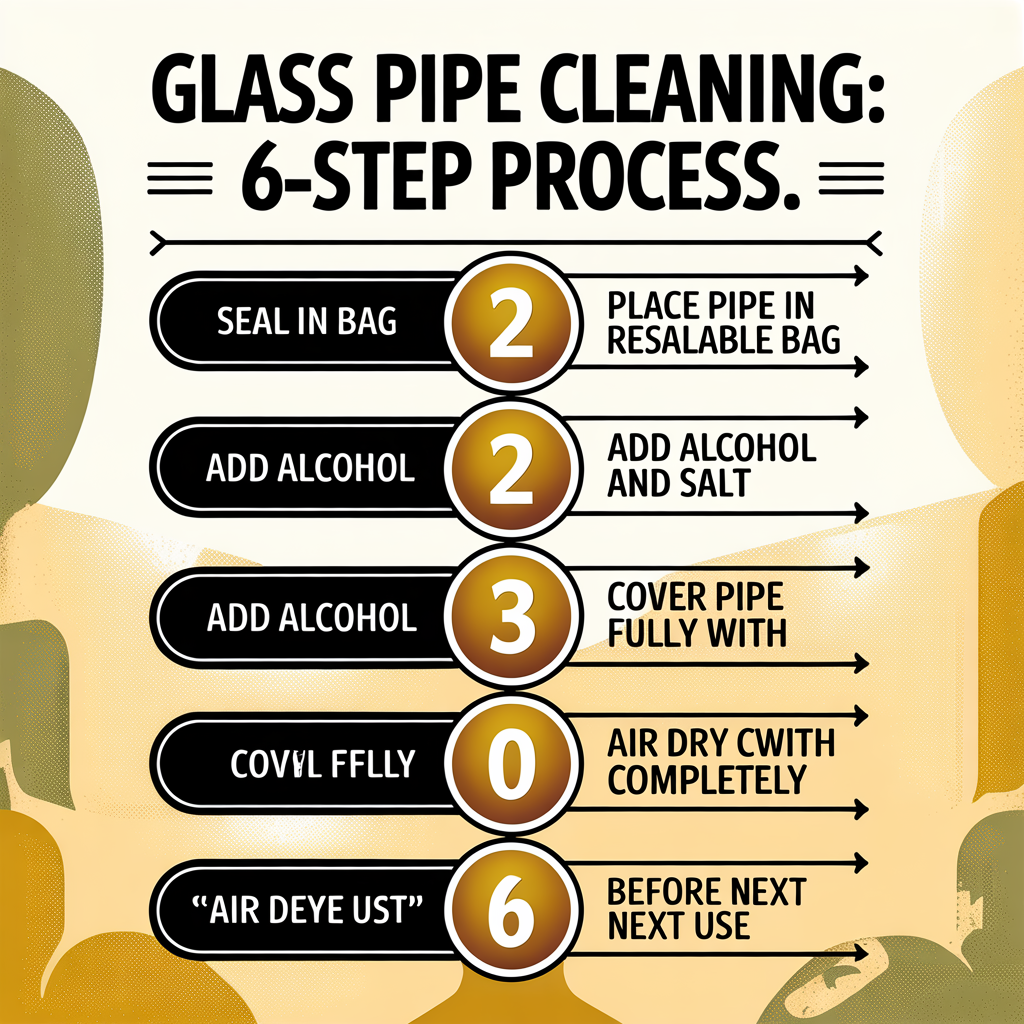
- Place the dry pipe in a resealable bag, add isopropyl alcohol to fully submerge, then add one to two tablespoons of coarse salt <cite data-source="src-001"></cite>
- Seal the bag, pressing out excess air, then shake vigorously for 30 to 60 seconds until the liquid darkens <cite data-source="src-001"></cite>
- Remove the pipe and inspect it — for light to moderate buildup, one round of shaking is usually sufficient <cite data-source="src-003"></cite>
- Rinse the pipe thoroughly under warm running water, scrubbing tight spots with a pipe cleaner or cotton swab <cite data-source="src-001"></cite>
- Set the pipe on a clean towel and allow it to air dry completely before next use — typically one to two hours <cite data-source="src-001"></cite>
First, place your dry pipe into a resealable bag. Do not add water yet. Pour enough isopropyl alcohol into the bag to fully submerge the pipe, then add one to two tablespoons of coarse salt. <cite data-source="src-001"></cite> The exact amount is not critical — you want enough salt to produce a gritty texture inside the bag when you shake it.
Seal the bag tightly, pressing out as much air as possible. Then shake the bag vigorously for 30 to 60 seconds. <cite data-source="src-001"></cite> You will see the liquid inside turn dark as the resin dissolves into the alcohol. The salt grains bump against the glass and scrub away any film stuck to the surface.
After shaking, remove the pipe from the bag and inspect it. For a pipe with light to moderate buildup, one round of shaking is usually enough. <cite data-source="src-003"></cite> Set the pipe aside and proceed to rinsing.
Rinse the pipe thoroughly under warm running water to flush out all remaining alcohol, salt, and dissolved resin. <cite data-source="src-001"></cite> Use a pipe cleaner or cotton swab to gently scrub the interior of the stem and the small openings where your finger would normally rest. Any residual salt left behind can scratch the glass if it dries and you use the pipe again.
After rinsing, set the pipe on a clean towel and allow it to air dry completely before the next use. <cite data-source="src-001"></cite> A pipe that still holds water inside will dilute the next session and may cause bubbling or spitting. Most pipes dry fully within one to two hours when placed in a warm, dry spot.
Once your pipe is clean and dry, it is ready for the next session. If you are interested in adding to your collection, the <a href="https://wordpress-production-3a6d.up.railway.app/product/inside-out-linework-swirl-hand-pipe-spoon">INSIDE OUT LINEWORK SWIRL HAND PIPE SPOON</a> is one example of a glass hand pipe available at Treehouse Lifestyle.
How Do I Handle Heavy Resin Buildup?
A pipe that has gone weeks or months without cleaning develops a thick, tar-like layer that does not come off with a 60-second shake. <cite data-source="src-001"></cite> The solution is soaking before you shake. The longer the alcohol sits on old resin, the softer it gets, and the less mechanical effort you need to remove it.
- A 30-minute soak in isopropyl alcohol and salt softens moderate resin buildup enough that a 60-second shake removes most of it <cite data-source="src-003"></cite>
- For heavy, caked-on resin, a 12-hour soak allows the alcohol to fully penetrate and break down buildup that has been accumulating for weeks <cite data-source="src-001"></cite>
- After any soak, shake for 60 seconds, then rinse thoroughly and scrub remaining spots with a pipe cleaner <cite data-source="src-003"></cite>
- Regular cleaning every few days for a daily-use pipe prevents resin from ever hardening to the point where extended soaking becomes necessary <cite data-source="src-003"></cite>
For moderate buildup, a 30-minute soak before shaking is often enough to make a significant difference. <cite data-source="src-003"></cite> Pour your alcohol and salt into the bag with the pipe, seal it, and simply leave it on the counter while you do something else. When you come back and start shaking, the resin lifts away far more easily than it would have without soaking.
For heavy, caked-on resin, extend the soak to a full 12 hours. <cite data-source="src-001"></cite> You can leave the bag on a plate in the refrigerator if you are worried about spills, though most people just set it in a bowl or dish to be safe. The extended time allows the alcohol to penetrate and break down resin that has been hardening for weeks.
After the soak, shake the bag for 60 seconds the same way you would for a regular clean. <cite data-source="src-003"></cite> You may see large chunks of dissolved resin break free inside the bag. Rinse the pipe thoroughly, scrubbing any remaining sticky spots with a pipe cleaner, and rinse again until the water runs completely clear.
If you clean pipes regularly, you are less likely to encounter this level of buildup. Making a habit of cleaning every few days for a daily-use pipe means the resin never has time to harden into something that needs a long soak. <cite data-source="src-003"></cite> For pipes that see heavy use, a quick rinse after each session and a full clean every few days keeps heavy buildup from ever becoming a problem.
For more extensive routines that cover bongs and other water-filtered accessories as well, <a href="https://wordpress-production-3a6d.up.railway.app/shop/bongs/straight-tube-bongs">Straight Tube Bongs</a> and similar pieces benefit from the same alcohol-and-salt approach with a slightly longer soak for best results.
Can I Clean My Glass Pipe Without Alcohol?
Yes, and there are several reasons you might need to. Some people prefer not to keep rubbing alcohol in the house. Others find themselves out of alcohol at the exact moment a cleaning is needed. <cite data-source="src-002"></cite> The four main alternatives are white vinegar, baking soda, hydrogen peroxide, and plain boiling water. Each one works, but each has trade-offs worth understanding before you choose.
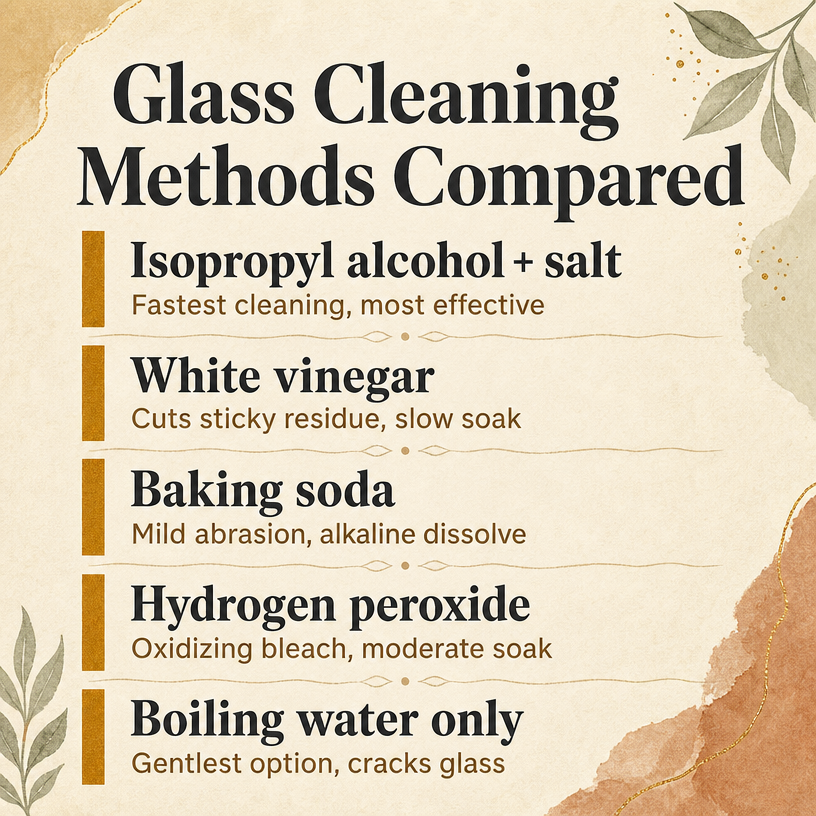
- White vinegar and coarse salt — acetic acid cuts sticky residue; requires a 30-minute to several-hour soak and produces a strong smell <cite data-source="src-002"></cite>
- Baking soda paste — mild alkaline abrasion works best for light residue and narrow openings; scrub after 15–30 minutes <cite data-source="src-002"></cite>
- 3% hydrogen peroxide and coarse salt — oxidizing bleach lifts resin; needs one to several hours to work effectively <cite data-source="src-002"></cite>
- Boiling water — gentlest option for delicate glass but carries a risk of cracking if the glass is cold when submerged; air dry after soaking <cite data-source="src-002"></cite>
White vinegar contains acetic acid, which cuts through sticky residue effectively. <cite data-source="src-002"></cite> Pour enough vinegar into a bag to cover the pipe, add coarse salt, and let it soak for 30 minutes to several hours before shaking and rinsing. The smell can be strong, and the process takes longer than alcohol, but it is effective for moderate buildup.
Baking soda provides mild alkaline abrasion. <cite data-source="src-002"></cite> Mix it with just enough water to form a paste, coat the interior of the pipe with the paste, and let it sit for 15 to 30 minutes before scrubbing with a pipe cleaner and rinsing. It works best for light residue and for pipes with narrow openings where a bag-and-shake method is difficult.
Hydrogen peroxide is an oxidizing agent that bleaches and lifts resin. <cite data-source="src-002"></cite> Use 3% hydrogen peroxide (the standard concentration available at pharmacies) in a bag with coarse salt, soak for one to several hours, then shake and rinse. It is less fast-acting than isopropyl alcohol but works well when given enough time.
Boiling water is the gentlest option and requires no special supplies. <cite data-source="src-002"></cite> Bring a pot of water to a rolling boil, carefully lower the pipe into the water using tongs, and let it sit for 20 to 30 minutes. <cite data-source="src-003"></cite> The heat softens fresh resin effectively. The main risk is thermal shock — dropping a cold glass pipe into boiling water can cause it to crack. <cite data-source="src-002"></cite> Let the pipe cool gradually before handling it, and never submerge a cold pipe in hot water directly.
No alcohol-free method matches the raw cleaning speed of isopropyl alcohol, <cite data-source="src-002"></cite> but all four alternatives are functional when alcohol is unavailable. The best choice depends on what you have on hand, how much time you have, and whether your pipe has delicate glass that might be sensitive to temperature extremes.
For pipes with stubborn buildup that alcohol-based cleaning does not fully resolve, a repeat soak with your chosen alternative — or a combination such as vinegar followed by a baking soda scrub — can improve results. <cite data-source="src-002"></cite>
| Method | How It Works | Best For | Soak Time |
|---|---|---|---|
| Isopropyl alcohol + salt | Solvent dissolves resin; salt scrubs mechanically | All buildup levels; fastest results | 30 sec–12 hrs |
| White vinegar + salt | Acetic acid cuts sticky residue | Moderate buildup; smell-sensitive settings | 30 min–several hrs |
| Baking soda paste | Alkaline abrasion; dissolves on rinse | Light residue; narrow openings | 15–30 min |
| 3% hydrogen peroxide + salt | Oxidizing bleach lifts resin | Moderate buildup; brighter results | 1–several hrs |
| Boiling water only | Heat softens fresh residue; no chemicals | Delicate glass; when nothing else is available | 20–30 min |
How Do I Clean a Multi-Piece Bubbler?
A bubbler has more separate parts than a simple spoon pipe, and each part can collect resin in its own way. The stem, the water chamber, the downstem, and the bowl all need attention during cleaning. <cite data-source="src-001"></cite> The key step that many people skip is disassembly before cleaning.
- Disassemble the bubbler fully — separate the bowl, stem, and downstem so alcohol can reach interior passages <cite data-source="src-001"></cite>
- Place each piece in its own resealable bag with enough isopropyl alcohol and coarse salt to fully submerge it <cite data-source="src-001"></cite>
- Soak all pieces together for the same duration, then shake each bag individually to avoid pieces damaging each other
- Rinse each piece under warm water, scrub interior passages with a pipe cleaner, and rinse until the water runs clear
- Air dry all pieces completely on a clean towel before reassembling — trapped moisture affects bubbler performance <cite data-source="src-001"></cite>
- Clean or replace small screens and frits inside the bowl to maintain open airflow <cite data-source="src-001"></cite>
Take the bubbler apart completely. Separate the bowl from the stem, remove the downstem if it is removable, and set each piece in its own resealable bag. <cite data-source="src-001"></cite> Pour alcohol and salt into each bag until the piece is fully submerged. If a piece is too small for a bag, a small jar or container works just as well.
Why separate bags? Because resin collects in the hidden interior passages of a bubbler — inside the stem and in the downstem channel — and those surfaces are not reachable with a pipe cleaner once the pieces are assembled. <cite data-source="src-001"></cite> Sealing each piece individually ensures the alcohol contacts every interior surface.
Let all pieces soak for the same amount of time, then shake each bag individually to avoid pieces knocking into each other and potentially causing damage. <cite data-source="src-001"></cite> Rinse each piece under warm water, scrub interior passages with pipe cleaners, and rinse again until the water runs clear.
Allow all pieces to air dry completely on a clean towel before reassembling the bubbler. <cite data-source="src-001"></cite> Reassembling a wet or still-damp bubbler traps moisture inside the stem and water chamber, which affects performance the next time you use it.
Small Accessories like metal screens or glass frits that sit inside the bowl should also be cleaned or replaced if they are clogged with residue. <cite data-source="src-001"></cite> Brush them with a small brush or swap in a fresh screen to ensure airflow through the bowl is not restricted.
Bubblers and hand pipes share similar cleaning principles, but the added water chamber and multiple joints mean you should always build in extra time for disassembly, soaking, and drying. Browse the full <a href="https://wordpress-production-3a6d.up.railway.app/shop/accessories">Accessories</a> collection to find replacement screens and other parts if needed.
What Should I Avoid When Cleaning a Glass Pipe?
Cleaning a glass pipe is straightforward, but a few common mistakes can damage the glass or leave residue that affects your next session. Avoiding these pitfalls keeps your pipe in good condition for the long term.
- Avoid sudden temperature changes — do not pour boiling water into a cold pipe or drop a cold pipe into hot water, as thermal shock can crack the glass <cite data-source="src-002"></cite>
- Avoid fine sandpaper, steel wool, or harsh scrubbers that scratch the glass surface and create grooves where resin sticks more easily <cite data-source="src-002"></cite>
- Never skip the final rinse — residual salt or alcohol left inside the pipe affects flavor and produces an unpleasant taste in the next session <cite data-source="src-001"></cite>
- Use properly sealed bags — an unsealed or poorly sealed bag will leak alcohol and may not fully submerge the pipe during soaking
- Do not attempt to clean a pipe with existing cracks or chips — soaking can widen damage and create a safety hazard when the pipe is heated <cite data-source="src-002"></cite>
The biggest risk is thermal shock. Glass expands and contracts with sudden temperature changes, and pouring boiling water into a cold pipe — or dropping a cold pipe into hot water — can cause it to crack or shatter outright. <cite data-source="src-002"></cite> Let the pipe reach room temperature before exposing it to heat, and let it cool gradually after any hot soak.
Avoid using fine sandpaper, steel wool, or abrasive scrubbers on the glass itself. These materials scratch the surface, creating tiny grooves where resin sticks more easily next time and making the pipe harder to clean going forward. <cite data-source="src-002"></cite> Salt is the right abrasive because it dissolves in water and rinses away completely. Pipe cleaners with soft bristles are also safe for the interior.
Do not skip the rinse step. Any salt, alcohol, or cleaning solution left inside the pipe when you use it again will affect flavor and may produce an unpleasant taste. <cite data-source="src-001"></cite> A thorough warm-water rinse followed by air drying solves this completely.
Avoid using plastic bag alternatives that are not actually sealed. An unsealed bag means your alcohol-and-salt solution can spill, and it also means the pipe may not be fully submerged during soaking. A proper resealable bag with a good zip closure prevents both problems.
Do not attempt to clean a pipe that has hairline cracks or chips already. Soaking can widen existing cracks as the liquid works into them, and a cracked pipe is a safety hazard when heated. If a pipe is damaged, it is better to retire it and replace it with a new one. <cite data-source="src-002"></cite>
How Do I Keep My Glass Pipe Clean Between Deep Cleans?
A few small habits after each session make a full deep clean less frequent and less demanding. These steps take less than a minute and pay off over time.
- Rinse the pipe with warm water immediately after each session while resin is still soft and sticky <cite data-source="src-003"></cite>
- Use a screen in the bowl to keep ash and fine particles out of the interior, where they mix with resin and harden into difficult-to-remove buildup <cite data-source="src-003"></cite>
- Between full cleans, soak the bowl and stem in alcohol with a pinch of salt for a few hours to maintain the pipe and slow new buildup from accumulating <cite data-source="src-003"></cite>
- Store the pipe in a case or padded container to keep dust and debris out and prevent accidental damage <cite data-source="src-003"></cite>
- A consistent routine of rinsing after each session and a full clean every few days prevents resin from ever hardening to the point where an overnight soak becomes necessary <cite data-source="src-003"></cite>
Rinse the pipe with warm water immediately after you finish using it. Do this while the resin is still soft and sticky — warm water dissolves fresh residue far more easily than dried resin. <cite data-source="src-003"></cite> Even a 30-second rinse under warm running water drops the amount of buildup that accumulates between full cleans.
Use a screen in the bowl if your pipe does not already have one built in. A screen keeps ash and fine particles out of the interior, where they mix with resin and create a paste that is harder to scrub away. <cite data-source="src-003"></cite> Changing or cleaning the screen regularly keeps the bowl cleaner between deep cleans.
For pipes that see daily use, a short soak in a small amount of alcohol between full cleaning sessions can maintain clarity. Simply fill the bag with enough alcohol to cover the bowl and stem, add a pinch of salt, and let it soak while you are not using the pipe — even a few hours helps. <cite data-source="src-003"></cite>
Store the pipe in a case or padded container when it is not in use. This keeps dust, lint, and debris out of the interior and prevents accidental knocks that can cause chips or cracks. <cite data-source="src-003"></cite> A clean pipe stored in a clean environment is always faster to ready for the next session.
Establishing a routine — rinse after each use, full clean every few days for a daily pipe — means you will never face a pipe so caked in resin that it needs an overnight soak. Prevention is consistently faster than remediation. <cite data-source="src-003"></cite>
What Are Common Questions About Smoking Accessories?
What household items can I use to clean a glass pipe?
You likely already have several usable items in your kitchen or bathroom. Coarse salt and isopropyl rubbing alcohol are the two essentials for the most effective method. If you lack alcohol, white distilled vinegar, baking soda, hydrogen peroxide, or even just very hot water can work as alternatives, though each is generally less powerful and may require more scrubbing or longer soaking time.
What is the best way to clean a glass pipe?
The alcohol-and-salt method sealed in a bag and shaken for 30 to 60 seconds is the most widely recommended approach because it combines a solvent with mechanical agitation in a single step. For heavy buildup, letting the pipe soak in alcohol for 12 hours before shaking dramatically improves results. Any concentration of rubbing alcohol works, though 99% isopropyl alcohol is the fastest option.
Can I clean my glass pipe without using alcohol?
Yes. Four alcohol-free methods are widely documented: white vinegar, baking soda, hydrogen peroxide, and boiling water. Each has a different strength — vinegar cuts sticky residue with acetic acid, baking soda provides mild alkaline abrasion, hydrogen peroxide is a bleaching oxidizer, and boiling water is the gentlest option for delicate glass. None matches alcohol for raw cleaning speed, but all are viable when alcohol is unavailable.
How often should I clean my glass pipe?
For regular users who smoke daily or most days, cleaning every few days prevents heavy resin accumulation. For occasional users, once every couple of weeks is typically sufficient. Neglecting regular cleaning leads to resin buildup that narrows the airway and requires more soaking and scrubbing to restore the pipe.
How is cleaning a bubbler different from cleaning a regular pipe?
A multi-piece bubbler must be fully disassembled before cleaning because resin collects in the stem, the water chamber, and the downstem simultaneously. Each piece should be sealed in its own bag with alcohol and salt to ensure the cleaning solution contacts every interior surface. Failing to take a bubbler apart means the hidden interior passages stay dirty.
What Is the Easiest Way to Keep a Glass Pipe Clean?
The alcohol-and-salt method is the fastest and most reliable way to clean a glass pipe, and it requires only two supplies that most people can find at a local store or already have at home. The process takes five to ten minutes for a normally dirty pipe and up to 12 hours for a pipe with heavy, neglected buildup. <cite data-source="src-001"></cite>
The key to keeping a pipe easy to clean is cleaning it regularly. A quick rinse after each session and a full alcohol-and-salt clean every few days prevents resin from hardening into something that requires overnight soaking. <cite data-source="src-003"></cite> The difference in effort between a pipe that is cleaned every few days and one that sits for weeks is substantial.
If you do not have alcohol available, white vinegar, baking soda, hydrogen peroxide, and boiling water all work as functional alternatives, though each requires more time or scrubbing to achieve similar results. <cite data-source="src-002"></cite> Choose the method that matches what you have on hand, and give the pipe enough soaking time to do the work. [2]
Avoid thermal shock, harsh abrasives, and skipping the final rinse, and your glass pipe will stay in good condition for a long time. With a little regular maintenance, you spend a few minutes on cleaning rather than an hour restoring a ruined pipe. <cite data-source="src-003"></cite>
Where Does This Smoking Accessory Information Come From?
- wikiHow: The Best Ways to Clean Your Glass Bowl & Weed Pipe
- Veriheal: How to Clean Your Glass Pipe Without Alcohol: 4 Safe Methods
- Clear Choice Cannabis: How to Clean a Glass Pipe (Step-by-Step Guide That Works)