
If you want the short answer up front: for most regular cleaning, a homemade mixture of isopropyl alcohol (91% or above) and coarse salt works just as well as a store-bought bong cleaner, and it costs far less per use. The alcohol dissolves the sticky resin while the salt acts as an abrasive to physically knock it off the glass. [4] [1]
Store-bought cleaners are pre-mixed and can act faster on heavy, long-term resin, which makes them a reasonable pick when you want extra speed or convenience. You do not need a pricey bottled product to handle a normal weekly clean. [4]
Whichever route you take, a thorough rinse afterward matters the most, so no cleaning residue is left behind and your next use tastes clean. The sections below walk through how alcohol concentration works, which method fits which bong material, the step-by-step clean, and the rinse that finishes the job.
Does a DIY isopropyl alcohol and salt mix clean a bong as well as a store-bought solution?
For most regular maintenance, yes. The two methods remove the same sticky buildup, just through the same basic steps: a solvent works on the resin, and an abrasive helps it come loose. The real difference shows up in cost, convenience, and how fast each one works on heavy gunk. [4]
A DIY mix is hard to beat on price. A bottle of isopropyl alcohol and a box of coarse salt cost a few dollars and last through many cleanings, so each clean works out to pennies. A store-bought cleaner is pre-mixed and ready to pour, which saves you a small amount of prep every time, but you pay more per use for that convenience. [4]
On effectiveness, both sides remove resin from glass well. If you want a closer look at the full routine a proper clean involves, see how the pros break it down step by step. The choice mostly comes down to how heavy your buildup is and how much effort you want to spend. How Do You Clean a Bong the Right Way? [1]
Keep in mind that neither option is magic. If your bong has been sitting for months with a thick layer of resin, you will need extra soaking and shaking no matter which cleaner you choose. Regular cleaning beats occasional deep scrubbing every time, because it is far easier to lift a thin film than to chip away at a thick crust.
Here is the side-by-side on the two approaches:
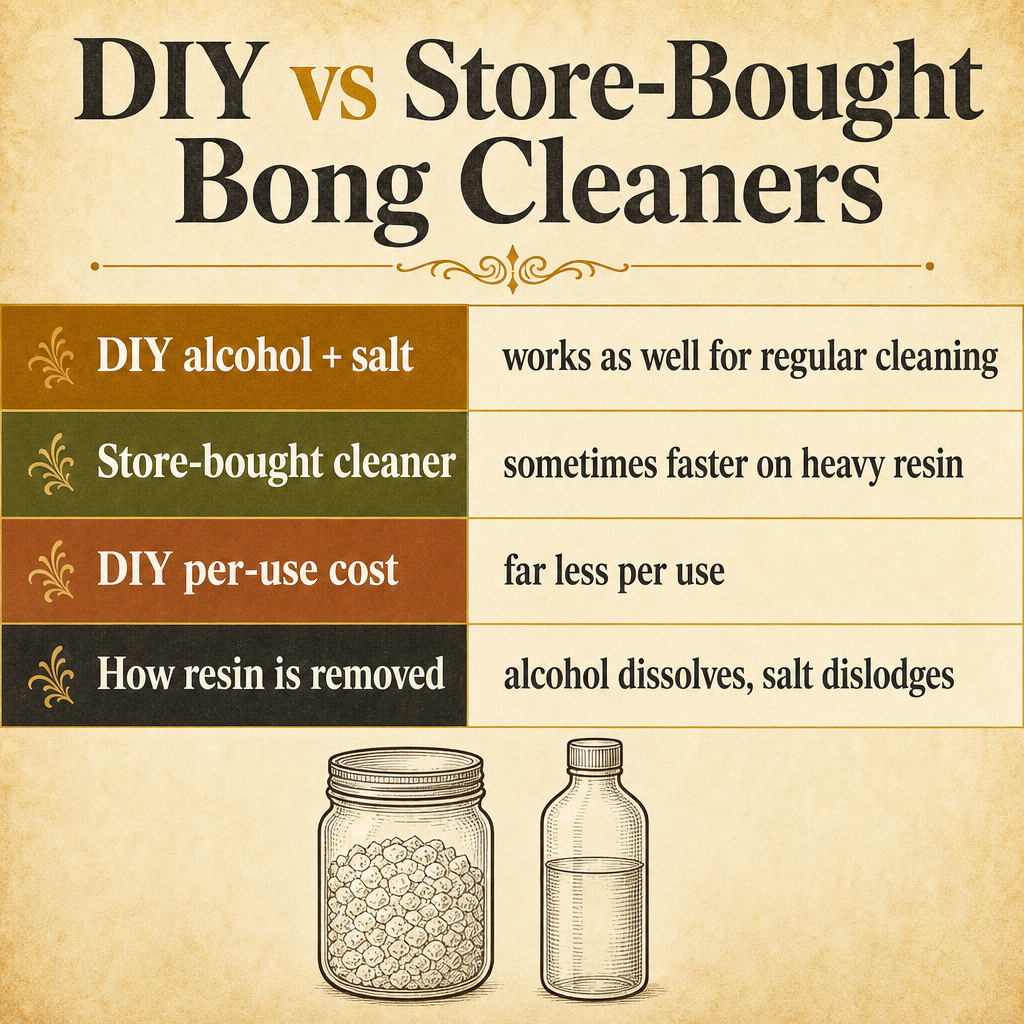
- DIY isopropyl alcohol and salt removes resin for regular cleaning as well as a store-bought solution, and costs far less per use
- Alcohol dissolves the resin while the coarse salt acts as an abrasive to physically dislodge it from the glass
- Store-bought cleaners are pre-mixed and can act faster on heavy, long-term resin without extra prep
- Your choice comes down to budget, how heavy the buildup is, and how much convenience you want
- Either method still depends on a thorough rinse afterward so no cleaning residue is left behind
What do 70%, 91%, and 99% isopropyl alcohol concentrations really mean for cleaning?
The number on a bottle of rubbing alcohol tells you how much of it is actually alcohol and how much is water. A 70% bottle is 70% isopropyl alcohol and 30% water, while a 91% or 99% bottle leaves only a small amount of water in the mix. That water content is the whole story behind cleaning speed. [2] [3]
Resin dissolves in alcohol, not in water. When you use a lower concentration, more water dilutes the solvent, so the alcohol does its dissolving work more slowly. A higher concentration has less water competing for space, which is why it cuts through resin noticeably faster. [4]
Alcohol in these strengths is a common commercial solvent, typically sold as rubbing alcohol from about 70% up to 99% in some products. It can be harmful if swallowed or if it gets in the eyes, so it belongs out of reach of children and should be handled with care. [2] [3]
When you shop, reach for the highest strength you can easily find. Even if you only ever see 70% on the shelf, it still works, just count on a little more soaking and shaking time. If your bong is a soft silicone model, a higher-strength alcohol is still off-limits for material reasons covered below. A SILICONE BEAKER BONG WITH REMOVABLE GLASS BOWL is one example where the soft body still needs the gentler soap-and-water route even when the glass bowl can take alcohol. SILICONE BEAKER BONG WITH REMOVABLE GLASS BOWL
The concentration you pick also affects how often you need to clean. A higher strength clears a bong fast enough that you can stay on a simple weekly schedule, while a weaker blend may leave a stubborn residue that builds back up. For owners who prefer to clean on a set routine, a bottle at 91% or above makes each pass quick and dependable.
- Start with 99% if you can find it, because almost no water means the fastest resin breakdown
- Move to 91% as a solid everyday pick that cleans noticeably faster than 70%
- Use 70% when that is all that is available, and simply add a longer soak to make up for the extra water
- In every case, handle the alcohol carefully and keep it away from children since it can be harmful if swallowed or if it gets in the eyes
Which bong cleaning method should I use for my bong material?
The material your bong is made of should decide your cleaning method before cost or convenience do. Glass is the most forgiving, but silicone and acrylic need more care because strong solvents can break them down. [1]
For a glass piece, the isopropyl alcohol and coarse salt method is the clear pick. The alcohol lifts the resin and the salt scrubs it away without scratching the glass. This is the routine most owners reach for and the one that handles buildup best. [1]
Silicone and acrylic are where you have to change course. Isopropyl alcohol can degrade those materials, so skip it entirely. Instead, use dish soap and warm water with a brush, which cleans them safely. Some all-in-one pieces, such as a silicone beaker bong with a removable glass bowl, mix materials and still need this gentler soap-and-water care for the soft parts. [1]
Household staples like baking soda, white vinegar, coarse salt, and lemon juice are cheap and handy for light buildup, but they can need extra soaking and scrubbing and may fall short on heavy, long-term residue. They also need material-aware handling: coarse salt can scratch acrylic, and acidic vinegar can weaken silicone. [5]
Acrylic pieces call for the same gentle approach. A colorful acrylic water pipe still carries resin even though it is not glass, and pouring alcohol into it risks ruining the plastic. Reach for dish soap and warm water first, and use a soft brush on the inside so you do not scratch the surface. If you own an acrylic model, this method keeps it usable much longer than a harsh solvent ever would. Even a Gas Mask with Acrylic Water Pipe follows the same rule, so check what yours is made of before you pour any alcohol in. Gas Mask with Acrylic Water Pipe | 8"
- Glass: isopropyl alcohol plus coarse salt is the standard method and cleans most effectively
- Silicone: use dish soap and warm water with a brush, because alcohol can break down the material
- Acrylic: clean with dish soap and warm water, and avoid coarse salt that can scratch the surface
- Household options like vinegar and lemon juice suit light buildup but can weaken or scratch softer materials, so match them to your piece
- When cleaning an acrylic or hybrid unit, confirm what it is made of first so the method matches the material
How do you clean a glass bong step by step with a DIY alcohol and salt solution?
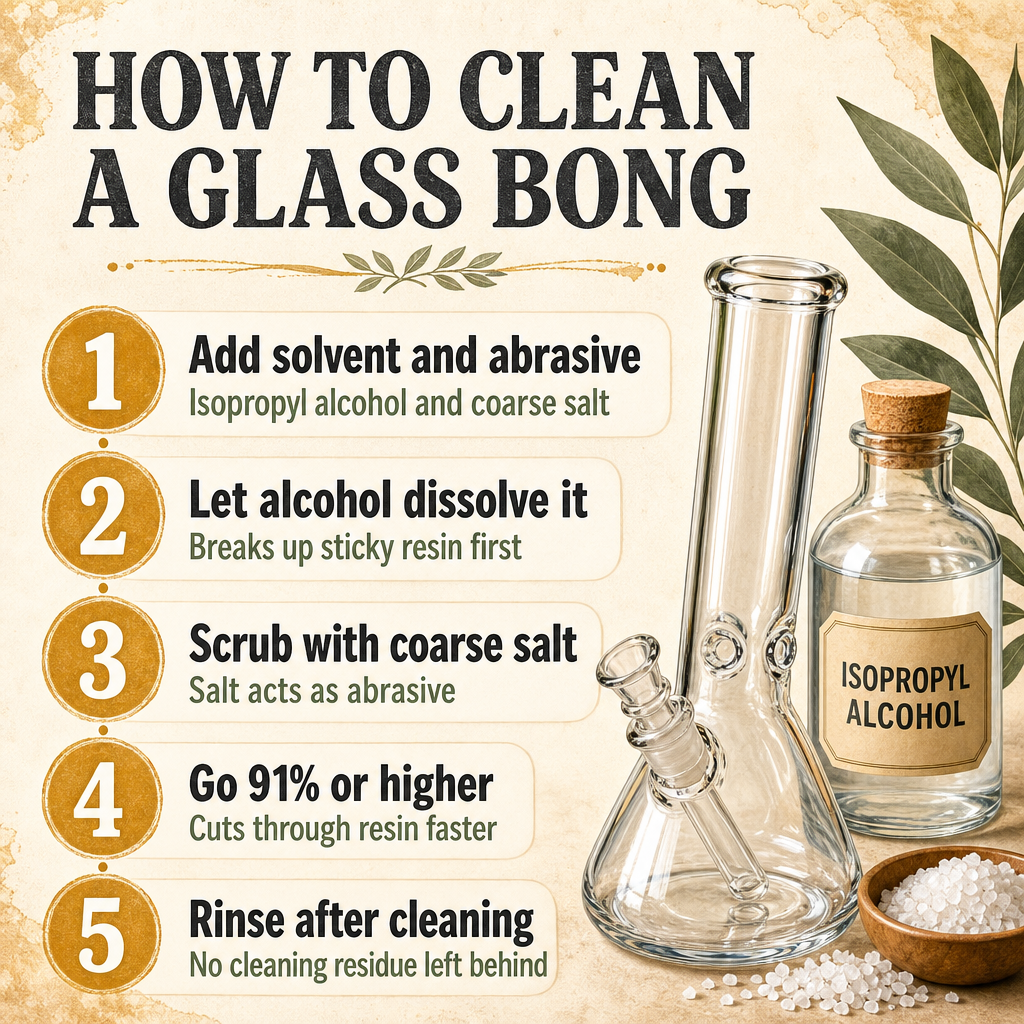
A do-it-yourself glass bong clean is simple once you have the two ingredients on hand: isopropyl alcohol at 91% or above and a coarse salt such as Epsom or rock salt. The alcohol softens and dissolves the resin while the salt acts as an abrasive to dislodge it. [1] [4]
Work in a sink or over a towel, and pour out any stale water first. Seal any openings you can with your hands or a plug so you can shake without splashing everywhere. Expect the whole job to take about ten minutes for a regular clean, or a longer soak when buildup is heavy. If you want the finer points of using alcohol on glass, our guide on how to clean glass accessories with isopropyl alcohol goes into it in detail. How Do You Clean Glass Accessories With Isopropyl Alcohol?
Follow these steps in order for a clean result:
- Fill the bong with a generous amount of isopropyl alcohol at 91% or higher so every interior surface is covered
- Add a handful of coarse salt; the crystals are what scrub the resin off the glass as you shake
- Seal the openings and shake the bong gently but firmly for a minute or two so the alcohol and salt reach the walls
- For heavy buildup, let it soak for a while first so the alcohol can break down the thickest resin before you shake
- Empty the cloudy mixture into the sink, then rinse thoroughly under warm running water and repeat if any residue remains
When is a store-bought bong cleaner the better pick?
A store-bought bong cleaner earns its spot when regular DIY cleaning starts to feel like more work than it is worth. These products are pre-mixed, so there is nothing to measure or combine, and many are marketed as faster-acting on stubborn resin. [4]
That speed and convenience is the main reason to choose one. If your schedule is tight, you clean rarely, or a recent deep buildup needs extra power, a bottled cleaner can save you effort. The trade-off is the higher per-use price compared with a DIY salt-and-alcohol mix. [4]
They are not a replacement for the rinse step. Like every method, a store-bought cleaner only does its job well if you wash the residue away completely afterward. If you want a bundled, ready-made option for your glassware, a Vessel Care Kit packs everything into one tidy purchase. Vessel Care Kit
Think of store-bought cleaners as the convenience option rather than the only option. For the majority of owners who clean on a regular schedule, the simple homemade mix remains the lower-cost default that performs just as well.
A bottled cleaner makes the most sense when:
- You have heavy, long-term resin that a quick shake will not shift and you want a faster-acting product
- You want to skip the measuring and mixing that a DIY clean requires
- You clean only now and then and prefer the convenience of a ready-to-pour bottle
- You are willing to pay a higher price per use in exchange for a quicker routine
- You prefer a all-in-one solution that bundles a cleaner with brushes and directions in a single kit
How do you rinse a bong properly so no cleaning residue is left behind?
Rinsing is the step people rush, and it is the step that matters most. Every cleaning method leaves some amount of cleaner behind, and leftover residue can affect the taste and smell of the next use. A proper rinse clears it all away before you put the bong away. [4] [5]
The good news is that rinsing needs no special product. Household alternatives for light buildup, such as baking soda, white vinegar, and lemon juice, also need the same clear-water finish, and they may need extra soaking and scrubbing on heavier resin. [5]
The easiest way to avoid a long rinse is to keep the buildup from forming in the first place. Cleaning on a steady schedule means each rinse stays short and simple. If you tend to let your piece sit, the habit of small everyday steps makes the next clean far faster. Our guide on how to prevent heavy resin buildup in bongs and pipes covers those habits in full. How Do You Prevent Heavy Resin Buildup in Bongs and Pipes?
Work through this rinse and check routine every time:
- Drain the dirty cleaning mixture into the sink and let the bong empty completely
- Run warm water through the mouthpiece, downstem, and bowl so it flushes every interior surface
- Look inside under good light and check for any oily film or salt crystals still clinging to the glass
- If you spot residue, do another quick alcohol-and-salt pass, then rinse again until the water runs clean
- Let the bong dry fully before the next use, and store it somewhere it stays clean between sessions
Frequently Asked Questions
Does a DIY isopropyl alcohol and salt mix clean a bong as well as a store-bought solution?
For most regular maintenance, yes. The alcohol dissolves resin while the salt works as an abrasive to dislodge it, and a DIY mix costs far less per use. Store-bought cleaners are pre-mixed and can act faster on heavy resin.
Is isopropyl alcohol safe for every kind of bong?
No. Isopropyl alcohol should not be used on silicone or acrylic pieces because it can break down those materials. For them, use dish soap and warm water with a brush instead.
Why does a higher alcohol concentration clean faster?
Isopropyl alcohol at 91% or above cuts through resin noticeably faster than 70% because less water dilutes the solvent action.
Why is rinsing important after cleaning a bong?
Every bong cleaning method requires a thorough rinse so no cleaning residue is left behind, since leftover residue can affect the taste and smell of the next use.
Which bong cleaning solution should you pick?
For almost every owner, the simple homemade mixture of isopropyl alcohol at 91% or above and coarse salt is the best all-around bong cleaning solution. It removes resin as well as a store-bought cleaner for regular maintenance, it costs pennies per use, and the two ingredients are easy to keep on hand. [4]
Reach for a store-bought, pre-mixed cleaner when you have heavy, long-term buildup, want faster action, or prefer the convenience of a ready-to-pour product, just be ready for the higher per-use price. A care kit is a good middle ground if you want brushes and directions bundled together. [4]
Match your method to your material: alcohol and salt for glass, and dish soap with warm water for silicone and acrylic. End every clean with a thorough rinse so no residue is left behind, and your next use stays clean and fresh. [1] [5]
Sources
- Esquire: How to Clean a Bong, According to Pros
- StatPearls / National Institutes of Health (NCBI Bookshelf): Isopropanol Toxicity
- MedlinePlus / National Library of Medicine (NIH): Isopropanol alcohol poisoning
- Grasscity: Best Bong Cleaners: What to Look For
- Bong Warehouse: Pros and Cons of Cleaning Bongs with Household Items