
A step-by-step guide to cleaning a bong with isopropyl alcohol and coarse salt, plus how to handle different materials and remove hard water stains.
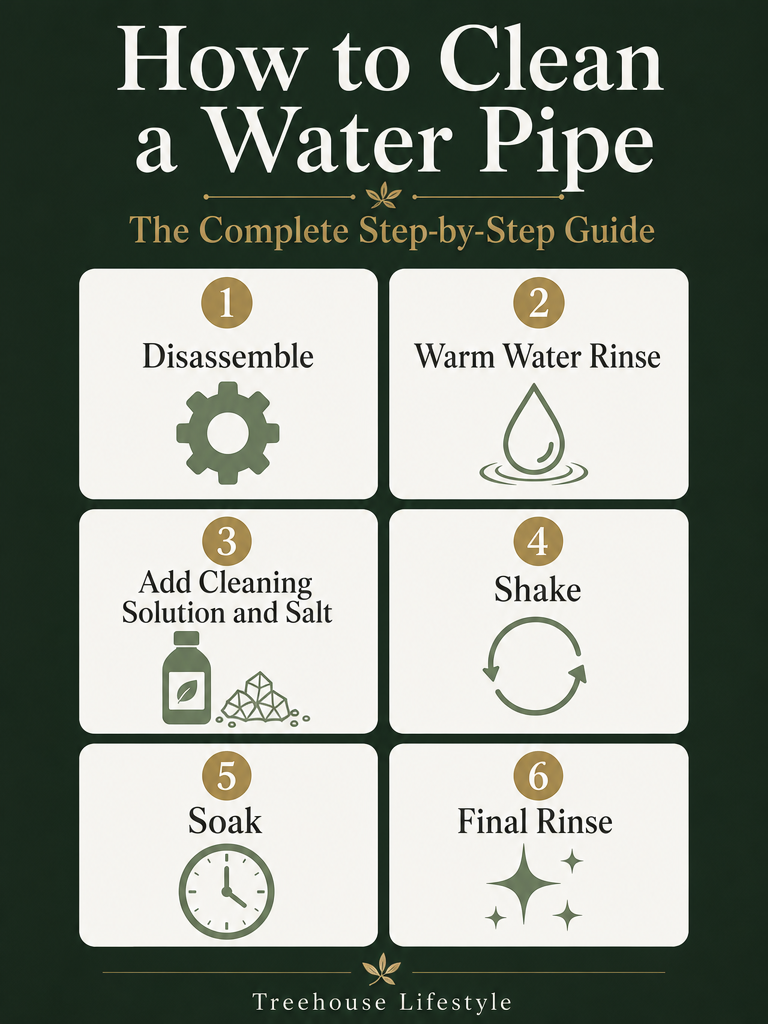
The most effective way to clean a bong is to disassemble it, pre-rinse with warm (not hot) water, add 91% or higher isopropyl alcohol and coarse salt, shake and soak the pieces, scrub any remaining residue, then rinse thoroughly with warm water until no alcohol smell remains. This method works well for glass bongs. For acrylic or silicone bongs, skip the alcohol and use warm water with dish soap instead. Cleaning should happen after every use at minimum, with a deep alcohol-and-salt clean at least once a week for regular users.
Why Does a Bong Need Regular Cleaning?
Bong water should be replaced after every use. Standing water can harbor bacteria, mold, and biofilm within hours, and can cause respiratory infections if inhaled. Dirty bong water has been linked to documented cases of necrotizing pneumonia caused by Pseudomonas aeruginosa, with the infection traced directly to contaminated bong water in a daily bong user. [1]
- Standing bong water can harbor bacteria, mold, and biofilm within hours of use.
- Documented bacteria in dirty bong water include Streptococcus, Staphylococcus, E. coli, and Pseudomonas aeruginosa.
- A biofilm layer can form on standing bong water in as little as one weekend of neglect.
- Mold and black mildew can develop in standing bong water.
Bacteria documented in dirty bong water include Streptococcus, Staphylococcus, E. coli, and Pseudomonas aeruginosa. Mold and black mildew can also develop in standing water. A biofilm layer can form on the surface of standing bong water in as little as one weekend of neglect. These are documented risks supported by verified sources — they are reasons to clean your bong regularly, not reasons to avoid it. [6]
The more you use your bong, the more often it needs cleaning. Even occasional users benefit from a regular maintenance routine. Knowing what can happen in a dirty bong gives you every reason to keep up with maintenance and protect your health.
Beyond health concerns, a clean bong also produces better-tasting vapor and is easier to use overall. Residue buildup affects the flavor of what you are smoking, and stubborn resin makes each cleaning session harder than the last.
What Supplies Do You Need to Clean a Bong?
Before you start, gather the right materials. For the alcohol-and-salt method, you will need a few key items. Using the correct concentration and type of each supply makes the difference between a mediocre clean and a thorough one.
- 91% or higher isopropyl alcohol — lower concentrations are less effective at dissolving resin.
- Coarse salt such as Epsom salt or rock salt — the large crystals scrub resin without scratching glass. Fine table salt dissolves too quickly.
- White vinegar for hard water stains and mineral deposits on glass.
- Lemon juice as a pre-soak to help loosen stubborn resin.
- Pipe brushes, cotton swabs, or small bottle brushes for tight spots.
- Paper towels or clean rags for drying.
91% or higher isopropyl alcohol is the recommended concentration for cleaning glass bongs — concentrations below 90% are less effective at dissolving resin. Coarse salt such as Epsom salt or rock salt provides effective physical abrasion inside the bong without scratching glass. Fine table salt dissolves too quickly to scrub effectively. White vinegar handles hard water mineral deposits on glass. Lemon juice serves as a pre-soak to help loosen stubborn resin before the main clean. Pipe brushes, cotton swabs, or small bottle brushes scrub tight spots like the stem and base. Paper towels or clean rags handle drying.
Warm (not hot) water is important for pre-rinsing — hot water causes resin to become more sticky and adherent, making it harder to remove. Have these supplies ready before you start the cleaning process.
Read The Complete Guide to Cleaning Smoking Accessories for more detail.
Read What Is a Bong and How Does It Work? for more detail.
How Do You Clean a Bong Step by Step?
Follow these steps in order for the most thorough clean. Each step matters — skipping steps or rushing leads to residue that is harder to remove next time.
- Disassemble the bong completely — separate bowl, stem, downstem, and base.
- Pre-rinse each piece under warm (not hot) running water to remove loose debris.
- Add 2 to 3 tablespoons of coarse salt and fill the chamber with 91% or higher isopropyl alcohol.
- Seal the openings, shake vigorously for 2 to 3 minutes, then soak for 15 to 20 minutes.
- Scrub each piece with brushes to remove any remaining residue.
- Rinse thoroughly with warm water until no alcohol smell remains.
- Air dry completely, then reassemble and refill with fresh water — distilled water is preferred.
Disassemble the bong completely. Separate the bowl, stem, downstem, and base so you can clean every chamber and connection. Pre-rinse each piece under warm (not hot) running water. This removes loose debris and preps the surface for the cleaning solution. Hot water causes resin to become more sticky, so keep the temperature warm.
Prepare the cleaning solution. Add 2 to 3 tablespoons of coarse salt directly into the bong or the piece being cleaned. Fill the chamber with 91% or higher isopropyl alcohol until the salt dissolves and the piece is fully submerged. Seal the openings and shake the bong vigorously for 2 to 3 minutes. The salt crystals scrub the interior glass surfaces as you shake, breaking up resin buildup.
Let the pieces soak for 15 to 20 minutes. Some sources recommend 30 minutes minimum for heavily used bongs. A longer soak gives the alcohol more time to dissolve stubborn residue. After soaking, scrub each piece with pipe brushes or bottle brushes to remove any remaining film.
Rinse each piece thoroughly with warm water until you can no longer detect an alcohol smell. Residual alcohol will produce harsh fumes when the bong is used again. Allow all pieces to air dry completely on a clean surface before reassembling. Once dry, reassemble the bong and refill with fresh water — distilled water is preferred because it contains fewer minerals that can promote bacterial growth between uses.
Read What Are the Parts of a Bong, Rig, or Pipe and How Do They Work? for more detail.
Can You Use Alcohol to Clean All Types of Bongs?
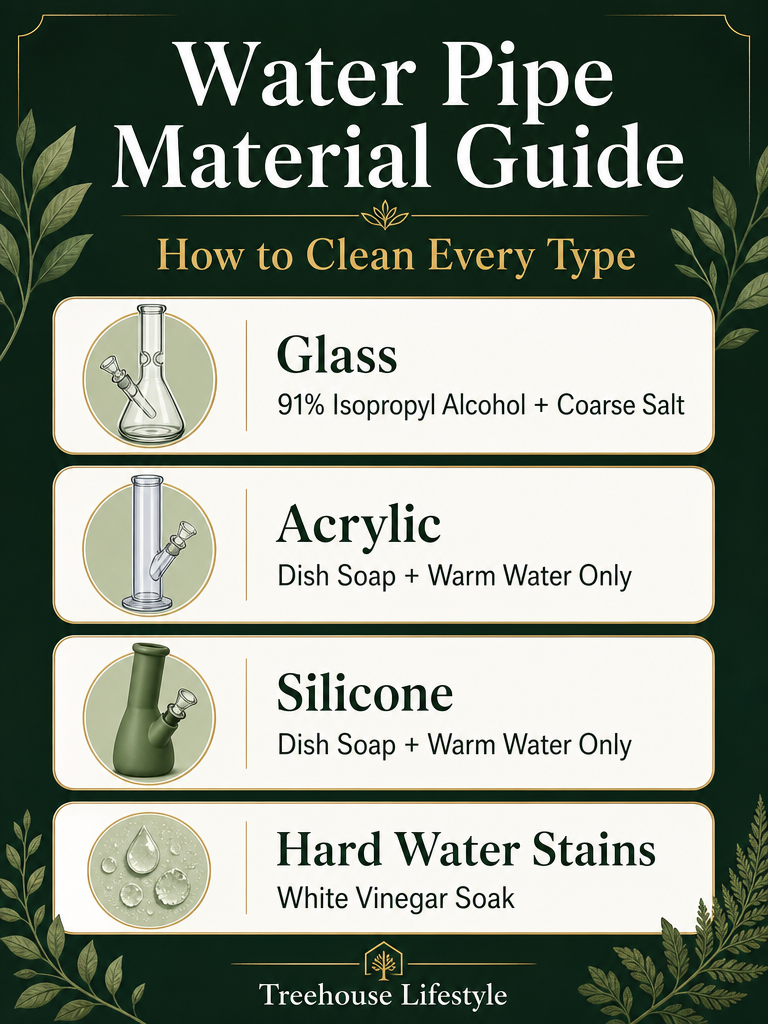
No — isopropyl alcohol works well for glass Bongs, but it damages acrylic and Silicone Bongs. Alcohol breaks down and degrades those materials over time. Always check what your bong is made of before choosing a cleaning method.
- Glass bongs — isopropyl alcohol and coarse salt is the standard cleaning method and is safe for glass.
- Acrylic bongs — alcohol breaks down and degrades acrylic. Use warm water and dish soap instead.
- Silicone bongs — alcohol can cause silicone to deteriorate. Clean with warm water and dish soap.
- If you are unsure of the material, start with warm water and dish soap — it is safe for all bong types.
For glass bongs, isopropyl alcohol and coarse salt is the standard and effective method. For acrylic and silicone bongs, warm water and dish soap are the recommended approach — alcohol is not safe for those materials. If you are unsure what your bong is made of, start with warm water and dish soap — it is safe for all bong types and will not cause damage.
How Do You Remove Hard Water Stains from a Glass Bong?
Hard water leaves mineral deposits called scale on Glass Bongs. This requires a different approach than resin removal. Vinegar is the recommended solution for glass bongs.
- Fill the bong with white vinegar until the stained area is fully submerged.
- Let it soak for 15 to 20 minutes to allow the acidity to dissolve mineral deposits.
- Rinse thoroughly with warm water to remove all vinegar residue.
- For stubborn stains, a 50/50 mixture of lemon juice and vinegar can be used as a pre-soak before the alcohol-and-salt method.
- Vinegar is for glass only — do not use it on acrylic or silicone bongs.
Fill the bong with white vinegar until the stained area is fully submerged. Let it soak for 15 to 20 minutes. The acidity in the vinegar works to dissolve mineral deposits over time. After soaking, rinse thoroughly with warm water to remove all vinegar residue. For stubborn hard water stains, a 50/50 mixture of lemon juice and vinegar can be used as a pre-soak to help loosen the deposits before switching to the alcohol-and-salt method. Vinegar is for glass only — do not use it on acrylic or silicone bongs.
What Are the Most Common Bong Cleaning Questions?
Here are answers to the questions readers ask most often about bong care. These cover cleaning frequency, alternative methods, and material-specific concerns.
- Clean the bong water after every use and perform a deep alcohol-and-salt clean at least once a week for regular users.
- Without alcohol, use warm water and dish soap for acrylic and silicone bongs, or a vinegar and baking soda approach for glass.
- Use coarse salt such as Epsom salt or rock salt — fine table salt dissolves too quickly to scrub effectively.
- Avoid hot water for pre-rinsing — warm (not hot) water prevents resin from becoming more sticky.
- For hard water stains on glass, a vinegar soak for 15 to 20 minutes followed by a warm water rinse is the recommended approach.
How often should you clean a bong? At minimum, change the bong water after every single use. A deep clean using the alcohol-and-salt method should be done at least once a week for regular users, and more often if the bong sees heavy use. The more you use your bong, the more frequently it needs attention.
Can you clean a bong without isopropyl alcohol? Yes. For acrylic and silicone bongs, warm water and dish soap are effective and safe. For glass bongs, a vinegar soak followed by scrubbing with baking soda and a brush can help, though it is less effective at dissolving heavy resin than alcohol and salt. If you are in a pinch, warm water and manual scrubbing will still improve cleanliness.
What type of salt should you use to clean a bong? Coarse salt such as Epsom salt or rock salt works best because the large crystals provide effective physical abrasion inside the bong without scratching the glass surface. Fine table salt dissolves too quickly and does not scrub effectively.
Can you use hot water to clean a bong? Hot water should be avoided for pre-rinsing or soaking before the alcohol step. Heat causes resin to become more sticky and adherent, making it harder to remove. Always use warm (not hot) water for pre-rinsing, and reserve hot water only for the final thorough rinse after the alcohol-and-salt clean. [3]
How do you clean a bong with hard water stains? For hard water mineral deposits (scale) on glass bongs, a vinegar soak is the recommended approach. Fill the bong with white vinegar, let it soak for 15 to 20 minutes, then rinse thoroughly with warm water. A 50/50 mixture of lemon juice and vinegar can be used as a pre-soak to help loosen stubborn resin before switching to the alcohol-and-salt method.
See DONUT HOLE HAND PIPE as one current product example.
What Are Common Questions About Smoking Accessories?
How often should you clean a bong?
You should at minimum change the bong water after every single use. A deep clean using the alcohol-and-salt method should be done at least once a week for regular users, and more often if the bong sees heavy use.
Can you clean a bong without isopropyl alcohol?
Yes. For acrylic and silicone bongs, warm water and dish soap are effective and safe. For glass bongs, a vinegar soak followed by scrubbing with baking soda and a brush can help, though it is less effective at dissolving heavy resin than alcohol and salt.
What type of salt should you use to clean a bong?
Coarse salt such as Epsom salt or rock salt works best because the large crystals provide effective physical abrasion inside the bong without scratching the glass surface. Fine table salt dissolves too quickly and does not scrub effectively.
Can you use hot water to clean a bong?
Hot water should be avoided for pre-rinsing or soaking before the alcohol step. Heat causes resin to become more sticky and adherent, making it harder to remove. Always use warm (not hot) water for pre-rinsing, and reserve hot water only for the final thorough rinse after the alcohol-and-salt clean.
How do you clean a bong with hard water stains?
For hard water mineral deposits (scale) on glass bongs, a vinegar soak is the recommended approach. Fill the bong with white vinegar, let it soak for 15 to 20 minutes, then rinse thoroughly with warm water. A 50/50 mixture of lemon juice and vinegar can be used as a pre-soak to help loosen stubborn resin before switching to the alcohol-and-salt method.
What Is the Best Routine for Keeping Your Bong Clean?
Keeping your bong clean takes only a few minutes after each use and a deeper clean once a week. The process is straightforward: rinse after every session, do a full alcohol-and-salt clean weekly, and tackle hard water stains with vinegar when needed.
A clean bong is easier to use, produces better-tasting vapor, and lasts longer than one covered in residue. Regular maintenance also reduces the buildup that makes each cleaning session harder than the last. For those who want to explore more Cleaning Supplies, Treehouse Lifestyle offers a range of accessories designed to make maintenance straightforward. Free shipping on orders $150+ applies to qualifying purchases.
Consistency is the real secret. The more regularly you clean your bong, the less effort each cleaning session requires. A bong that is maintained weekly takes minutes to refresh. One that has been neglected for weeks requires much more work — and carries risks you can avoid with a simple routine.
Where Does This Smoking Accessory Information Come From?
- Esquire: How to Clean a Bong, According to Pros
- Business Insider: How to Properly Clean Any Type of Bong
- Phoenix Star Glass: Glass Bong Cleaning Tutorial: Ultimate Step-by-Step Guide
- Friends NYC: How to Clean a Bong in 5 Easy Steps
- PMC (Respirology Case Reports): Marijuana ‘bong’ pseudomonas lung infection: a detrimental recreational experience
- Chill Steel Pipes: Can a Dirty Bong Make You Sick? Dirty Bong Health Risks Explained