
What Pieces and Accessories Do I Need for a Complete Smoking Setup?
A complete smoking setup means having everything in one place so you can smoke cleanly and conveniently. The core of any setup is the piece itself — a hand pipe, bubbler, bong, or vaporizer — like a silicone beaker bong with removable glass bowl. Everything else either supports the piece, helps you prepare, or keeps your gear in good working order. [4]
The essential accessories that every smoker needs go beyond the piece itself. These items are what separate a complete, comfortable setup from one that creates more mess and frustration than it is worth. Accessories are the items that separate a complete, comfortable setup from one that creates more mess and frustration than it is worth. Skipping them may save money upfront but usually costs more in wasted herb, broken glass, or stained clothes.
These are the must-have accessories for any first smoking setup:
A grinder breaks your herb into evenly sized pieces before you pack it. This is not optional — hand-shredded herb burns unevenly and wastes material. [6] A reliable ignition source means a quality butane lighter, not matches or a candle. Hemp wick is a popular alternative that eliminates the taste of lighter fluid entirely. Airtight storage keeps your herb fresh between sessions. A rolling tray gives you a clean, contained surface to work on and prevents herb from scattering across a table or floor. Cleaning supplies — specifically isopropyl alcohol (90% or higher) and coarse salt — are what you use to scrub resin and buildup out of your piece after it gets dirty.
What Are the Main Types of Smoking Pieces?
Understanding the four main categories of smoking pieces — covered in our guide to what smoking accessories beginners need — helps you make a confident first purchase instead of guessing. Our breakdown of what smoking piece is best for a beginner can help you decide. Each type has a distinct personality — some prioritize portability, others prioritize hit quality, and some try to do a little of everything. [1]
Hand pipes are the simplest and most portable option. You pack herb directly into the bowl, light it, and inhale. There are no moving parts, no water, and no batteries. Spoon pipes, chillums, and steamrollers all fall into this category. They are durable, affordable, and easy to use anywhere. Maintenance is minimal — a quick ISO soak every couple of weeks keeps one in good shape.
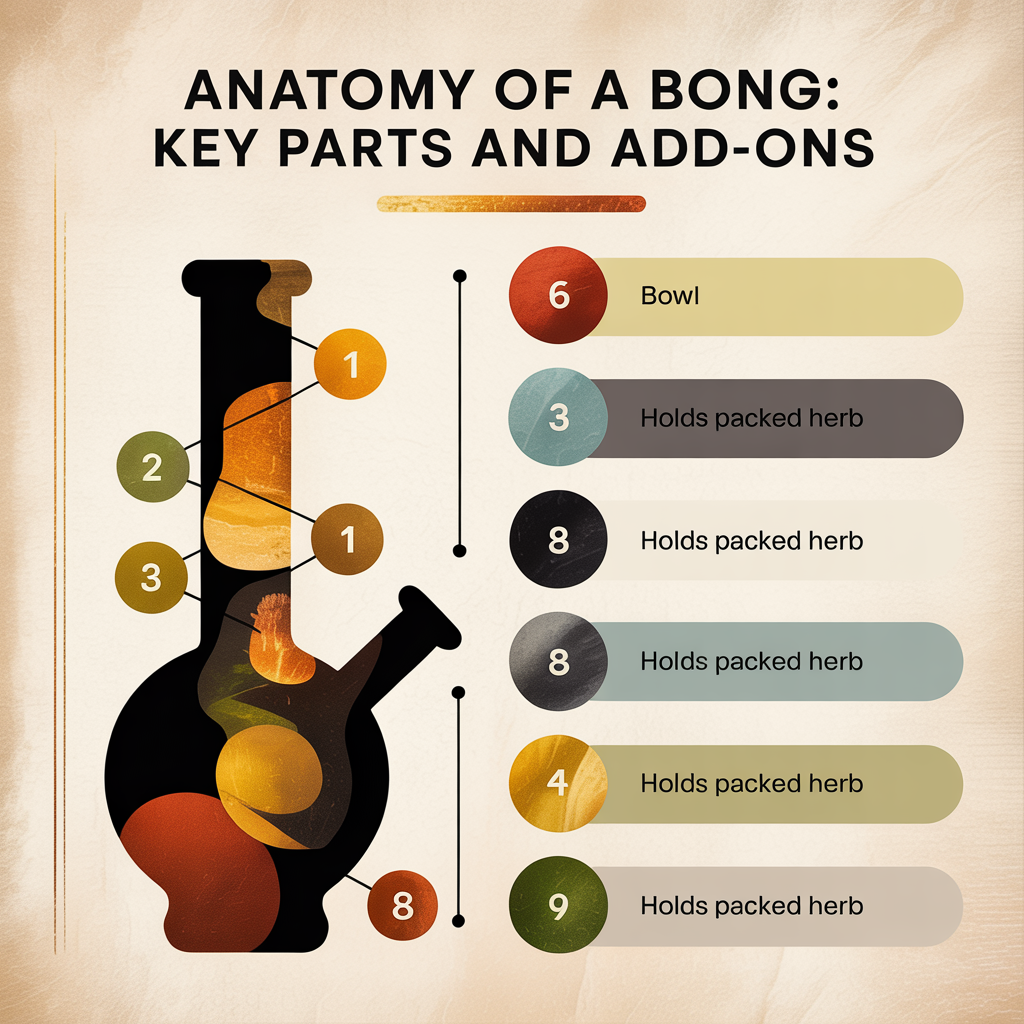
Bongs — also called water pipes — route smoke through a chamber of water before you inhale it. The water filters and cools the smoke, and the experience is noticeably different from a dry pipe. [1] Bongs are larger and require a stable surface, water, and more regular cleaning than hand pipes. A bong consists of five core parts: the bowl (where herb is packed), the downstem (which carries smoke into the water), the water chamber (where filtration and cooling happen), the neck (the passage to the mouthpiece), and the mouthpiece (where you inhale). [1]
Vaporizers and e-rigs heat your herb or concentrate at a lower temperature than combustion, producing vapor instead of smoke. [2] They require a power source or torch, and the upfront cost can be higher than a traditional piece. Maintenance varies by device. Many smokers who prioritize discretion or health-conscious choices explore this category.
Bubblers are a middle ground. They have a small water chamber like a bong but in a size closer to a hand pipe, making them pocketable. [5] The water filtration makes a noticeable difference compared to a dry pipe, and the compact size means you can take one places where a full bong would be impractical. Cleaning is more involved than a standard pipe but not as demanding as a bong.
Hand pipes are the most practical starting point for most beginners because they have no extra parts to lose, tend to be more durable, and give you the broadest range of style and price options to choose from. [2] If you know you want water filtration and you primarily smoke in one place, a bong is worth considering from the start.
What Is the Difference Between a Pipe, Bubbler, and Bong?
For a detailed side-by-side comparison, see our article on the difference between bubblers and bongs. The practical differences between a pipe, bubbler, and bong come down to four factors: how they deliver smoke, how portable they are, how much maintenance they need, and how much they cost. [5]
A hand pipe delivers smoke directly from the bowl to your mouth with no water involved. The hits are immediate and straightforward. There is nothing to fill, no water to dump, and no risk of leaking. Hand pipes are small enough to slip into a pocket and rugged enough to toss into a bag without worry. Cleaning is straightforward — a soak in isopropyl alcohol, a scrub with a pipe cleaner, and a rinse.
A bubbler adds a small water chamber to the pipe formula. The water filters and cools the smoke before it reaches you, which makes each hit feel noticeably different from a dry pipe. [5] Bubblers are compact enough to be portable, but you need to be careful not to tip them over when carrying one since the water can spill. Cleaning a bubbler is more involved than a dry pipe because the water chamber has nooks and crevices that need attention.
A bong routes smoke through a larger water chamber, giving it more contact time with water than a bubbler. The result is a noticeably different experience compared to both pipes and bubblers. [2] Bongs require more water, more counter space, and more regular cleaning than the other two options. They are also more fragile due to their size and shape. Drop a hand pipe and it may survive. Drop a tall bong and the outcome is less certain.
The choice most beginners face is a hand pipe versus a bong. If you need something you can take anywhere and smoke quickly without setup, a hand pipe wins. If you primarily smoke at home and want a specific style of hit, a bong is worth the extra cost and maintenance. [5] Many smokers eventually own all three and pick based on the situation.
How Much Should I Budget for Each Type of Smoking Piece?
Price ranges for smoking pieces span a wide spectrum, and understanding where each type starts helps you set a realistic budget before you shop. [3]
Hand pipes are the most affordable category. You can find a basic glass spoon pipe for just a few dollars at some retailers. These entry-level models work fine but use thinner glass that is more prone to cracks and chips. Spending $15–30 gets you noticeably better glass thickness and more interesting designs. At $30–50 you are in quality territory — thicker glass, better craftsmanship, and pieces that are genuinely enjoyable to use over the long term.
Bubblers typically start around $15–25 for basic models and climb from there. For $25–50 you can get a well-made bubbler with decent glass and a design that actually fits comfortably in your hand. [5]
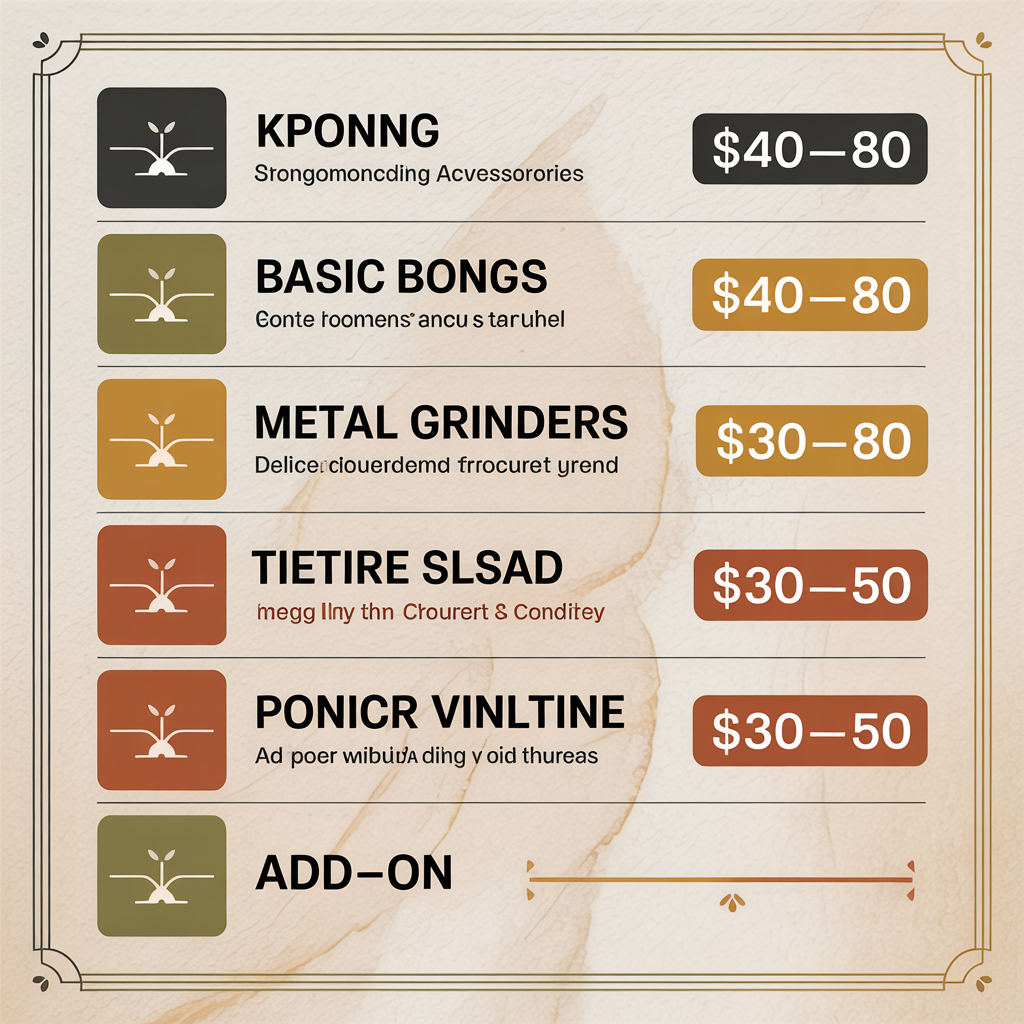
Bongs span a wide range. Functional basic bongs with thinner glass start around $40–80 and will get the job done. [3] Quality first bongs with thicker borosilicate glass (around 5mm walls), a solid downstem, and an ice catcher commonly start around $80–150. [3] Premium bongs with percolators, complex filtration systems, and artistic glasswork can run $200–500 or more. For a first bong, the $40–100 range is the practical sweet spot where you get solid construction without paying for features you will not appreciate yet.
Vaporizers and e-rigs have the widest price spread. Basic conduction vaporizers start around $30–50. Convection models with better temperature control and more even heating run $75–150. Tabletop vaporizers with precision control and large chambers can easily exceed $200.
For a first piece, the lowest-risk budget entry point is a hand pipe. If you know you want water filtration, a basic bong in the $40–80 range is a reasonable starting point where you get a functional product without overcommitting. [3]
What Accessories Are Worth Buying on a Budget?
Accessories matter every bit as much as the piece itself, but not all accessories are equal in how much they improve your setup. Some are non-negotiable. Others are nice to have but not worth spending limited budget on until you know how you will use your piece. [4]
Here are the essential accessories ranked by priority for a first budget setup:
A quality grinder is the single most important accessory in your setup. Metal grinders — typically aluminum — last years longer than acrylic alternatives and produce a more even grind throughout their lifespan. Acrylic grinders cost less upfront but wear down faster and may start producing uneven, muddy results after a few months of regular use. A metal grinder in the $30–50 range is the last grinder you will need to buy for a long time. [6]
A reliable butane lighter is your ignition source. Budget lighters work fine at first but tend to run out of fuel or crack after a few weeks of regular use. Spending $5–8 on a quality refillable butane lighter is a worthwhile upgrade that will last months.
Airtight storage keeps your herb from drying out and helps contain odor. Any small, sealable glass jar or specialized storage container works. This is not a place to spend much — a $5 container from a kitchen store does the job as well as anything marketed specifically to smokers.
Rolling trays keep your work surface contained and makes cleanup trivial. Metal trays are easy to clean and very affordable, typically $10–20. Even a small baking sheet from a kitchen store works in a pinch.
Cleaning supplies are an ongoing cost, not a one-time purchase. Isopropyl alcohol (90% or higher) and coarse salt are the core supplies. A small bottle of ISO and a bag of salt cost under $10 and last through many cleaning sessions. Pipe cleaners and cotton swabs help you reach tight spots. [4]
What Should I Look for When Buying My First Piece?
Whether you are buying a hand pipe, bubbler, or bong, the evaluation criteria are largely the same. These are the five practical factors that matter most in a first piece, listed in order of importance. [3]
Glass quality is the single most important material factor. Look for borosilicate glass — it handles temperature changes without cracking and does not affect the flavor of your herb. You can usually see the glass thickness at the base or the joint. Walls around 5mm thick hold up well for regular use without being unnecessarily heavy. [3]
Downstem quality determines how well your bong or bubbler filters smoke. A downstem with too-small percolator holes can restrict airflow and make it hard to inhale. A solid, well-made downstem that fits snugly in the joint gives you smooth pulls without fighting the piece. If you are buying a hand pipe, the stem is simpler — just make sure the airway is clear and the interior is not crudded up. [3]
Ease of cleaning matters more than most beginners expect. Pieces with fewer small parts and simpler shapes clean faster. Removable parts like a separate bowl and downstem make scrubbing much easier. Complex percolator chambers can look impressive but become a hassle to clean thoroughly. [3]
Size affects both your experience and how likely you are to use the piece regularly. An 8–12 inch bong is the most practical first size — large enough to provide a satisfying hit but small enough to handle easily, store conveniently, and clean without a full-sized sink. Going taller adds marginal smoothness but introduces real-world inconveniences that most first-time buyers end up regretting. [3]
Cooling features are nice to have but not worth paying a premium for on a first piece. Ice catchers are a notable exception — glass pinches on the neck that hold ice cubes, which cool the hit without adding much complexity. [1] If a piece at your price point includes an ice catcher, that is a bonus worth noting. Percolators add a different kind of filtration but complicate cleaning, so they are better left for a second piece once you know what you actually want.
How Do I Put Together a Complete Setup Under $100?
Putting together a complete setup under $100 is entirely achievable if you prioritize correctly. The key is spending most of your budget on the piece and grinder — those two items define your experience. Everything else can be sourced affordably. [4]
Here are three specific build combinations at different price points, all under $100 total:
This combination prioritizes portability and simplicity above all else. An entry-level hand pipe around $10–15 gives you a functional piece that will last if handled with reasonable care. A basic metal grinder ($15) is the non-negotiable anchor of this build — do not skip it. A quality butane lighter ($5), a small airtight container ($5), and an isopropyl alcohol kit ($5–10) round out the essentials. Total: roughly $40–50. You can add a rolling tray later when you find a spare $10.
This build trades up to a mid-range hand pipe for a noticeably better smoking experience. A quality hand pipe in the $25–40 range uses thicker glass and offers better design than a budget model. The metal grinder ($30) stays the same — this is the one accessory you should not downgrade. Add a butane lighter ($5), airtight storage ($5), rolling tray ($10), and cleaning supplies ($5–10). Total: roughly $65–80. This is the sweet spot for a first setup that you actually enjoy using rather than just tolerate.
This build swaps the pipe for a small bong and gives you water filtration at home without abandoning the budget. A basic functional bong ($40–60) delivers the bong experience at an accessible price point. Pair it with a butane lighter ($5), airtight storage ($5), and isopropyl alcohol and pipe cleaners ($5–10). Total: roughly $85–100. The trade-off here is no dedicated grinder — add one later when budget allows since hand-shredded herb is a noticeable step down in smoking quality. [4]
Treehouse Lifestyle offers free shipping on orders $150+, so adding a few accessories to any order can bring you over that threshold and save on delivery costs.
How Do I Keep My Setup Clean and Lasting?
Cleaning is the single biggest factor in how long your smoking gear lasts and how good each session feels. Residue buildup affects flavor, airflow, and overall enjoyment. A clean piece hits better and is more pleasant to use. [4]
Here is a simple maintenance routine organized by piece type, starting with what to do after every session and building up to periodic deep cleans:
For hand pipes, a quick ISO soak every 1–2 weeks is usually sufficient for light use. Break down your piece, set the components in a bag or container with enough isopropyl alcohol to submerge them, add a tablespoon of coarse salt, and let it soak for 30 minutes to a few hours. Scrub each part with a pipe cleaner or cotton swab, then rinse thoroughly with warm water and allow everything to air dry completely before reassembling.
For bubblers, clean every 3–5 uses since the smaller water chamber accumulates residue faster. The process is the same as hand pipes but may require extra attention to the water chamber where buildup hides in small curves and junctions. Use a slim pipe cleaner to reach into the stem and chamber where your fingers cannot go.
For bongs, change the water after every single session — this one habit makes the biggest difference in keeping your bong clean over time. A quick rinse with hot water after each use prevents residue from hardening onto the glass. Deep clean with ISO and salt once a week for moderate use, or every 3–4 sessions for heavy use. Pay special attention to the downstem — it is the part most likely to develop stubborn buildup. If your bong has a percolator, run pipe cleaners through each arm and rinse thoroughly, as residue in a perc directly affects hit quality. [4]
For vaporizers and e-rigs, follow the manufacturer’s guidelines for temperature settings and cleaning intervals. The heating element and any glass or metal pathways need periodic attention to remove buildup without damaging the device. ISO wipes work well for external components; check whether internal parts can safely be soaked or should only be wiped.
The most common mistake beginners make is letting a piece go too long without cleaning because they dread the process. The solution is simple — clean before the residue becomes hard. A piece that is cleaned regularly takes 5 minutes. A piece that has been neglected for a month takes an hour and may never fully recover its original hit quality.
Sources
- World of Bongs: Bong Parts for Beginner Guide – 2026 Updated
- Weedmaps: A Beginner’s Guide to Functional Glass: Choosing, Using, and Appreciating the Art of Smoke
- The Freeze Pipe: What to Look for in Your First Bong: A Beginner’s Guide
- Chill Steel Pipes: Must-Have Smoking Accessories for Beginners: The Ultimate Guide
- Phytopedia: Pipe vs. Bong: Which Is Better for Beginners?
- Munchmakers: Metal vs Acrylic vs Wood Grinders: Complete Material Comparison