

Choosing cannabis apparel comes down to three things: pick the fit category (slim, relaxed, or oversized) that matches how you dress, choose a fabric weight that suits the print method, and plan for the 2–5% first-wash shrinkage that ring-spun cotton picks up in hot water. Wash inside out in cold water and air-dry when you can [1] [3] [4].
What fit styles are commonly used for cannabis-themed t-shirts and hoodies?
Most cannabis-themed t-shirts and hoodies are cut in one of three fit categories: slim, relaxed, or oversized. The labels sound similar, but they describe three different patterns, not just three sizes of the same shirt. A quick read of each one will save you from picking a tee that hugs too tight or a hoodie that swallows your frame.
Slim fit sits close to the body with a clean, narrow shape. It works well when you want the graphic to feel sharp and tucked-in rather than draped. Relaxed fit is the everyday-friendly middle ground — comfortable, balanced, and easy to layer without looking oversized. Oversized fit is intentionally loose and silhouette-driven, with shoulders that drop, sleeves that run a little longer, and a body that drapes away from the chest.
When you shop the Treehouse Lifestyle T-Shirts and Hoodies / Sweatshirts collections, you will usually see one of those three labels in the product description. Pick the category that matches the way you already dress, then check the size chart to confirm. That single step removes most of the guesswork that comes from staring at a model photo and wondering how the shirt will look on you.
- Slim fit: close to the body with minimal volume — best for a sharp, layered look under jackets or open flannels.
- Relaxed fit: balanced and everyday-friendly with extra room that does not look oversized — the most versatile pick for daily wear.
- Oversized fit: intentionally loose and silhouette-driven, with dropped shoulders and longer sleeves — a different pattern, not just a size up.
| Fit category | How it sits | Best for | Watch out for |
|---|---|---|---|
| Slim | Close to the body, minimal volume | Layering under jackets, sharper graphic look | Can feel tight across the chest if you are between sizes |
| Relaxed | Balanced and easy, with extra room | Everyday wear, the most versatile option | Less shape through the torso than slim fit |
| Oversized | Loose, silhouette-driven, dropped shoulders | Statement looks and longer sleeves | Not the same as a slim fit in a larger size — the pattern is different |
How do you measure your chest and torso to pick the right size in a cannabis graphic tee or hoodie?
A good fit starts with two numbers: your chest circumference and your favorite tee, laid flat. Once you have those, every size chart becomes a quick compare instead of a guess. You can do all of this with a soft tape measure and a flat table in about five minutes.
Start by laying a t-shirt you already love on a flat surface. Smooth out wrinkles, then measure across the front of the shirt about one inch below the armpit, from one side seam to the other. That number is the flat chest width. Double it to get the full chest circumference the brand uses in its size chart — a 22-inch flat chest width equals a 44-inch chest measurement [3]. The same trick works for hoodies; just lay them flat the same way.
If you do not have a favorite shirt to measure, take your own chest measurement with a soft tape measure around the fullest part of your chest, keeping the tape level under the arms. Add 1–2 inches of ease for a relaxed fit and 3–4 inches for an oversized fit, then pick the size whose flat-chest number matches.
If you want to browse once you have your numbers, the Treehouse Lifestyle Apparel collection sorts by size and fit, and pieces like the Windbreaker Jacket follow the same flat-measure sizing we just walked through. For a wider look at how apparel fits into a cannabis lifestyle gift rotation, the What Are the Best Cannabis Lifestyle Gifts and Accessories? parent guide is a useful companion read.
- Lay the shirt flat and smooth out wrinkles before you measure — bumps in the fabric will throw off the number.
- Measure across the front about one inch below the armpit from seam to seam; that is the flat chest width.
- Double the flat chest width to get the full chest circumference the brand lists on its size chart (a 22-inch flat width = 44-inch chest) [3].
- Compare that number to the brand’s size chart and add 1–2 inches of ease for a relaxed fit or 3–4 inches for an oversized fit.
- Repeat the same flat-measure routine on a hoodie you already own to translate the fit you like into a new purchase.
What fabric weight is best for an everyday-wear cannabis shirt or hoodie?
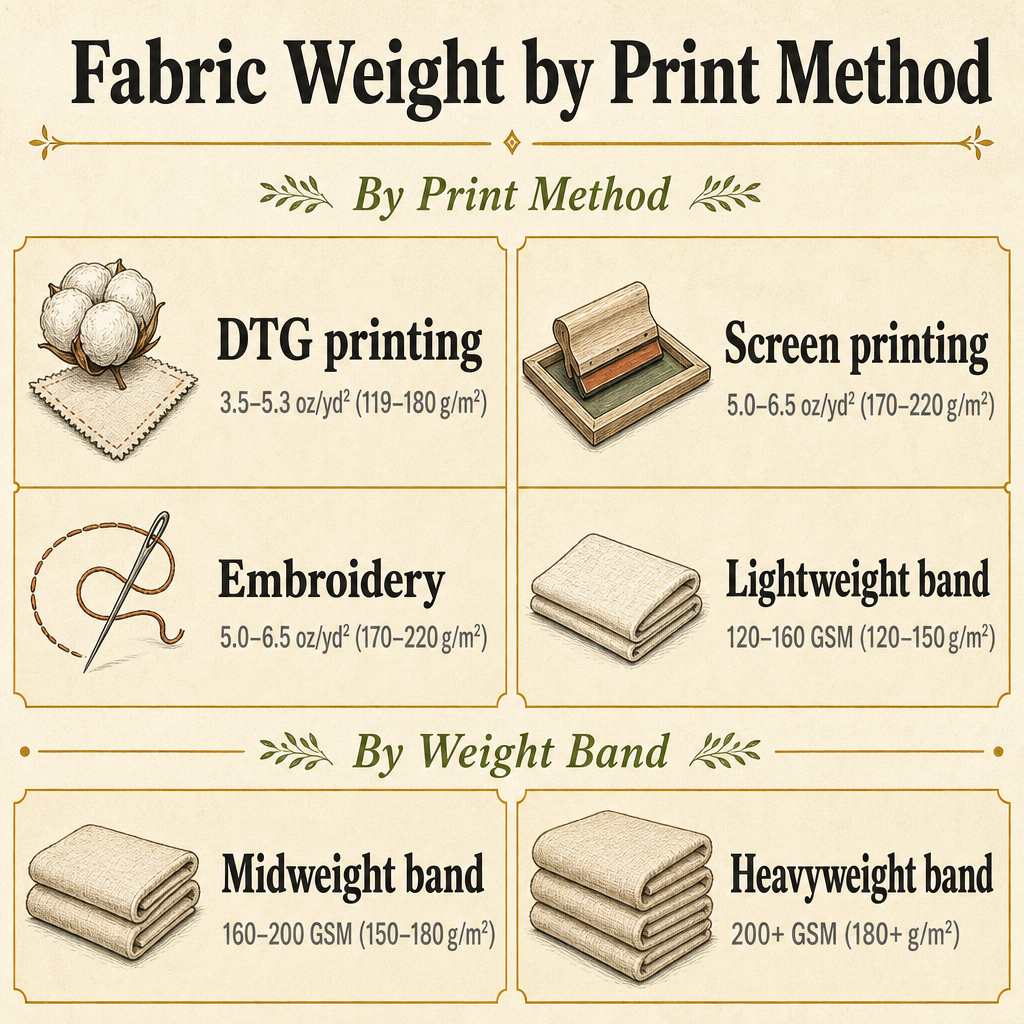
Fabric weight is the single biggest clue to how a tee or hoodie will feel after a season of wear. It is measured in ounces per square yard (oz/yd²) in the United States and in grams per square meter (GSM) almost everywhere else, and the two convert with a simple rule: multiply oz/yd² by 33.91 to get GSM [1]. A typical cotton t-shirt lands somewhere between 3.5 and 6.5 oz/yd² (119–220 g/m²), and the heavier the fabric, the denser, more structured, and more durable the garment feels.
Brands and custom apparel guides usually split fabric into three bands: lightweight at 120–160 GSM, midweight at 160–200 GSM, and heavyweight at 200+ GSM. The 165–185 GSM range tends to be the everyday-wear sweet spot because it gives you enough opacity to avoid a see-through tee, enough softness to wear against skin, and enough density to survive a regular wash cycle [1]. Lighter fabrics feel cooler and drape softer; heavier fabrics feel structured, hold their shape, and look better under a printed graphic.
The print method on a graphic tee should match the fabric weight. DTG (direct-to-garment) printing works best at 3.5–5.3 oz/yd² on 100% cotton or high-cotton blends. Screen printing performs best at 5.0–6.5 oz/yd². Embroidery needs 5.0–6.5 oz/yd² because fabrics below 4.2 oz/yd² tend to pucker under needle tension [1]. If a listing does not say what the print method is, the fabric weight is still a strong tell about how long the graphic will hold up.
If you want a deeper dive on choosing pieces that hold up wash after wash as a gift, the What Cannabis Apparel Makes the Best Gift? gift guide walks through the same fabric-weight logic in a gift-buying context.
- Lightweight (120–160 GSM / ~3.5–4.7 oz/yd²): drapes softly, feels cool, and works best under light layering — not ideal for a bold graphic.
- Midweight (160–200 GSM / ~4.7–5.9 oz/yd²): the everyday-wear sweet spot at 165–185 GSM for opacity, softness, and durability.
- Heavyweight (200+ GSM / ~5.9+ oz/yd²): structured and durable, the best canvas for screen printing and heavier embroidery.
Which hoodie fit should you pick for everyday wear — slim, relaxed, or oversized?
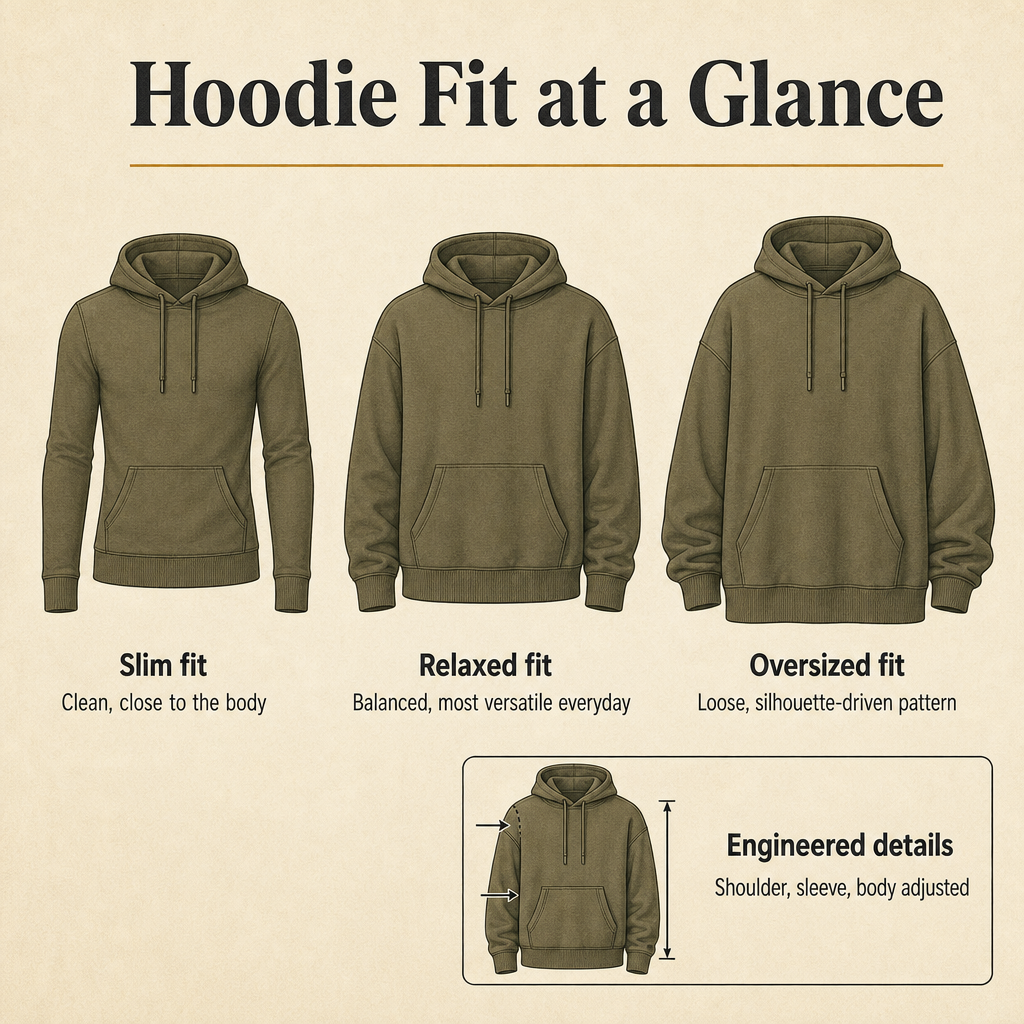
Hoodie fit terminology splits into the same three categories you see on tees, with one important twist: an oversized hoodie is a different pattern, not just a size up [2]. Designers adjust shoulder placement, sleeve width and length, body proportions, and fabric weight to engineer each fit. When you compare hoodies, look at the shoulder seam relative to your own shoulder and the sleeve length relative to your wrist — those two details tell you which pattern you are actually holding.
Slim hoodies fit closer to the body with minimal volume. They look clean under a jacket and work well when you want the graphic front-and-center without a lot of fabric movement. Relaxed hoodies offer more room without looking oversized and are often the most versatile for everyday wear [2]. Oversized hoodies sit loose, with shoulders that drop past your natural shoulder line, sleeves that run long, and a body that drapes away from your chest. Looser fits trap more air for warmth, while slimmer fits sit closer to the body [2].
If you only own one cannabis hoodie and wear it three or four days a week, relaxed fit is the safest pick. If you already have a relaxed hoodie and want to add a second piece with a different look, an oversized hoodie gives you a silhouette-led statement, and a slim hoodie gives you a layering piece for cooler days. If you are building a small rotation around a graphic hat like the Treehouse Dad Hat • White, a relaxed hoodie matches the easy, everyday look best.
- Slim fit: clean, close to the body with minimal volume — best for layering under jackets and a sharp, tucked-in look.
- Relaxed fit: balanced, everyday-friendly, and the most versatile — extra room without looking oversized.
- Oversized fit: intentionally loose, silhouette-driven, with dropped shoulders and longer sleeves — designers adjust shoulder, sleeve, body, and fabric weight to create the look, so size up does not give you the same result [2].
- Warmth: looser fits trap more air while slimmer fits sit closer to the body, so slim runs cooler and oversized runs warmer [2].
How much does a 100% cotton or ring-spun cotton tee shrink after washing?
Cotton tees and hoodies shrink, and the numbers are more predictable than most shoppers expect. Most ring-spun cotton t-shirts shrink 2–5% after a first hot wash and tumble dry, and that figure drops to under 1.5% if you wash cold and air-dry [4]. Pre-shrunk (Sanforized) ring-spun knit fabric is allowed up to 5% residual shrinkage under the Sanforized specification measured to ISO 6330, and practitioner test data has measured pre-shrunk ring-spun jerseys shrinking up to 5.33% under hot-wash, hot-dry conditions [4].
Ring-spun cotton is made by twisting and thinning cotton fibers on ring frames before spinning them into yarn, which produces a softer, finer, and more durable fabric than carded open-end cotton [5]. The trade-off is that ring-spun cotton is more prone to shrinking in hot water and high-heat drying, which is exactly why care guides recommend cold water and low-heat drying for it.
Ring-spun cotton fits true to its labelled size when new. The ‘runs small’ perception typically comes from wash shrinkage, not from inaccurate labeling — buyers who consistently size up are usually compensating for expected shrinkage [4]. If you plan to machine-dry, sizing up one is the practical move; if you wash cold and air-dry, you can order true to size. For a broader look at how accessories and apparel add up across a cannabis lifestyle budget, the How Much Does a Complete Smoking Setup Cost at Every Budget Level? guide is a useful side read.
- Cold wash + air-dry: residual shrinkage drops to under 1.5% — order true to size [4].
- Hot wash + tumble dry: expect 2–5% shrinkage on a first cycle — consider sizing up one [4].
- Pre-shrunk (Sanforized) ring-spun knit: up to 5% residual shrinkage allowed under ISO 6330; test data has hit 5.33% under hot-wash, hot-dry conditions [4].
- Ring-spun vs carded open-end: ring-spun is softer, finer, and more durable — and more prone to shrinking in hot water and high-heat drying [5].
What should you look for in a printed graphic to know it will hold up to everyday wear?
A printed graphic that holds up to everyday wear comes from a fabric-weight and print-method pairing, not from the brand name on the tag. Once you know how the print was applied, you can predict how the graphic will look after ten washes. The print method should match the fabric weight the brand used.
DTG (direct-to-garment) printing lays ink into the fibers of the fabric, which is why it works best at 3.5–5.3 oz/yd² on tightly woven 100% cotton or high-cotton blends [1]. Screen printing pushes ink through a mesh onto the surface, which is why it performs best at 5.0–6.5 oz/yd² [1]. Embroidery uses thread tension that pulls at the fabric, which is why it needs 5.0–6.5 oz/yd² — anything below 4.2 oz/yd² tends to pucker under the needle [1].
If a listing does not name the print method, the fabric weight and the weave still tell you a lot. A tightly knit midweight tee (165–185 GSM) tends to hold a DTG print well. A heavier cotton tee or fleece hoodie tends to hold a screen print or a small embroidered patch well. When in doubt, message the brand and ask which method they used — the answer is usually short and direct.
- DTG printing: best on tightly woven 100% cotton or high-cotton blends at 3.5–5.3 oz/yd² — the ink soaks into the fibers for a soft hand [1].
- Screen printing: best on mid-to-heavyweight fabric at 5.0–6.5 oz/yd² — the ink sits on the surface and lasts longer on a denser knit [1].
- Embroidery: needs 5.0–6.5 oz/yd² because fabrics below 4.2 oz/yd² tend to pucker under needle tension — heavier knits hold the thread cleanly [1].
How do you wash a graphic-printed cannabis shirt without cracking or fading the print?
A graphic tee does not need special equipment to last. It needs the same handful of habits, applied every wash. Most cracking and fading comes from heat, harsh detergent, and direct ironing on the print — all three are easy to avoid.
Turn the shirt inside out before you wash it. That single step protects the print from rubbing against other clothes, the drum of the machine, and the detergent. Wash in cold water on a gentle cycle, and skip harsh detergent and bleach, which can fade colors and crack or peel prints [6]. Spot-clean stains instead of scrubbing the graphic.
Air-dry when you can — flat or on a line is best. If you use a dryer, tumble dry on low heat, because high heat is what cracks screen prints and DTG prints and what shrinks cotton knits the most [5] [6]. When it is time to iron, avoid direct ironing on the print — use a protective cloth or iron inside-out [6]. Apply this routine tonight and the graphic should look the same a year from now as it did the day it arrived.
- Turn the shirt inside out before washing to keep the print from rubbing against the drum and other clothes.
- Wash in cold water on a gentle cycle and skip harsh detergent and bleach, which fade colors and crack prints [6].
- Spot-clean stains instead of scrubbing the graphic, and never scrub directly on the print.
- Air-dry when you can — flat or on a line — or tumble dry on low heat; high heat is what cracks and peels prints and shrinks cotton [5] [6].
- Avoid direct ironing on the print; use a protective cloth or iron the shirt inside-out [6].
Frequently Asked Questions
What is the difference between slim, relaxed, and oversized hoodie fit?
Slim fit sits close to the body with minimal volume; relaxed fit is balanced and everyday-friendly with extra room that does not look oversized; oversized fit is intentionally loose and silhouette-driven. Designers adjust shoulder placement, sleeve width and length, body proportions, and fabric weight to create each fit — an oversized hoodie is a different pattern, not just a size up [2].
Should I size up for a heavyweight cotton hoodie to allow for shrinkage?
Yes — because most ring-spun cotton tees and hoodies shrink 2–5% on a first hot wash and tumble dry, sizing up is the practical move if you plan to machine-dry [4]. If you wash cold and air-dry, residual shrinkage drops to under 1.5% and you can order true to size.
How do I know if a graphic tee print will last?
Match the print method to the fabric weight. DTG (direct-to-garment) printing works best at 3.5–5.3 oz/yd² on tightly woven 100% cotton or high-cotton blends; screen printing performs best at 5.0–6.5 oz/yd²; embroidery needs 5.0–6.5 oz/yd² because fabrics below 4.2 oz/yd² tend to pucker under needle tension [1].
Does ring-spun cotton really shrink more than other cotton?
Ring-spun cotton is softer and more durable than carded open-end cotton, and it is also more prone to shrinking in hot water and high-heat drying [5]. The fabric itself fits true to its labelled size when new; the perception that it runs small comes from cumulative wash shrinkage when buyers wash and dry hot [4].
What is the best way to dry a graphic-printed cannabis shirt?
What should you do next to pick a cannabis graphic tee or hoodie you will actually wear?
Start with the fit category that matches how you already dress — relaxed for the most versatility, slim for a sharper layered look, oversized when you want a silhouette-led statement. Then pull out a tee you love, lay it flat, and write down its flat chest width so you can compare it to the brand’s size chart without guessing.
Once the size is settled, look at the fabric weight. A 165–185 GSM midweight tee is the everyday-wear sweet spot for opacity, softness, and durability, and it works with most print methods [1]. If the graphic is screen-printed or embroidered, lean toward 5.0–6.5 oz/yd². If it is DTG, a 3.5–5.3 oz/yd² tightly woven cotton will hold the print best.
Plan for 2–5% shrinkage if you will machine-dry, or under 1.5% if you wash cold and air-dry [4]. Build the care routine tonight — inside out, cold water, gentle cycle, low heat or air-dry, no direct iron on the print — and the graphic will look the same a year from now as it did the day it arrived [5] [6]. Browse the Treehouse Lifestyle apparel collection, grab a tee and a hoodie in your fit and size, and free shipping kicks in on orders $150+ so you can compare a couple of pieces without thinking about the cart total.
Sources
- Printful: How much does a shirt weigh? T-shirt weight guide
- The Unrivaled Brand: What Is a Hoodie Fit? Slim vs Relaxed vs Oversized
- Printful: How to measure a t-shirt: A complete guide for online sellers
- NatuClothes: Does Ring Spun Cotton Shrink? Measured Data and Sanforized Tolerances
- Cotton Fabric (YourCotton): How To Care For Ringspun Cotton To Avoid Shrinkage
- Mercha: How to Stop Your Tees from Peeling, Cracking & Fading – Care Tips You Need