

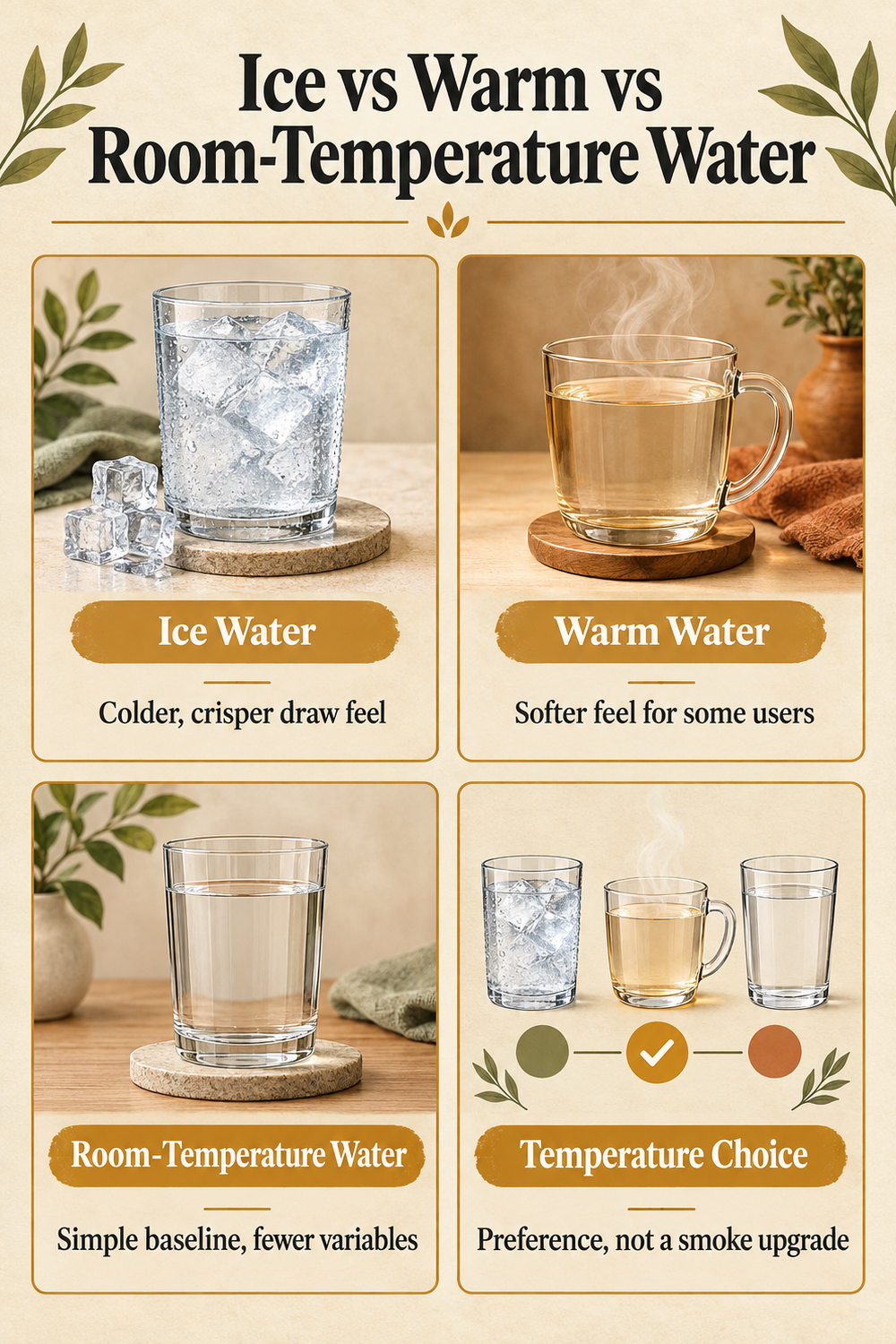
Ice in bong setups mainly changes temperature and feel, not safety. Ice water can make the neck and mouthpiece feel colder and crisper, while warm water may feel softer to some users. Room-temperature fresh water is the easiest baseline. Choose by comfort, hardware fit, meltwater control, and cleanup. [1] [3]
What Changes When You Put Ice in a Bong?
Putting ice in a bong mostly changes the temperature of the path above the water chamber. The neck and mouthpiece feel colder, and the draw can feel more crisp. That is why many people like ice in taller pieces, especially pieces with a built-in ice pinch. It is a comfort choice, not a proof that the smoke itself has been upgraded. [1]
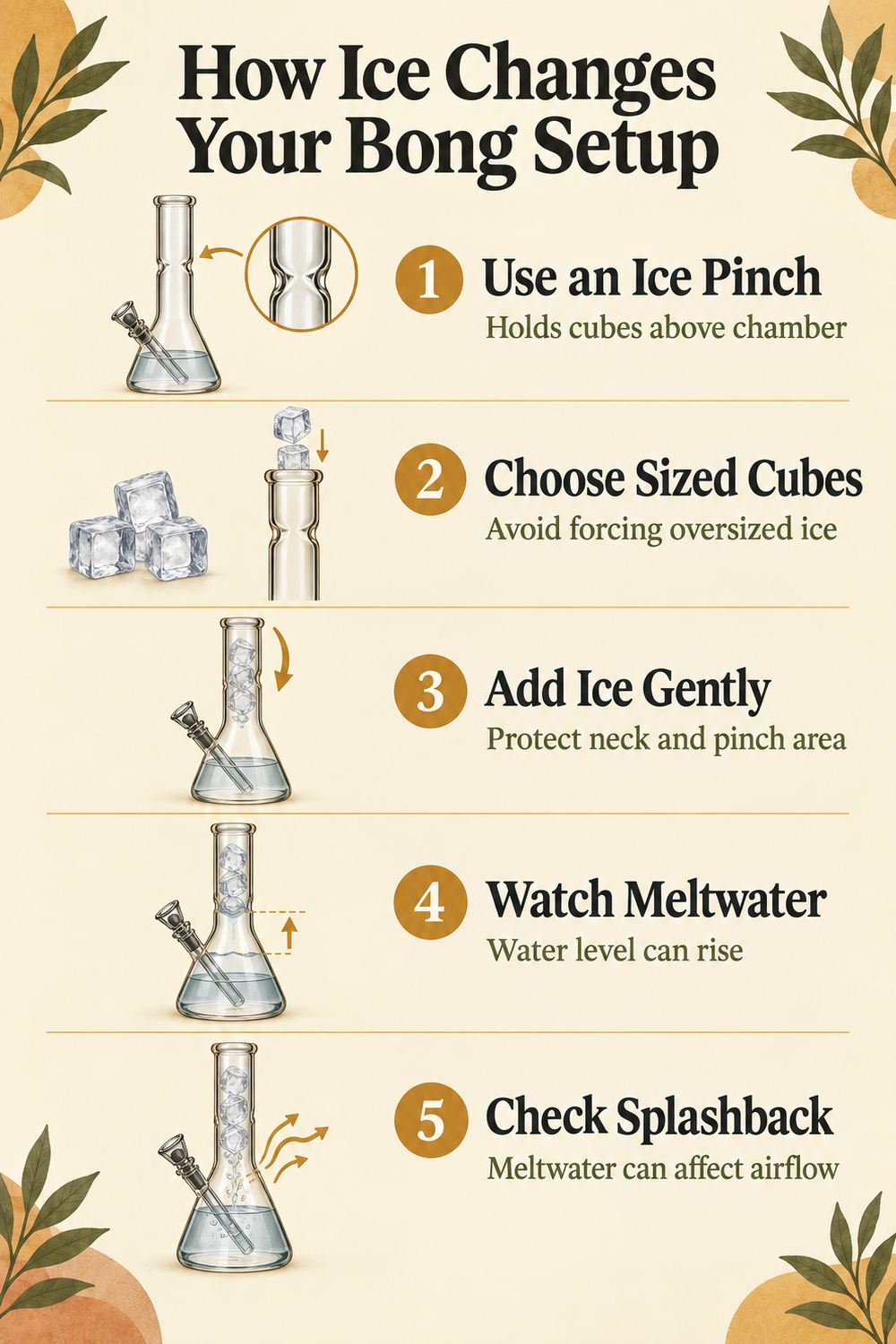
Ice also changes the setup. You need enough neck space for cubes to sit above the chamber. You need cubes that fit without force. You also need to watch what happens as the ice melts. Meltwater moves down into the chamber and can raise the water level during the session. If the level gets too high, the draw may feel restricted or water may reach places you do not want it to reach. [2] [3]
Think of ice as one accessory choice among many Accessories. It changes the feel of the piece, much like a different mouthpiece shape, height, or chamber style changes the way a bong handles. It does not replace regular cleaning, careful water levels, or smart glass care. If cleaning is already on your mind, How Often Should You Clean Smoking Accessories? is a good companion topic because residue and old water can affect how any setup feels.
The most useful way to decide is to test a simple baseline first. Try fresh room-temperature water, then try a small amount of ice in a piece made for it. Pay attention to comfort, splashback, and whether the extra setup is worth it for you.
- Colder neck feel: ice chills the upper part of the piece and mouthpiece area.
- Different draw feel: many users notice a colder, crisper sensation, but that is still a preference note.
- More variables: melting ice can raise the water level and change airflow.
- Hardware needs: ice belongs in a piece with an ice pinch or catcher, not loose in any random neck.
Is Warm Water Better Than Ice Water in a Bong?
Warm water is not automatically better than ice water. Ice water, warm water, and room-temperature water each create a different experience. The best choice is the one that fits your comfort, your piece, and how much setup you want to do. A good comparison starts with temperature, then looks at effort, mess, and predictability. [1]
Ice water is the most noticeable option because it makes the neck and mouthpiece colder. Some users like that sharp, chilled feel. Others find it too cold or too much work. Ice also melts, so it asks you to watch the water level. Warm water goes the other direction. It may feel gentler to some users because the piece is not cold, but it should be warm, not hot. Room-temperature fresh water is the low-drama option. It is simple, repeatable, and easy to reset.
If your bong has a percolator, temperature is only one part of the setup. Air path, chamber size, water level, and percolator style also affect how the piece behaves. For a deeper look at that hardware side, see What Is a Percolator Bong and How Does It Work?. The key is not to expect water temperature to do every job. It is one setting in the whole setup.
Research and public guidance support careful language here. Water temperature may change feel, but it should not be framed as a lung upgrade or a way to remove the concerns linked with smoked cannabis. The CDC notes that smoking cannabis in bongs, bowls, joints, or blunts can affect lung tissue. [4] A separate indoor-air study measured large increases in fine particles during social bong smoking sessions. [6]
- Ice water: best for people who enjoy a very cold, crisp feel and do not mind watching meltwater.
- Warm water: best for people who dislike a cold mouthpiece and want a less chilly setup.
- Room-temperature water: best for a simple baseline with fewer moving parts.
- Any temperature: best treated as a preference choice, not as a claim about smoke quality.
| Water choice | What changes | Best fit |
|---|---|---|
| Ice water | Colder neck, colder mouthpiece, more meltwater to monitor | Users who like a crisp, chilled setup |
| Warm water | Less cold feel, no ice to load, must avoid hot water | Users who dislike a chilled draw |
| Room-temperature water | Simple, repeatable, easy to refresh | Users who want a no-fuss baseline |
What Is a Bong Ice Catcher or Ice Pinch?
A bong ice catcher, ice pinch, or ice notch is a built-in restriction in the neck of a water pipe. It is usually made from small inward glass points or shaped notches. Those points support ice above the main chamber, so the cubes sit in the neck instead of dropping straight into the water. [2]
An ice catcher is a convenience feature. It is not a separate filtration system, and it is not a promise that the bong is higher quality. It simply gives ice a place to rest. The rest of the piece still matters: glass thickness, base stability, neck width, water level, and cleaning access all affect daily use.
This feature is easy to confuse with other add-ons. An ash catcher sits outside the main bong and changes the path before the smoke enters the main chamber. If you are comparing those terms, What Are Ash Catchers and Do You Actually Need One? explains that separate accessory. An ice pinch is built into the neck itself, so it is part of the bong body.
When shopping, look closely at the photos. You should be able to see where the ice sits, how wide the neck is, and whether the pinch area looks easy to inspect. A narrow neck may only accept small cubes or crushed ice. A wider neck may be easier to load, but the piece still needs a solid pinch shape to hold the ice where it belongs.
- Ice catcher: the general shopper term for a bong feature that holds ice.
- Ice pinch: small inward glass points or notches that support cubes in the neck.
- Ice notch: another term for the same kind of built-in support area.
- Main chamber: the lower water area where meltwater can collect after ice melts.
How Do You Use Ice in a Bong Without Making a Mess?
The easiest way to use ice with less mess is to start with the right piece. Use ice only in a bong designed to hold it. A dedicated ice pinch keeps cubes in the neck and helps stop them from falling into the chamber all at once. If you are browsing ice-ready pieces, Ice Bongs is the natural category to compare.
Start small. One or two properly sized cubes are easier to manage than a packed neck full of ice. Add them gently from the top. Do not force cubes through the mouthpiece or push them past a tight spot. If a cube does not fit, choose a smaller piece of ice instead. [2]
After the ice is in place, check the water level before and during use. Ice melts into the chamber, which can slowly raise the level. Too much water can change airflow and increase splashback. If the draw starts to feel blocked, or if water gets too close to the mouthpiece, stop and empty a little water before continuing. [3]
A little planning keeps this simple. Fill the chamber slightly lower than you would for a no-ice setup, then let the meltwater bring the level up. Keep a towel nearby the first time you try a new piece with ice. Once you know how fast the ice melts and how the chamber responds, the routine gets much easier.
- Use a bong with an ice catcher, ice pinch, or ice notch.
- Choose cubes that fit through the neck without pressure.
- Add ice gently so it lands on the pinch, not hard against it.
- Start with a slightly conservative water level before the ice melts.
- Pause and pour out excess water if splashback starts or airflow changes.
What Should You Watch for With Glass, Ice, and Warm Water?
Glass care matters when ice is involved. The pinch area carries the weight of the cubes, so it deserves a quick check before use. Look for chips, cracks, or sharp edges around the neck and pinch points. If anything looks damaged, do not load ice into that area. [2]
Avoid sudden extreme temperature swings. Do not take a very cold piece and add very warm water right away. Do not use hot water. If warm water is part of your preference test, keep it comfortably warm and conservative. CPSC guidance on tap-water scalds is a good reminder that hot water can burn skin faster than many people expect, especially as temperatures rise. [7]
The same care applies to complex glass. Pieces like Recycler Bongs may have extra chambers and paths, so water level and cleaning access matter even more. More parts can mean more places for water to sit. That does not make the piece bad; it just means you should learn the fill line and clean routine before adding ice to the mix.
A simple rule helps: never force, never shock, and never ignore water level. If the setup feels fussy, go back to room-temperature water. A bong does not need ice to work as designed, and the easiest setup is often the one you will keep clean and use correctly.
- Inspect the ice pinch and neck for chips or cracks before loading ice.
- Use smaller cubes instead of pushing oversized cubes through the neck.
- Avoid hot water and sudden shifts between very cold and very warm glass.
- Learn the normal water line before experimenting with ice or warm water.
- Empty, rinse, and dry the piece after use so meltwater does not sit in the chamber.
How Should You Shop for a Bong With an Ice Catcher?
Shopping for an ice-friendly bong is mostly about fit and daily use. Start with the ice catcher itself. The pinch should be visible, placed high enough to keep ice above the chamber, and shaped so cubes can rest without sliding straight down. Then look at the neck width. A neck that is too narrow may make loading ice annoying. A neck that is too wide still needs a good pinch design. [2]
Base shape matters too. Beaker bongs often feel stable on a table because they have a wider bottom. Straight tubes can feel clean and simple, but height, glass thickness, and base diameter still matter. If you want to compare the broader category, start with Bongs and filter for pieces that match your size, budget, and cleaning preferences.
A product page should help you answer practical questions. Can you see the ice pinch in the photos? Does the description mention borosilicate glass? Is the water level easy to see? Does the mouthpiece look comfortable? Is the downstem or bowl easy to remove for cleaning? If the listing leaves you guessing, choose a simpler piece or ask before buying.
Product-specific choices can be personal. A piece like Psychedelic Pineapple Beaker Bong may appeal to shoppers who want a beaker shape and a more playful look, while another shopper may prefer a plain clear tube. Either way, do not buy an ice bong only because it says ice in the name. Buy it because the size, neck, base, water visibility, and cleaning access make sense for how you will use it.
This is also where shipping and cart planning can matter. If you are adding screens, cleaning tools, a replacement bowl, or other small parts, Treehouse Lifestyle offers free shipping on orders $150+. That detail belongs in a shopping section like this, not in the temperature comparison, because it is a cart note rather than part of how the setup feels.
Before checkout, compare the full routine, not just the headline feature. A taller piece may feel impressive, but it also needs storage space, careful handling, and a sink area where you can rinse it without bumping the glass. A smaller piece may be easier to clean and move, even if it holds less ice. Also check whether replacement bowls, downstems, screens, and cleaning supplies are easy to add to the same cart. Those small details help the setup stay useful after the first week, which matters more than one cold test draw.
- Ice-catcher design: look for a visible pinch or notch that holds cubes above the chamber.
- Neck width: make sure normal small cubes can fit without pressure.
- Stable base: choose a shape that feels steady once water and ice are added.
- Water visibility: clear glass makes it easier to monitor meltwater and fill level.
- Cleaning access: removable parts and simple paths make routine care easier.
- Overall fit: match height, weight, style, and budget to your actual routine.
Frequently Asked Questions
Does ice in a bong make the draw smoother?
Ice can make the draw feel colder and crisper, which some people may describe that way. The better wording is that ice changes temperature and feel. It should not be presented as proof that ice changes the smoke in a protective way.
Is warm water or ice water better for a bong?
Neither is best for everyone. Ice water fits people who like a cold, crisp setup. Warm water may feel softer to some users. Room-temperature fresh water is the easiest baseline when you want fewer variables.
Do you need an ice catcher to put ice in a bong?
You should use ice only with a piece designed to hold it. An ice catcher, ice pinch, or ice notch supports properly sized ice above the main chamber, so cubes do not drop freely into the water chamber.
Can melting ice change how a bong works during a session?
Yes. As ice melts, the water level can rise. That can change airflow and increase splashback. Monitor the level and pour out excess water when needed.
Can you use hot water in a bong instead of warm water?
Avoid hot water. If you test warm water, keep it conservative and comfortable to the touch. Public scald guidance warns that hotter tap water can burn skin quickly as temperatures rise.
Which Bong Water Temperature Should You Choose?
Choose the water temperature that fits your preference and your piece. Ice water gives the coldest, crispest feel, but it adds meltwater and needs an ice catcher. Warm water may feel less chilly to some users, but it should never be hot. Room-temperature fresh water is the simple baseline and the easiest choice to repeat.
If you want to experiment, change only one thing at a time. Start with a clean piece and fresh room-temperature water. Then try a small amount of ice in a bong built for it. On another day, try conservative warm water. Compare comfort, water level, airflow, and cleanup. That gives you a real answer for your setup without pretending temperature is more than it is.
For shopping, focus on hardware. Look for a visible ice pinch, neck width that fits small cubes, a stable base, easy water-level checks, and cleaning access. Those details matter more than a big claim on the product page.
A final practical tip is to write down what worked after each test. Note the water level, how many ice cubes you used, whether splashback appeared, and how easy the piece was to rinse afterward. That small habit makes the next session simpler because you are not guessing from memory. If you share the piece with another adult, reset with fresh water before comparing notes so each person is judging the same clean baseline. For most shoppers, the winning setup is not the coldest or warmest option. It is the repeatable routine that feels comfortable, keeps the glass easy to manage, and fits the piece you already own.
Sources
- This Is Why I’m High: Hot vs Cold Bong Water: What Temperature Actually Changes
- SimpleGlassPipe: What Is an Ice Catcher in a Glass Water Pipe and Does It Matter
- Prism Water Pipes: Using Ice in a Bong: Benefits, Risks, and Tips
- Centers for Disease Control and Prevention: Cannabis and Lung Health
- Chemical Research in Toxicology / PubMed: A comparison of mainstream and sidestream marijuana and tobacco cigarette smoke produced under two machine smoking conditions
- JAMA Network Open / PubMed: Fine Particulate Matter Exposure From Secondhand Cannabis Bong Smoking
- U.S. Consumer Product Safety Commission: Avoiding Tap Water Scalds