
This dab torch guide walks buyers through matching torch format, fuel, and controls to their rig and workspace. The main formats are compact refillable butane micro torches, larger refillable torches, and cylinder-mounted propane or MAP-Pro torches — each with a different balance of run time, handling, and table space.
Beyond format, the controls that matter are adjustable flame output, a reliable ignition system (instant on/off or trigger), a stable base, and a comfortable grip. Buyers should also check fuel compatibility, since a torch is only designed to work with the gases its manufacturer lists.
The rest of this guide walks through how torch formats compare, which controls change everyday use, what to look for in a fuel system, how to size a torch to your banger, the basics of inspecting and storing compressed-gas cylinders, and when an electric e-nail makes more sense than an open-flame torch.
What Jobs Does a Dab Torch Actually Do?
A dab torch is the heat source that sits between your fuel supply and your banger. It does not hold your concentrate, filter your vapor, or replace any of the glass in your rig. Its only real job is to put enough heat into the banger bucket at the right pace so that you can heat, cool, and dab on your own schedule. Once you understand that narrow job, the buying decision gets simpler.
Every dab torch on the market is built around three working parts: a fuel chamber (refillable or cylinder-fed), an ignition system (a spark wheel or electronic trigger), and a nozzle that shapes the flame. The chamber decides how long you can dab before refilling. The ignition decides how reliably the torch lights each session. The nozzle and flame controls decide how easy it is to aim heat at the banger without scorching the rest of your setup.
Before you compare brands or chase maximum flame temperature, list out the jobs you need the torch to do at your actual setup. That list will steer you toward a format that fits your workspace and your gear, instead of a torch that looks impressive in product photos but does not match how you dab. Shop our dab accessories and Lighters if you want to browse torches, lighters, and other dab setup accessories side by side while you read.
If you are new to dabbing and still picking your first rig, it helps to read about the rest of the setup before locking in a torch. Our guide on Glass vs Silicone Bong: Which Material Should You Actually Buy? explains how material choice changes everyday use, and the same principles of size, weight, and stability apply when you pick a torch to sit next to your rig.
- Heating the banger bucket quickly and evenly to your target temperature window.
- Re-lighting mid-session when a banger cools faster than expected.
- Sitting stable on a table or tray so you can carb-cap and load with one hand.
- Refilling or swapping fuel without tools that block the rest of your session.
- Igniting reliably each time, without a separate lighter as a backup.
What Torch Formats Are Used for Dabbing?
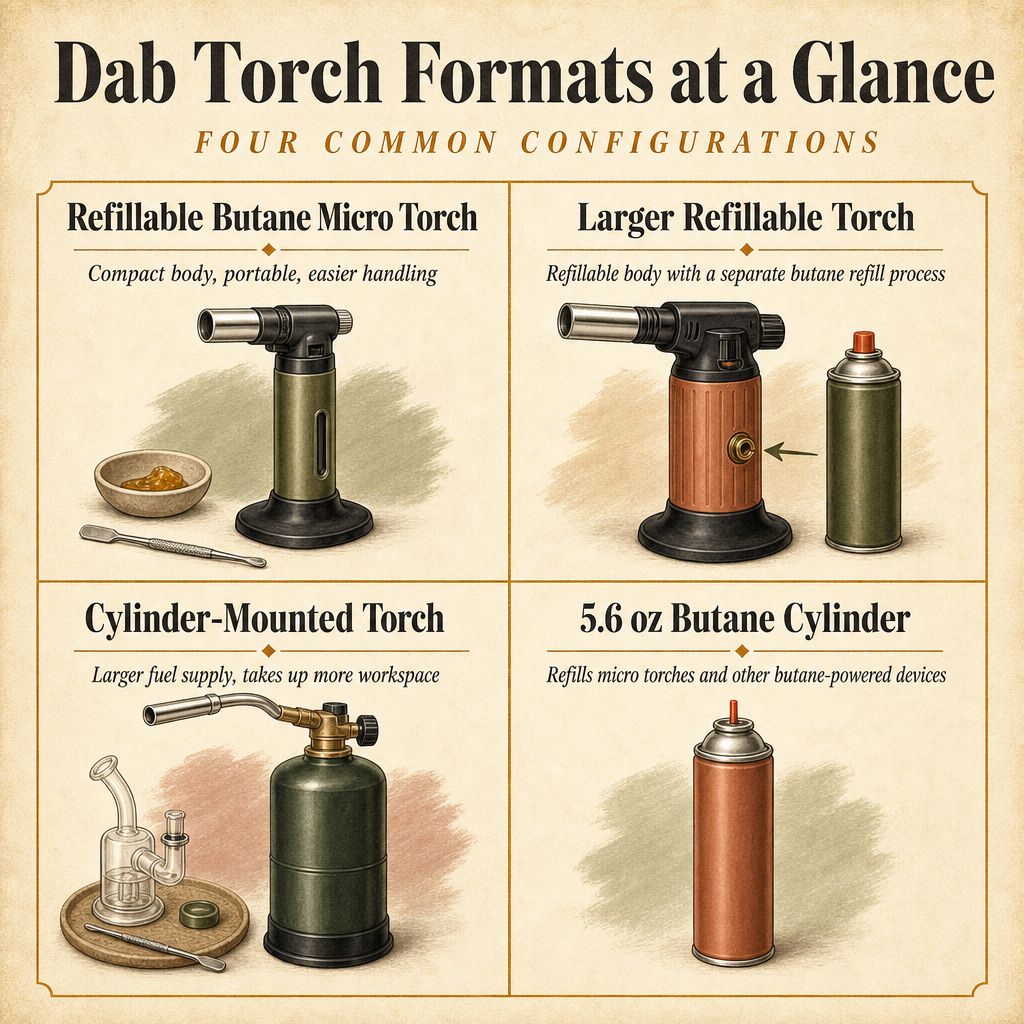
There are three torch formats you will see most often in dab gear catalogs. A refillable butane micro torch is the small, single-handed torch most people picture when they think of a dab torch. A larger refillable torch is similar in concept but with a bigger fuel tank and a longer body. A cylinder-mounted torch screws onto a separate propane or MAP-Pro cylinder, which makes it heavier and taller but extends run time and changes the feel of the flame.
Each format is built around a different set of tradeoffs. A micro torch is easy to carry and easy to store, and it is the format most dabbers start with. A larger refillable torch still uses the same fuel and refill process but gives you longer sessions before you need to top up. A cylinder-mounted torch is the format that buyers usually move up to when they want more run time and have a stable spot to keep the cylinder between sessions.
If you are still choosing the rig itself, our guide on What Is a Dab Rig and How Do You Use One? covers the rest of the setup, and our piece on What Size Dab Rig Should You Choose? walks through how rig size changes your workspace demands. Manufacturer specifications show that torch terminology varies between formats, so it helps to read the spec sheet rather than assume every torch labeled for dabbing behaves the same way. [1] For example, Bernzomatic’s DuraCast 8000 lists an adjustable ultra-swirl flame, instant on/off ignition, a continuous flame lock, pressure regulation, and any-angle use as built-in features, while refillable micro torches use a separate butane refill process and a much smaller fuel chamber. [2]
Format also decides how you handle fuel. Refillable torches are topped up from a separate butane cylinder, which means you need both the torch and a refill can on hand. Cylinder-mounted torches run directly off a propane or MAP-Pro tank, so the cylinder itself is the fuel supply and the torch body is more of a handle and nozzle. Both approaches are common, and neither is automatically better — the right one depends on how often you dab and how much space you have.
- Refillable butane micro torch: compact body, portable, easy to handle, smaller fuel supply, refilled from a separate butane cylinder. [2]
- Larger refillable torch: bigger fuel tank than a micro torch, same refill process, longer body that some buyers find easier to grip for longer heats.
- Cylinder-mounted propane or MAP-Pro torch: larger fuel supply, takes up more workspace, stays in place on the table for the session, and uses a separate cylinder as the fuel source. [1]
- 5.6 oz butane cylinder: designed to refill micro torches, lighters, cordless soldering irons, and other butane-powered devices, not to be used as a torch on its own. [2]
- Electric e-nail: removes the open flame and the cylinder from the setup, which we cover more in the buyer checklist section below.
| Format | Fuel source | Best for | Workspace |
|---|---|---|---|
| Refillable butane micro torch | Butane refill cylinder (e.g. 5.6 oz) [2] | Small bangers, travel, first-time buyers | Compact; fits small trays and portable rigs |
| Larger refillable torch | Butane refill cylinder [2] | Longer sessions with the same refill process | Bigger body, longer grip; needs more table space |
| Cylinder-mounted torch | Specified propane or MAP-Pro cylinder [1] | Long run time and a stable home setup | Tall cylinder; plan a fixed spot on the table |
Which Fuel System Should a Dab Torch Use?
Fuel compatibility is one of the easiest things to get wrong on a dab torch, because the words butane, propane, and MAP-Pro get used loosely online. A torch is only designed to work with the gases its manufacturer lists on the box and in the manual, and using a fuel the torch was not built for is a common reason for hard-to-diagnose problems.
Before you buy, look up the exact torch model and check what fuel the manufacturer says it is compatible with. The list below keeps that check simple.
Refillable micro torches are usually designed around butane. They are topped up from a separate butane refill cylinder, and the torch body has a refill valve that matches that cylinder. The 5.6-ounce butane cylinder from Bernzomatic, for example, is described by the manufacturer as a refill source for micro torches, lighters, cordless soldering irons, and other butane-powered devices, using a universal fueling tip. [2] That tells you the cylinder is a refill source, not a torch — buyers sometimes confuse the two in product photos.
Cylinder-mounted torches run directly off a larger propane or MAP-Pro tank. The DuraCast 8000 from Bernzomatic is listed by the manufacturer as compatible with specified MAP-Pro and propane cylinders, and the torch itself does not carry its own fuel. [1] That changes how you shop: instead of buying the torch and the fuel together, you buy the torch and the matching cylinder as a pair, and you keep spare cylinders on hand.
If you want a torch that fits a small workspace, a refillable butane torch is usually the simplest choice. If you want a longer run time between refills and have room for a cylinder, a propane or MAP-Pro setup is the format most buyers move up to. Either way, the rule is the same: match the fuel to the torch model, and do not mix fuel types. Buyers looking for an all-in-one setup that does not require managing fuel can also look at electric options like a Nectar Collector Pro Delux Kit, which sidesteps the fuel decision entirely.
- Confirm the exact torch model and read its spec sheet before buying fuel.
- Use only the butane refill cylinder format the manufacturer lists for micro torches. [2]
- Use only the propane or MAP-Pro cylinder the manufacturer lists for cylinder-mounted torches. [1]
- Store spare cylinders upright, away from heat, and follow the manufacturer’s instructions for handling and storage. [3]
Which Controls and Safety Features Matter Most on a Dab Torch?
Once you have picked a format and a fuel system, the controls on the torch decide how the format feels in everyday use. The most useful controls are ones you can operate without looking at the torch while you heat a banger, because your other hand is usually holding the carb cap or the tool. Manufacturers list a fairly consistent set of features across modern torches, and it is worth comparing them side by side rather than assuming all ‘dab torches’ operate alike.
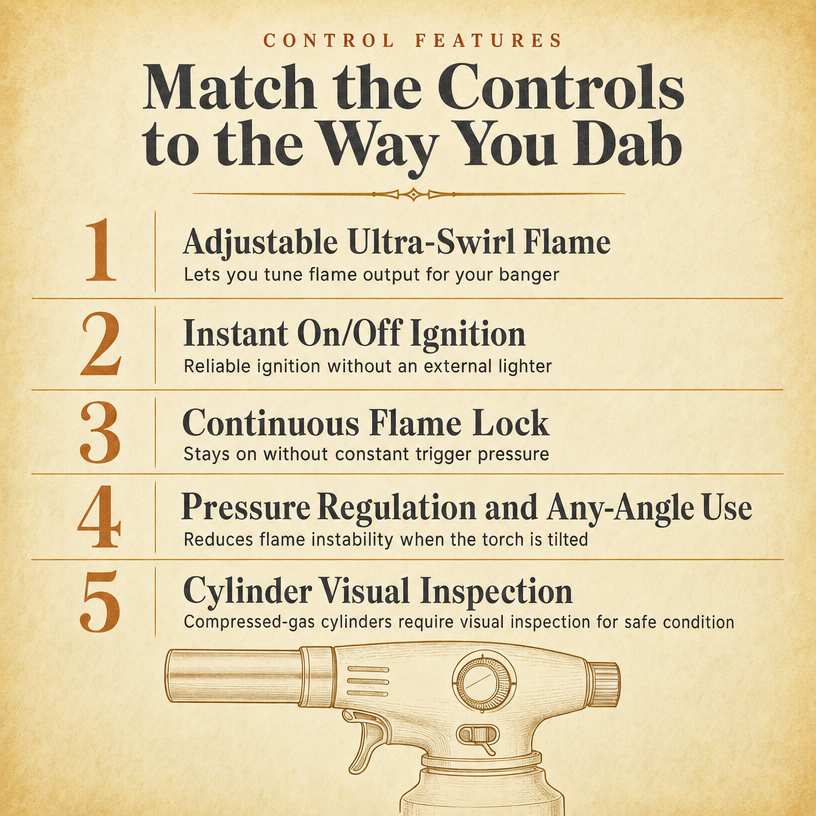
The DuraCast 8000 from Bernzomatic lists instant on/off ignition, an adjustable ultra-swirl flame, a continuous flame lock, pressure regulation, and any-angle use as part of its design. [1] That combination is a useful baseline for what to look for, and the same features show up in different forms on most modern refillable and cylinder-mounted torches.
Pressure regulation and any-angle use matter more than buyers expect, because you rarely hold a dab torch straight up while heating a banger. A torch that requires a perfect vertical angle to keep the flame steady is harder to aim into a bucket, especially on a smaller rig. A pressure-regulated torch can reduce flame instability when the torch is tilted, which is helpful when angling into the banger. Even with that, the user still needs to follow the product instructions and keep the flame directed away from people, fuel containers, and combustible materials.
A continuous flame lock is convenient because the flame stays on without constant trigger pressure, which matters during longer heats. That convenience is also why a flame lock deserves extra care: the flame remains on when you let go of the trigger, so the user must keep the flame directed away from people, fuel containers, and combustible materials. [1] Buyers who only dab for short heats sometimes prefer a torch without a flame lock so the flame always drops the moment they release the trigger.
Compressed-gas cylinders should be visually inspected for safe condition, and their handling, storage, and use should follow applicable compressed-gas requirements and the manufacturer’s instructions. [3] That is true whether the cylinder is feeding a torch on your dab table or feeding gear in a workshop, and it is the main reason cylinder-mounted torches come with a short list of handling rules that refillable micro torches do not. Our related guide on What Are the Different Types of Bongs? covers the rig-side decisions that sit next to those torch controls.
- Adjustable flame output — lets you tune flame size for your banger and your session length.
- Instant on/off or trigger ignition — reliable ignition without needing a separate lighter as a backup.
- Continuous flame lock — keeps the flame on without constant trigger pressure, which is convenient but requires extra attention to flame direction.
- Pressure regulation and any-angle use — reduces flame instability when the torch is tilted toward a banger.
- Cylinder visual inspection — required for compressed-gas cylinders under employer control, and a good habit for any user. [3]
How Should You Size a Torch to Your Banger and Workspace?
Torch size is not a universal best-size rule. It is a match between the torch body, the banger bucket, and the workspace you actually dab in. A compact refillable butane torch favors portability and easier handling at the cost of fuel capacity. A larger cylinder-mounted torch offers a larger fuel supply but takes up more room, which is a real tradeoff if your dab setup shares space with anything else on the table.
For smaller bangers and Mini Dab Rigs, a compact micro torch is usually enough heat for the bucket and keeps the flame away from the joint and the rig body. The shorter body also keeps your hand closer to the banger, which makes it easier to carb-cap at the right moment. The trade is that the fuel chamber is small, so you will refill more often during a long session.
For larger bangers and longer sessions, a larger refillable torch or a cylinder-mounted torch spreads heat over a wider area and gives you more run time per fill. The longer body or the taller cylinder takes up more room on the table and changes how you hold the torch, which is something to test before committing. Most buyers who move up to a cylinder-mounted torch do it for the run time, not the flame size, so the real question is how often you want to refill.
Workspace matters as much as banger size. A small tray with a rig, a carb cap, and a tool does not leave much room for a cylinder-mounted setup, and a tall cylinder can catch an elbow during a pass-around. A micro torch fits almost anywhere, which is part of why it is the most common format. If your dab setup is portable, a compact torch is usually the right size. If your setup is fixed and you have a stable spot for a cylinder, sizing up is a reasonable upgrade.
- Match the torch body length to the space on your dab tray, not just to the banger size.
- Use a compact refillable torch for small bangers and small rigs, where handling matters more than run time.
- Use a larger refillable torch or a cylinder-mounted torch when banger size and session length both go up.
- Keep the fuel cylinder upright and away from foot traffic if you go with a cylinder-mounted setup.
- Refill before the chamber is empty rather than running a torch until the flame sputters, which makes cold starts easier.
What Should You Look for When Buying a Dab Torch?
Once you know the format, the fuel system, and the size, the rest of the buying decision is a checklist of features that decide whether a torch fits the way you dab. The list below is ordered from the biggest decision down to the smaller details, and most buyers end up picking the torch that ticks the most boxes without overspending on features they will not use.
Format and fuel come first, because they decide everything else. A refillable butane torch is the most common starting point and pairs with a separate butane refill cylinder. A cylinder-mounted torch pairs with a specified propane or MAP-Pro cylinder. Once you have picked the format, the fuel you need is fixed. Refillable torches are designed for butane, and cylinder-mounted torches are designed for the specific gas the manufacturer lists. [1] [2]
Ignition and flame controls come next. Reliable ignition is the single feature buyers complain about most when it is missing, and adjustable flame output is what lets you tune heat to your banger. A continuous flame lock is convenient for longer heats, but it deserves the same caution as the rest of the controls. Buyers who want a no-fuss setup can browse our Beaker Bongs and other categories to compare torches side by side, and the same buying logic — format, fuel, controls, ergonomics — applies across most accessory categories.
Build quality and ergonomics finish the list. A stable base or a stable body matters when you set the torch down between heats, and a comfortable grip matters when you hold the torch at an angle. Warranty terms are worth a glance as well, especially for cylinder-mounted torches where the body is the part you keep between cylinder swaps.
Finally, think about whether a torch is the right tool at all. An electric e-nail removes the open flame and the compressed-gas cylinder from the setup, which makes it a common alternative for buyers who do not want to handle, store, or visually inspect a compressed-gas cylinder. A torch is still the right choice when portability or a quick heat-up matters more than flame-free operation, and most dabbers keep a torch even when they own an e-nail for travel and small rigs.
- Format — refillable butane, larger refillable, or cylinder-mounted.
- Fuel compatibility — butane refill cylinder for micro torches, specified propane or MAP-Pro cylinder for cylinder-mounted torches.
- Ignition — instant on/off or trigger ignition, no separate lighter required.
- Flame control — adjustable flame output that you can tune mid-session.
- Flame lock — continuous lock is convenient but requires extra attention to flame direction.
- Pressure regulation and any-angle use — reduces flame instability when tilted.
- Build — stable base, comfortable grip, and a warranty worth reading.
How Should You Inspect and Store a Compressed-Gas Cylinder?
If your dab torch runs off a propane or MAP-Pro cylinder, the cylinder is part of your dab setup, and it comes with a short list of handling rules. Compressed-gas cylinders under employer control are required to be checked for safe condition by visual inspection, and the handling, storage, and use of those cylinders should follow applicable compressed-gas requirements and the manufacturer’s instructions. [3] Even if the OSHA standard applies in a workplace context, the inspection habit is a sensible one for any user.
A visual inspection is the easiest step. Look at the cylinder body for dents, gouges, rust around the valve, and any sign of leaking or damaged threads. Check the valve and the connection point for debris or wear. If a cylinder shows damage you are not sure about, set it aside and contact the manufacturer or the supplier rather than continuing to use it.
Storage matters as much as inspection. Keep cylinders upright, away from heat sources, and out of direct sunlight. Do not store a cylinder where it can fall over, where it can be struck by foot traffic, or where temperatures swing widely. Follow the manufacturer’s instructions for storage temperature and separation from combustible materials, since those numbers are specific to the gas and the cylinder design.
Use the cylinder only with the torch the manufacturer lists for it. Cylinders are designed for a specific torch type and connection, and swapping cylinders between torches that were not designed for the same connection is a common source of leaks and ignition problems. When the cylinder is empty, follow local rules for disposal or recycling rather than tossing it in household trash.
- Visually inspect the cylinder for dents, rust, valve damage, and leaks before each use.
- Keep the cylinder upright and away from heat sources, foot traffic, and direct sunlight.
- Use the cylinder only with the torch model the manufacturer lists for it.
- Follow the manufacturer’s storage temperature range and separation rules.
- Recycle or dispose of empty cylinders per local rules, not in household trash.
Frequently Asked Questions
What is the most common torch format for dabbing?
Compact refillable butane torches are the most common dab torch format because they are portable and easy to handle, while larger cylinder-mounted propane or MAP-Pro torches are common for buyers who want a larger fuel supply and have room for the cylinder.
Do all dab torches use the same fuel?
No. Fuel compatibility must be checked against the specific torch — for example, the Bernzomatic DuraCast 8000 is listed as compatible with specified MAP-Pro and propane cylinders, while Bernzomatic’s 5.6-ounce butane cylinder is intended to refill micro torches and other butane-powered devices.
What does a continuous flame lock actually do?
A continuous flame lock keeps the flame on without constant trigger pressure, which is more convenient for longer heats but means the user must keep the flame directed away from people, fuel containers, and combustible materials.
Is any-angle use really useful on a dab torch?
Pressure regulation and any-angle use can reduce flame instability when the torch is tilted, which is helpful when angling into a banger. The user still needs to follow the product instructions and keep the flame directed away from people, fuel containers, and combustible materials.
When is an electric e-nail a better fit than a torch?
An electric e-nail removes the open flame and the compressed-gas cylinder from the setup, which makes it a common alternative for buyers who do not want to handle, store, or visually inspect a compressed-gas cylinder. A torch remains the right choice when portability or a quick heat-up matters more.
How should I store a propane or MAP-Pro cylinder?
Compressed-gas cylinders should be visually inspected for safe condition, and their handling, storage, and use should follow applicable compressed-gas requirements and the manufacturer’s instructions.
So, How Do You Pick the Right Torch for Your Setup?
The best torch for a dab rig is the one that matches your format, your fuel system, and your workspace, not the one with the biggest spec sheet. Start with format: a compact refillable butane torch for portability, a larger refillable torch for more run time, or a cylinder-mounted torch when you want a long session and have a stable spot for the cylinder. Then confirm fuel compatibility against the exact torch model, because that single check rules out most fuel-related problems before they start.
Controls are the next layer. Adjustable flame output, reliable ignition, pressure regulation, and any-angle use are the features that change how a torch feels during a session, and a continuous flame lock is convenient when you use it carefully. If you go with a cylinder-mounted setup, build the cylinder inspection and storage habits into your routine so the cylinder stays in safe condition between sessions. With those boxes checked, a torch is a small, predictable piece of gear that does one job well.
Ready to compare torches, bangers, and rigs in one place? Treehouse Lifestyle carries dab rigs, bangers, torches, and accessories with free shipping on orders $150+, so you can build out the rest of your setup while you pick the torch that fits the way you dab.
Sources
- Bernzomatic: DuraCast 8000 Torch
- Bernzomatic: 5.6 oz. Butane Cylinder
- Occupational Safety and Health Administration: 1910.101 – Compressed gases (general requirements)