
A practical guide to comparing rolling paper materials for burn rate, strength, and smoke quality
Rolling papers are made from plant fibers including hemp, rice, wood pulp, flax, and cotton linter. Each material produces noticeably different burning characteristics, paper strength, and ash quality. Hemp papers offer the longest natural fibers and the strongest burn, rice papers burn the thinnest and cleanest, and wood pulp papers are the most affordable but produce heavier ash. This guide compares these three most common materials across the factors that matter most for your rolling experience.
What Are Rolling Papers Made Of?
Rolling Papers are thin sheets designed for hand-rolling cigarettes and cannabis joints. The base material is plant fiber, and the fiber source determines much of the paper’s behavior when burned. [1]
- Hemp fiber from the bast (bark) of the industrial hemp plant
- Rice grain husk fiber or rice paper made from rice straw
- Wood pulp from trees, the same base used in most writing papers
- Flax fiber, sometimes blended with hemp or wood pulp
- Cotton linter, the short fibers left over from cotton processing
Most commercial rolling papers start with one of three main fiber sources: hemp, rice, or wood pulp. Some brands blend fibers or add flax or cotton linter to change how the paper feels and burns. No single material is used across all brands, which means your choice of rolling paper has a real effect on your experience. [1]
Beyond the base fiber, manufacturers add other ingredients to control burn rate, ash color, and paper texture. These additives are standard across most mass-market brands. Understanding what goes into rolling paper helps you make a more informed choice when shopping. [1]
How Do Hemp Rolling Papers Compare to Wood Pulp?
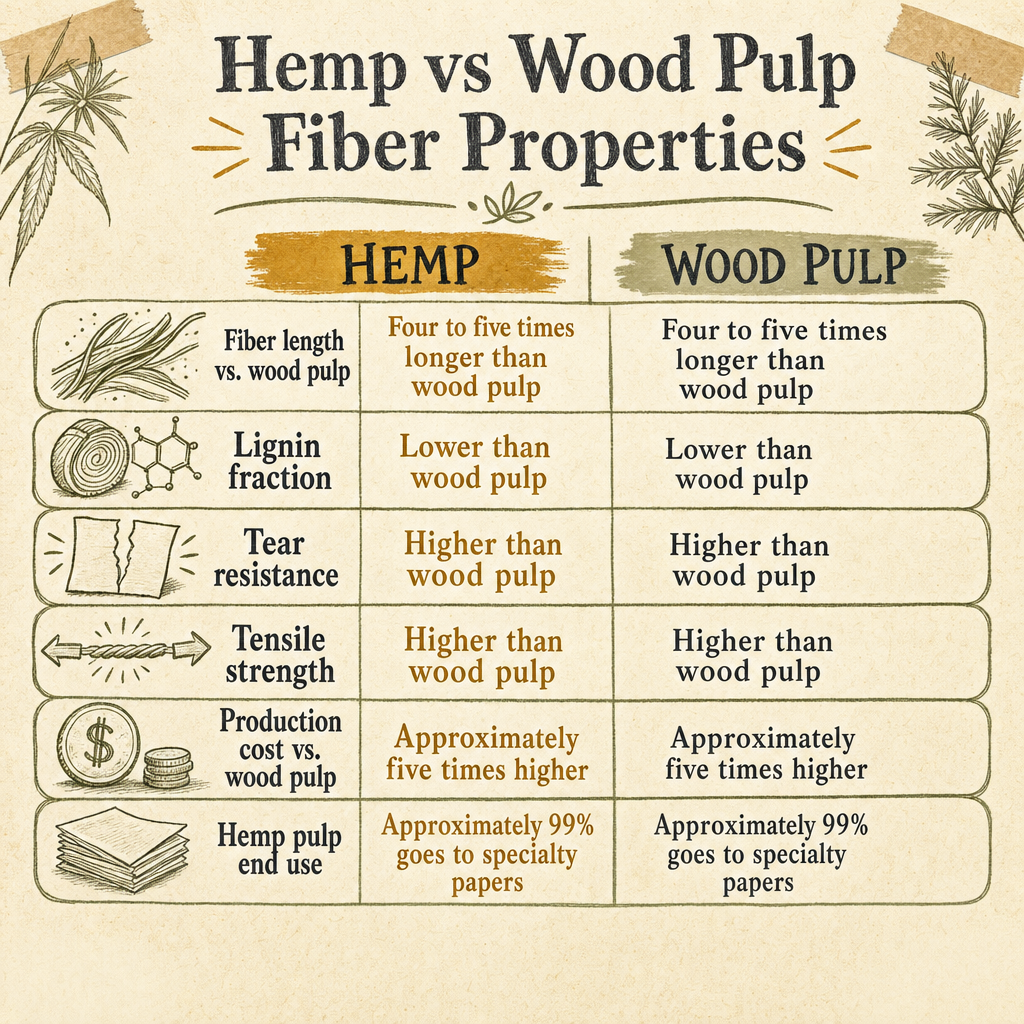
Hemp and wood pulp are the two most common base materials for rolling papers, and they behave quite differently. Hemp papers are made from pulp derived from the bast fiber of industrial hemp plants. The fiber lengths in hemp are four to five times longer than those found in wood pulp, which gives hemp paper its characteristic strength and tear resistance. [2]
- Fiber length is four to five times longer than wood pulp, producing a stronger sheet
- Lower lignin fraction allows for thinner processing without brittleness
- Higher tear resistance and tensile strength than wood pulp alternatives
- Production costs are approximately five times higher than wood pulp paper
- Approximately 99% of hemp pulp is used for specialty papers including rolling paper
- World hemp pulp production represents roughly 0.05% of global pulp output
Hemp paper also has a lower lignin fraction than wood pulp. Lignin is the compound that gives plant cell walls their rigidity. Less lignin means the paper can be processed into thinner sheets without becoming brittle. The resulting paper has higher tensile strength, meaning it holds together well when handled or rolled tightly. [2]
There is a significant trade-off, however. Hemp paper production costs are approximately five times higher than wood pulp production because the infrastructure for hemp processing is still underdeveloped. Approximately 99% of hemp pulp goes toward specialty papers such as cigarette paper and banknotes rather than commodity paper products. [2]
As of the early 1990s, most of the French hemp crop was used to make rolling paper, currency, and high-quality Bible paper. The European hemp paper industry remains a niche market. World hemp pulp production was approximately 120,000 tonnes per year in 1991, representing about 0.05% of global annual pulp production. [2]
Read What Rolling Accessories Do I Need and How Do I Choose the Right Ones? for more detail.
What Makes Rice Rolling Papers Unique?
Rice Rolling papers are made from rice grain husks or from rice straw, which is the stalk left over after rice is harvested. The resulting paper is known for being extremely thin and nearly translucent. This thinness comes from the short, fine fibers that rice produces, which pack together densely but do not create a rough surface. [1]
- Made from rice grain husks or rice straw, producing extremely thin and translucent sheets
- Burns with a fine, light-colored ash and minimal flavor interference
- Short fine fibers create a dense, smooth surface texture
- Can be more difficult to roll due to thinness, especially for beginners
- Sits at the premium price tier alongside hemp papers
Rice papers burn differently than hemp or wood pulp. Because the sheet is so thin, rice papers tend to produce a very fine, light-colored ash. The burn rate is generally consistent, though the thin material can make rice papers harder to roll for beginners. Experienced rollers often prefer rice paper for the clean burn and minimal flavor interference. [2]
In the rolling paper market, rice papers sit at the premium end alongside hemp papers. Wood pulp papers are generally the most affordable option, while rice and hemp papers command higher prices due to more specialized processing. Rice paper production from agricultural waste rice straw is an active area of research for more sustainable paper products. [2]
What Additives and Chemicals Are Used in Rolling Papers?
Rolling papers contain more than just plant fiber. Manufacturers add a range of fillers, combustion regulators, and adhesives to control how the paper burns and how it looks when ashed. These additives are present in most commercial rolling papers regardless of the base fiber material. [1]
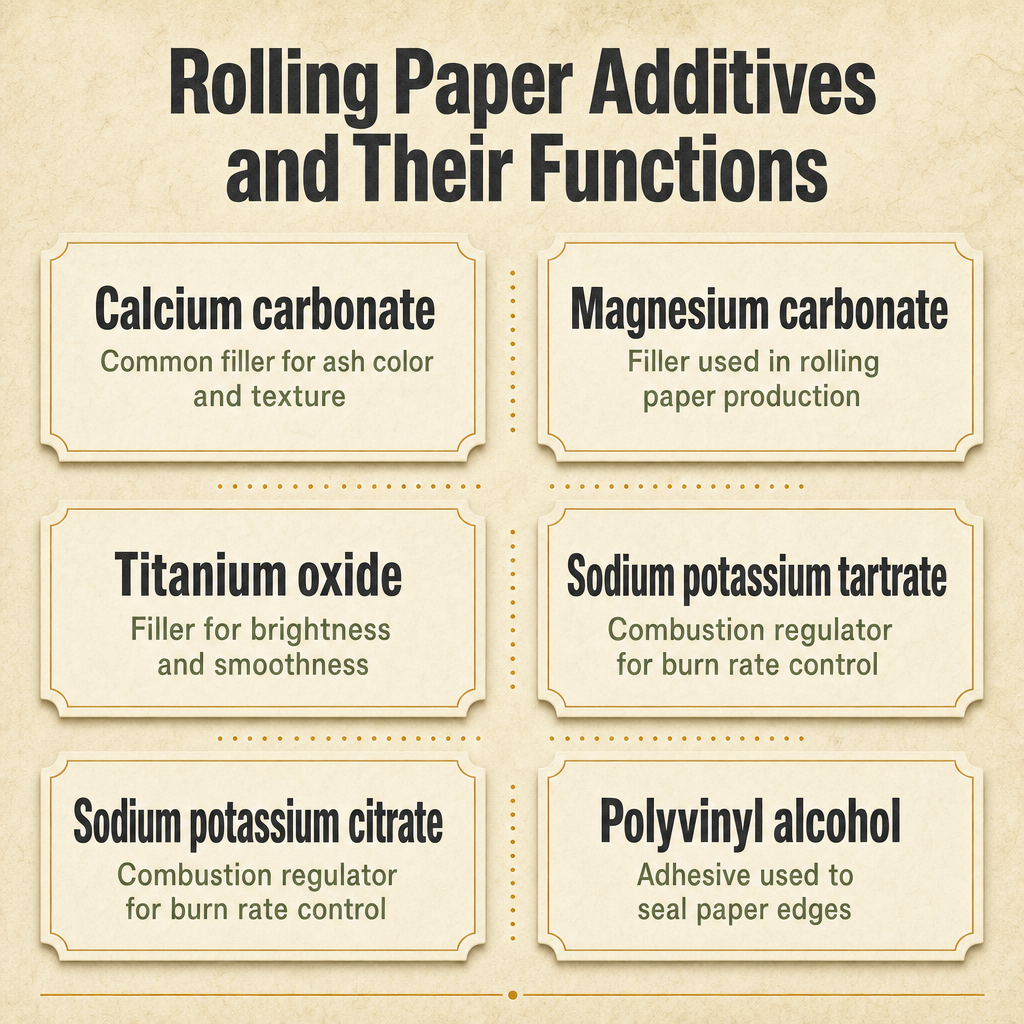
- Calcium carbonate: filler that affects ash color and texture
- Magnesium carbonate: filler used in rolling paper production
- Titanium oxide: filler that adds brightness and smoothness to the sheet
- Sodium potassium tartrate: combustion regulator for burn rate control
- Sodium potassium citrate: combustion regulator for burn rate control
- Polyvinyl alcohol: adhesive used to seal paper edges
- Ethylene vinyl acetate: used only in fire-safe cigarettes, not standard rolling papers
Fillers are used to affect ash color, paper texture, and overall sheet quality. Common fillers include calcium carbonate, magnesium carbonate, and titanium oxide. Calcium carbonate and magnesium carbonate are alkaline compounds that can lighten the color of the ash. Titanium oxide is used to increase brightness and create a smoother paper surface. [1]
Combustion regulators control the burn rate so the paper does not burn too fast or too slow. These compounds work by affecting how the paper ignites and how evenly it continues to burn. Sodium potassium tartrate and sodium potassium citrate are two common combustion regulators used in rolling paper production. [1]
Adhesives are used to seal the seam of the rolled paper so it stays closed during use. Polyvinyl alcohol is a common adhesive used in rolling paper manufacturing. This water-based adhesive creates a strong seal without adding significant flavor or releasing unwanted chemicals when burned. [1]
Some specialty rolling papers are designed to self-extinguish if left unattended. These fire-safe cigarettes use rolling paper containing ethylene vinyl acetate, a plastic compound that inhibits continued combustion. Regular rolling papers do not contain this additive. [1]
Read Pre-Rolled Cones vs Rolling Papers: Which Should You Choose? for more detail.
How Does Paper Permeability Affect Burn Rate?
Paper permeability refers to how much air can pass through the sheet while it burns. This is measured in CORESTA units, an industry standard for describing the porosity of cigarette rolling paper. Higher permeability means more air passes through, which dilutes the smoke with air and generally produces a slower, more controlled burn. [1]
- Higher CORESTA units mean more air passes through, diluting smoke and slowing the burn
- Lower CORESTA units produce a denser, more concentrated smoke
- US commercial filter cigarettes use paper with 14 to 51 CORESTA units
- Fiber material affects natural porosity even at the same thickness
- Permeability can be controlled through fiber selection, sheet density, and perforation
Rolling paper permeability affects smoke dilution with air during use. When air passes through the paper, it cools the smoke and reduces the concentration of combustion byproducts. US commercial filter cigarette brands use paper with permeability between 14 and 51 CORESTA units, showing a wide range of permeability across products. [1]
Choosing a permeability level is a trade-off between burn speed and smoke quality. Lower permeability produces a tighter smoke that some users prefer for stronger flavor presence. Higher permeability produces a more airy smoke that dilutes faster. Some rolling paper brands offer different permeability options within their product lines so users can select their preferred burn characteristics. [1]
Manufacturers control permeability through the papermaking process, including fiber selection, sheet density, and optional perforation. The base fiber material affects the natural porosity of the resulting sheet, which is why hemp, rice, and wood pulp papers can feel different even at the same thickness. [1]
Browse Flavored Rolling Papers to explore related options.
What Heavy Metal Contaminants Have Been Found in Rolling Papers?
A 2024 peer-reviewed study published in ACS Omega analyzed the elemental composition of commercially available cannabis rolling papers. The study tested multiple brands and found measurable concentrations of several heavy metals in some products. These metals can originate from pigments used to color the paper, processing equipment, or the raw fiber source itself. [3]
- A 2024 peer-reviewed study found copper, chromium, and vanadium in some commercial rolling papers
- Copper concentrations from certain papers may reach 4.5 to 11 times maximum exposure limits for frequent users
- Heavy metals can originate from pigments, processing equipment, or raw fiber sources
- Not all brands disclose contaminant testing; ingredient transparency varies across the market
- Third-party laboratory testing is available from some manufacturers and can inform purchasing decisions
The study identified copper, chromium, and vanadium in some rolling paper products. In certain samples, copper concentrations from pigments in the paper may result in exposures four to five times above established maximum exposure limits for frequent users. The researchers noted that these concentrations may present a hazard to users who roll frequently. [3]
The presence of heavy metals does not necessarily mean all rolling papers are unsafe, but the findings highlight that ingredient transparency varies across brands. Some manufacturers publish third-party test results for heavy metals and other contaminants, while others do not. Users who are concerned about contaminant exposure can look for brands that provide independent laboratory testing. [3]
The study underscores that rolling paper composition matters beyond just burn characteristics. Choosing papers from manufacturers that disclose ingredient information and conduct third-party testing can help users make more informed decisions about the products they use regularly. [3]
How Do Hemp, Rice, and Wood Pulp Rolling Papers Stack Up Against Each Other?
Hemp, rice, and wood pulp each bring distinct characteristics to the rolling experience. Hemp offers the longest natural fibers and the strongest, most tear-resistant paper. The fiber length also contributes to a more even burn. Rice papers are the thinnest option and produce a light, clean ash with minimal flavor impact, though they can be trickier to roll. Wood pulp papers are the most accessible and affordable, with a wider range of thickness options and availability. [2]
- Hemp papers: longest fibers, highest tear resistance, slowest burn, premium price, lower environmental footprint
- Rice papers: thinnest sheets, cleanest ash, minimal flavor interference, mid-to-premium price, can be harder to roll
- Wood pulp papers: most affordable, moderate burn rate, heavier ash, widest availability, established production infrastructure
- Hemp production costs are approximately five times higher than wood pulp but offer superior fiber strength
- Both hemp and rice papers represent more sustainable fiber sources than conventional wood pulp
When comparing burn speed, hemp papers generally burn the slowest among the three materials because the long fibers create a denser, more consistent sheet. Rice papers burn thinner and can move faster, though the experience varies by brand and thickness. Wood pulp papers burn at a moderate rate and produce heavier, darker ash compared to hemp and rice. [1]
From a cost perspective, wood pulp papers are the most affordable because the raw material is inexpensive and the production infrastructure is well-established. Hemp papers command a premium due to higher processing costs. Rice papers also sit in the mid-to-premium range. [2]
Environmental considerations favor hemp, which grows quickly and requires fewer pesticides than trees used for wood pulp. Rice straw paper production can repurpose agricultural waste that would otherwise be burned. Both hemp and rice papers represent more sustainable options than conventional wood pulp, though the actual environmental footprint depends on manufacturing practices and transportation distances. [2]
For those shopping for rolling papers, Treehouse Lifestyle offers a selection across these material categories, including Hemp Rolling Papers and other rolling accessories. Orders over $150 qualify for free shipping.
Browse Grinders to explore related options.
What Are Common Questions About Smoking Accessories?
What are rolling papers made of?
Rolling papers are made from a variety of plant fibers including hemp, rice, wood pulp, flax, and cotton linter. Most commercial brands use hemp or wood pulp as the base material, with added fillers like calcium carbonate and combustion regulators to control burn rate.
Which rolling paper material burns the slowest?
Hemp rolling papers generally burn the slowest among common materials because their long natural fibers produce a denser, more consistent paper. Rice papers burn thinner and can run faster, while wood pulp papers fall somewhere in between depending on the brand and thickness.
Are hemp rolling papers better than wood pulp?
Hemp papers offer superior fiber strength and tear resistance compared to wood pulp, and they produce less ash. However, hemp paper production costs are approximately five times higher than wood pulp, which is why wood pulp remains the most widely available and affordable option.
What additives are used in rolling papers?
Common rolling paper additives include fillers such as calcium carbonate, magnesium carbonate, and titanium oxide, which affect ash color and paper texture. Combustion regulators like sodium potassium tartrate and sodium potassium citrate control burn rate. Adhesives like polyvinyl alcohol are used to seal the paper edges.
Are there harmful chemicals in rolling papers?
A 2024 peer-reviewed study published in ACS Omega found that concentrations of copper, chromium, and vanadium in some commercial rolling papers may present a hazard to frequent users. Copper concentrations from certain papers may result in exposures four to five times maximum exposure limits. These metals can come from pigments and processing equipment.
Which Rolling Paper Material Should You Choose?
The best rolling paper material depends on what matters most to you. If fiber strength and a slow, even burn are your priorities, hemp papers are the strongest choice. If you prefer the thinnest possible paper with a clean ash and minimal flavor impact, rice papers deliver that experience. If budget and availability are your main concerns, wood pulp papers remain the most accessible option across most markets.
Regardless of material, it is worth paying attention to what goes into the paper beyond the base fiber. Fillers, combustion regulators, and adhesives all affect how the paper burns and what ends up in the smoke. Third-party testing for heavy metals and other contaminants is increasingly available from quality-focused manufacturers. If you use rolling papers frequently, looking for brands that publish ingredient and test information is a practical step.
For a wide selection of rolling papers across hemp, rice, and wood pulp categories, browse the full collection at Treehouse Lifestyle. Orders over $150 qualify for free shipping.
Where Does This Smoking Accessory Information Come From?
- Wikipedia: Rolling paper
- Wikipedia: Hemp paper
- ACS Omega ( peer-reviewed journal): Elemental Composition of Commercially Available Cannabis Rolling Papers