
A complete guide to bong bowl sizes, materials, shapes, and how to pick the perfect fit for your rig.
A bong bowl is the removable glass (or other material) piece that holds your herb inside a bong or water pipe. It slides into or onto the bong’s joint, and the smoke passes through the downstem and into the water before you inhale.
Choosing the right bowl means matching the joint size, material, and shape to your specific bong and personal preferences. This guide walks through every factor so you can shop with confidence and find the bowl that actually fits your setup.
What Is a Bong Bowl and How Does It Work?
The bong bowl is one of the three core parts of any bong or water pipe assembly, alongside the downstem and the main chamber body. [1] It sits inside or on top of the joint — the short tube that connects the bowl to the downstem — and holds the herb in place while air is drawn over it. When you light the herb and inhale, smoke is pulled downward through the bowl, into the downstem, and through the water in the base chamber before reaching you.
- The bowl holds herb and directs smoke into the downstem when you inhale
- Joint size determines whether a bowl will seal properly on your bong
- Material affects heat resistance, durability, and flavor retention
- Shape controls capacity, airflow, and how the bowl sits in the joint
Bowls come in three key variables that every buyer needs to understand: size, material, and shape. Getting any one of these wrong means a poor seal or a poor fit for your specific setup, so it helps to understand all three before you start shopping.
Bong bowls are widely available as standalone accessories. Treehouse Lifestyle carries a range of bowl pieces in different sizes, materials, and styles, with free shipping on orders $150+.
Read What Is a Bong and How Does It Work? for more detail.
What Bong Bowl Size Do I Need: 10mm, 14mm, or 18mm?
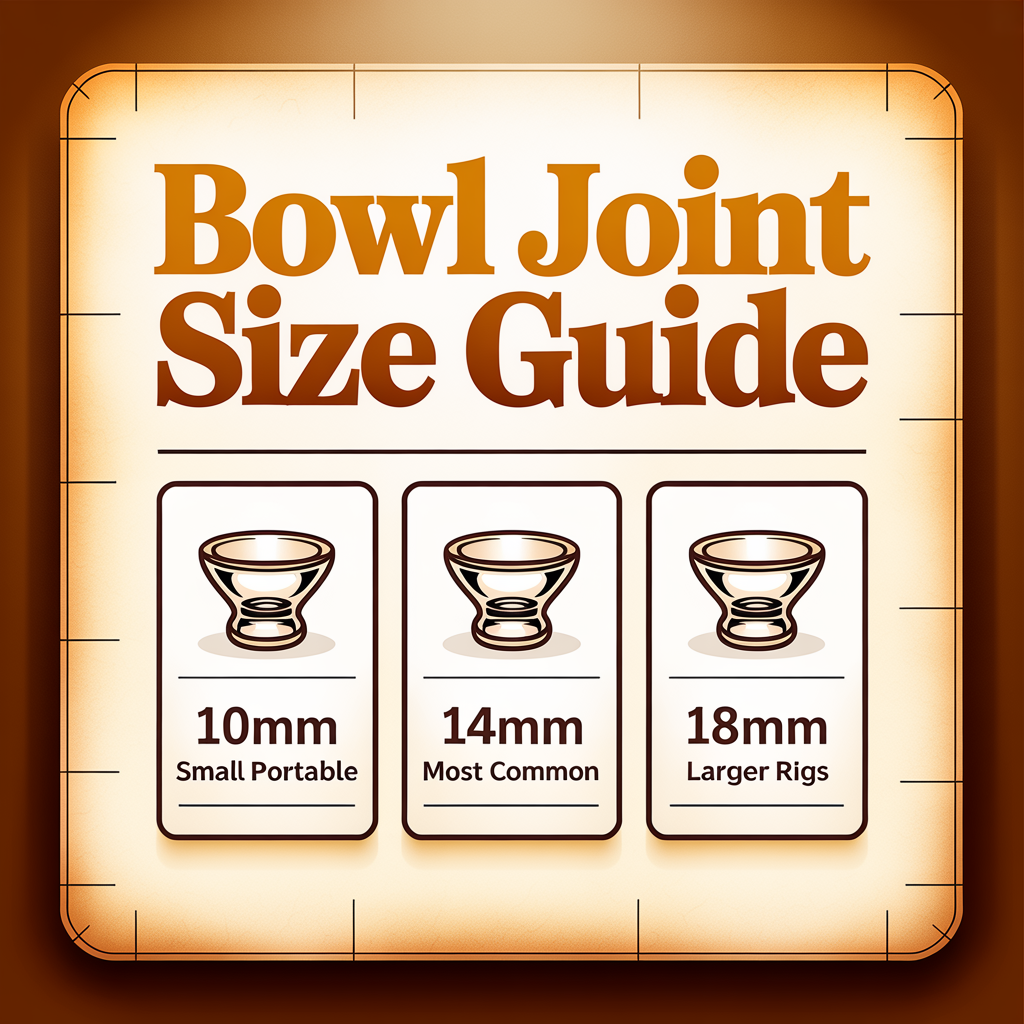
Bong bowl joint sizes are standardized across the industry at three measurements: 10mm, 14mm, and 18mm. These numbers refer to the inner diameter of the joint opening in millimeters. [1] The bong community uses these three sizes universally, which makes replacements and upgrades easier to find than they would be in an unregulated market.
- Measure the inner diameter of your bong’s joint opening in millimeters before buying
- 10mm bowls fit small portable bongs and some compact rigs
- 14mm is the most common size and fits the widest range of standard bongs
- 18mm bowls are designed for large-volume bongs and premium glass rigs
- Mismatched sizes cause air leaks and an unusable seal — always confirm before purchasing
The size you need depends entirely on your bong’s joint, not on the overall size of the bong itself. That said, the two are loosely related. Larger bongs with more water volume typically use 18mm joints because the wider glass demands a more stable connection. Smaller or portable bongs commonly use 14mm or 10mm joints. [2] If you try to fit a bowl into a joint that is not the same size, you will not get a proper seal and air will leak around the connection, making the bong difficult or impossible to use.
To find your bong’s joint size, measure the inner diameter of the joint opening in millimeters using a caliper or a simple ruler marked in millimeters. Do not guess — joint sizes look similar to the untrained eye and a mis-sized bowl is a common and frustrating mistake. [3]
When shopping for a replacement or upgrade bowl, match the size exactly. A 14mm bowl only fits a 14mm joint. There is no workaround or adapter that works reliably for this kind of connection in standard bong setups.
Read What Are the Parts of a Bong, Rig, or Pipe and How Do They Work? for more detail.
Read What Are 10mm, 14mm, and 18mm Glass Joint Sizes? for more detail.
What Material Bong Bowl Is Best for My Setup?
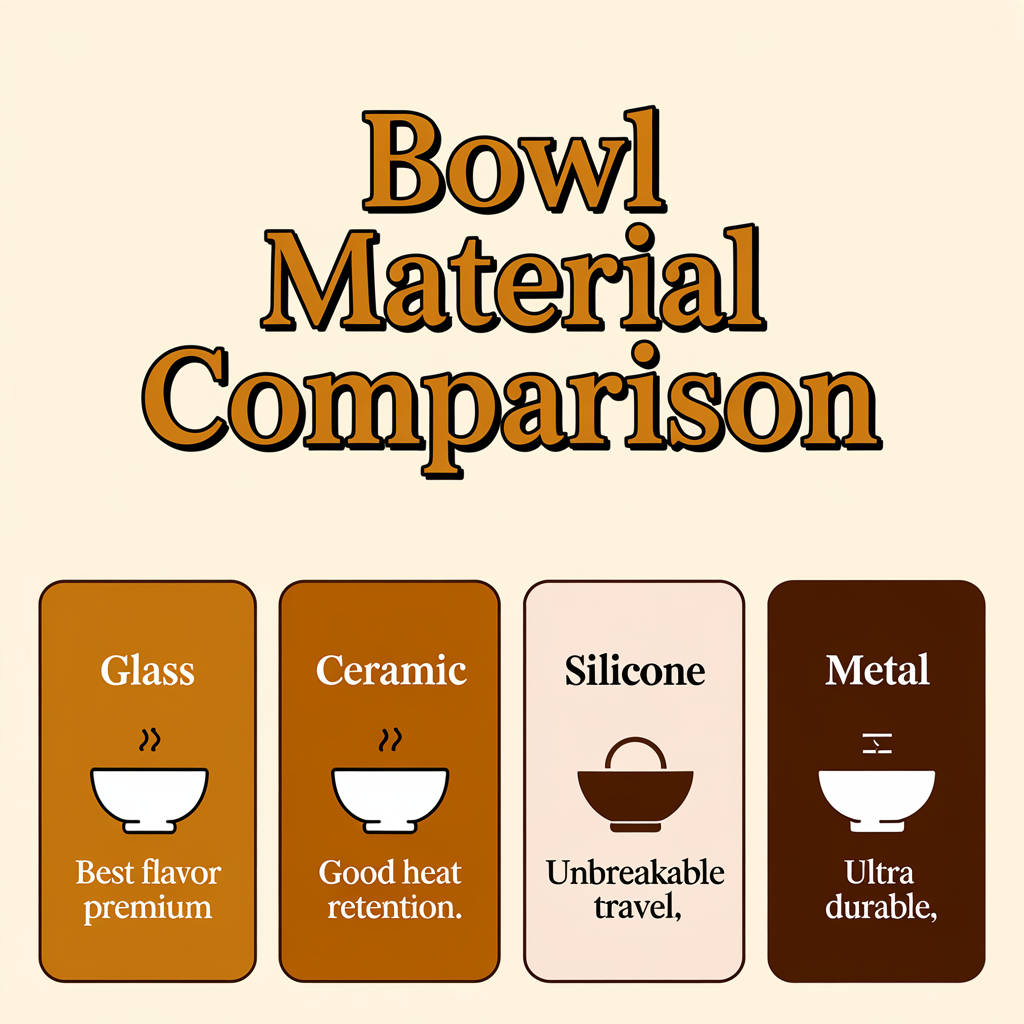
The four most common bowl materials are glass, ceramic, silicone, and metal. Each material behaves differently in ways that affect heat resistance, durability, maintenance, and the flavor of the smoke. [1]
- Glass — inert material, no flavor transfer, preferred for taste-sensitive users, fragile to thermal or physical shock
- Ceramic — good heat retention, may add subtle character to smoke, more breakable than silicone or metal
- Silicone — unbreakable under normal use, easy to clean, practical for travel, not a premium flavor option
- Metal — highest durability, may affect smoke flavor, less common but valued for heavy-use setups
Glass is the most widely used material and the preferred choice among specialists for daily use. It is inert, which means it does not react with the herb or add any flavor of its own. When you want to taste the full profile of your herb, glass is the material that stays out of the way. Glass bowls are also easy to clean and widely available at every price point. The main drawback is fragility — glass can crack from thermal shock or a hard drop.
Ceramic offers good heat resistance and holds heat well, which some users prefer for certain preparations. A ceramic bowl may impart a slightly different character to the smoke compared to glass, though the effect is subtle and varies by product. Ceramic is more breakable than silicone or metal but less fragile than glass in typical use scenarios.
Silicone bowls are nearly unbreakable under normal use, making them a practical choice for travel or for anyone who has broken glass bowls before. They are easy to clean and resistant to most cleaning solutions. The trade-off is that silicone is not considered a premium material for flavor retention — it works well and gets the job done, but it is not the first choice for users who prioritize taste above all else. [2]
Metal bowls are the most durable option and can withstand heavy use and rough handling. They are less common than glass or silicone but are valued in certain contexts for their longevity. Like ceramic, metal may impart subtle flavor notes to the smoke, which some users enjoy and others prefer to avoid.
Read How Do You Clean a Bong the Right Way? for more detail.
What Are the Different Bong Bowl Shapes?
Bowl shape affects how much herb the bowl holds, how the bowl sits in the joint, and the visual look of your bong. Different shapes serve different purposes and the right choice depends on your typical session size and personal preference. [2]
- Standard — straight-sided, versatile, reliable fit in most joints
- Funnel — most common, narrow base wide top, easy to load, good for general use
- Crown — wide shallow dish, higher capacity, better for longer sessions
- Sherlock — curved silhouette, distinctive look, comfortable loading angle
The standard or straight-sided bowl is the most basic shape. It has a consistent diameter from base to top and is a reliable, versatile option that works well in most bong setups without any special considerations.
The funnel bowl is the most common shape for general use. It is narrow at the base where it seats into the joint and widens toward the top. This shape helps direct herb into the narrowest part of the bowl and makes it easy to load. Funnel bowls are a safe default choice if you are unsure what shape to get.
The crown bowl, sometimes called a dish bowl, has a wide, shallow top designed to hold more herb than a standard funnel. Crown bowls are popular with users who prefer longer sessions or who need higher capacity without refilling. The trade-off is that they are larger and may feel tip-heavy on some bongs.
The sherlock bowl has a curved, rounded silhouette that sits lower in the joint and extends outward. It is valued as much for its distinctive look as for its function. Some users find the curved shape more comfortable to load, though the wider dish area means it can hold more material than a standard funnel.
Browse Sherlock Pipes to explore related options.
What Is the Difference Between Male and Female Bong Bowls?
The male and female terminology describes how a bowl connects to a bong joint. It sounds more complicated than it is, and once you understand the logic it becomes straightforward. [1]
- Male bowl — outer diameter smaller than the joint, slides into a female joint
- Female bowl — inner diameter larger than the joint, receives a male joint
- Most retail bowls are male unless the listing explicitly says otherwise
- Compare diameters: smaller base = male, larger base = female
A male bowl has an outer diameter that is smaller than the bong’s joint. You slide the male bowl into the bong’s joint from above. The joint is called female in this case because it receives the bowl. This is the most common configuration and most retail bowls are male unless the product description specifies otherwise.
A female bowl has an inner diameter that is larger than the bong’s joint. The bong’s joint — which is male in this case — slides into the female bowl’s opening. Female bowls are less common in the retail market but are used in some specialized setups.
The easiest way to tell the difference without any documentation is to compare diameters. If the bowl’s base is smaller than the joint opening, it is male. If the bowl’s base is larger than the joint opening, it is female. When in doubt, check the product listing before buying or ask the retailer directly. [2]
Getting the male/female orientation wrong is one of the more common mistakes when buying a replacement bowl online. The good news is that almost all standard retail bowls are male, so if you are buying a replacement for a standard bong, a male bowl is the correct starting assumption.
Browse Ash Catchers to explore related options.
What Is Glass-on-Glass and Is It Worth It?
Glass-on-glass is a connection style where both the bowl and the bong’s joint are made of glass and create a seal through a friction fit without any rubber or silicone grommet between them. [1] The two glass surfaces are ground to match and they seat directly together, which means both pieces must be the same size and shape at the connection point.
- Glass-on-glass creates a friction-fit seal between two glass surfaces without rubber or silicone
- No grommet material means no flavor interference and a stable long-term seal
- Both pieces must be the same size — no mixing of grommet and glass-on-glass parts
- Preferred by flavor-sensitive users; grommet-style is more flexible for mixing bowl sizes
The main advantage of a glass-on-glass connection is a notably secure and precise seal. Because there is no rubber or silicone material between the two pieces, there is nothing that can degrade, wear out, or affect the flavor of the smoke over time. Users who prioritize flavor retention often prefer glass-on-glass for this reason.
The trade-off is compatibility. Glass-on-glass requires a precise size match — both pieces must be ground to the same dimensions or the connection will not seal. You cannot use a rubber-grommet bowl with a glass-on-glass joint, or vice versa, without an adapter. Some bongs use grommet-style connections specifically so that bowls can be swapped more freely across different sizes.
If your bong has glass-on-glass joints and you want the most precise, flavor-consistent seal available, a glass-on-glass bowl in the matching size is the right choice. If your bong uses rubber or silicone grommets, look for bowls designed for grommet-style connections.
Browse Silicone Bongs to explore related options.
How Do I Choose the Right Bong Bowl for My Rig?
Choosing the right bowl comes down to a short checklist of five things. Work through these in order and you will land on the correct bowl every time without guesswork. [3]
- Measure the bong joint inner diameter in millimeters — this is the single most important step
- Confirm the male or female orientation of the bowl before buying
- Choose glass for flavor, silicone for durability, ceramic or metal for heat retention and specific use cases
- Pick a funnel shape for general use, crown for higher capacity, sherlock for aesthetics and comfort
- Match the connection style: glass-on-glass or grommet, depending on your bong’s joint design
Step one is to measure the joint. Use a caliper or a millimeter ruler to find the inner diameter of your bong’s joint. Write the number down — 10mm, 14mm, or 18mm. This is the single most important measurement in the process and skipping it is the most common reason for returns and mismatched purchases.
Step two is to confirm the gender. As covered above, most standard retail bowls are male. If you are buying a replacement bowl for a standard bong, start with a male bowl and verify the size before finalizing the purchase. [1]
Step three is to pick the material. Glass is the default choice for most users because it is widely available and performs well across every metric that matters. If you travel frequently, drop your accessories, or need maximum durability, consider silicone. If you want the most heat-resistant option and do not mind a heavier bowl, ceramic or metal are worth a look.
Step four is to choose a shape. For general use, a funnel bowl is the safest and most versatile option. For higher capacity sessions, look at crown bowls. For a distinctive look and a comfortable loading angle, a sherlock bowl is worth considering.
Step five is to verify the connection style. Check whether your bong uses glass-on-glass or grommet-style connections and buy a bowl that matches. Using the wrong connection style will result in a poor seal regardless of whether the size is correct.
Once you have worked through all five steps, you will have a bowl that fits your bong properly, suits your material and shape preferences, and gives you a reliable seal session after session.
See Pulsar Raptor Claw Glass Beaker Water Pipe | 15.5" | 14mm F as one current product example.
What Are Common Questions About Smoking Accessories?
How do I measure my bong’s joint size to find the right bowl?
Measure the inner diameter of the bong’s joint opening in millimeters. Use a caliper or a simple millimeter ruler. Common sizes are 10mm, 14mm, and 18mm. The bowl’s size must match exactly — a 14mm bowl only fits a 14mm joint.
Can I use any bowl size on any bong?
No. Joint sizes are standardized but not interchangeable. A 10mm bowl will not seal properly on a 14mm or 18mm joint, and vice versa. Always match the bowl size to the bong’s joint size.
What is the difference between a male and female bowl?
A male bowl has an outer diameter that slides into the bong’s joint (female side). A female bowl has an inner diameter that receives the bong’s joint (male side). Most retail bowls are male; check the product description to confirm.
Does bowl material affect flavor?
Glass is inert and does not add or remove flavor, making it the preferred material among specialists. Ceramic and metal may impart subtle notes depending on the blend. Silicone is non-reactive but is generally considered a budget or travel option rather than a flavor-premium choice.
What is a glass-on-glass bowl?
Glass-on-glass refers to a connection where both the bowl and the bong joint are glass and create a friction seal without rubber or silicone grommets. Both pieces must be the same size. Users favor this method for its secure fit and lack of flavor-affecting materials.
How often should I replace my bong bowl?
Replace a bong bowl when it develops cracks, chips, or a poor seal that causes air leaks. Regular cleaning can extend its life significantly. If the bowl no longer sits securely in the joint, it is time for a replacement.
What Is the Right Bong Bowl for Your Setup?
Bong bowl selection comes down to three core variables: size, material, and shape. Get the size right first — measure your joint and match it exactly. From there, choose a material based on whether you prioritize flavor, durability, or convenience. Pick a shape that suits your typical session size and preferred loading style.
If you are still unsure where to start, a standard-size 14mm male glass funnel bowl is the most universally compatible option available. It fits the largest number of bongs, uses the most widely available size, and glass remains the preferred material for users who care about smoke quality.
Treehouse Lifestyle carries a broad selection of bowl pieces across all standard sizes and materials. Orders over $150 qualify for free shipping, and our product pages include detailed specifications for joint size, material, and bowl shape so you can confirm the fit before buying.