
Pre-rolled cones are rolling papers already shaped into cones, usually with a tip in place, so you only fill and pack them. Pre-rolled cones are worth it if you want speed, a steady shape, and less mess. They are less ideal if you want the lowest cost or full control over every roll.
Think of a cone as the shortcut version of rolling. The paper body is already formed. One end is wider for filling, and the smaller end usually has a tip or crutch. You still choose the size, paper type, pack count, and brand, but you skip the hardest hand-rolling step.
What are pre-rolled cones and how do they work?
A pre-rolled cone is a rolling paper that has already been shaped before you buy it. Instead of starting with a flat sheet, you start with a paper cone that is open at the top and narrower at the mouth end. RAW describes its Classic Kingsize Cones as pre-rolled cones made from the same paper as its Classic Papers and ready to be filled. [1]
That simple shape is the whole point. The wider end gives you room to add ground material, while the smaller end helps the cone keep its form. Many cones also come with a tip already placed inside, which means one less part to fold or fit yourself. Zig-Zag also describes pre-rolled cones as a fill, pack, and use format, which is why they are popular with beginners and busy shoppers. [4]
Cones are not magic, and they are not all the same. The paper type, size name, tip style, and pack count can change from brand to brand. Some shoppers buy a small pack to test the feel. Others buy a bulk box, like Elements Rice Pre-Rolled Cones Bulk Box | 1 1/4, when they already know they want the same size again and again.
The easiest way to read a cone listing is to break the product into parts. Once you know what each part does, the product names get less confusing.
- Paper body: the thin outer paper that has already been shaped into a cone.
- Wide fill end: the open top where you add ground material slowly.
- Small mouth end: the narrow end that usually holds the tip or crutch.
- Tip or crutch: the small insert that helps the cone keep its shape near the mouth end.
- Pack count: the number of cones in the box, tube, pouch, or bulk pack.
How are pre-rolled cones different from rolling papers and pre-roll tubes?
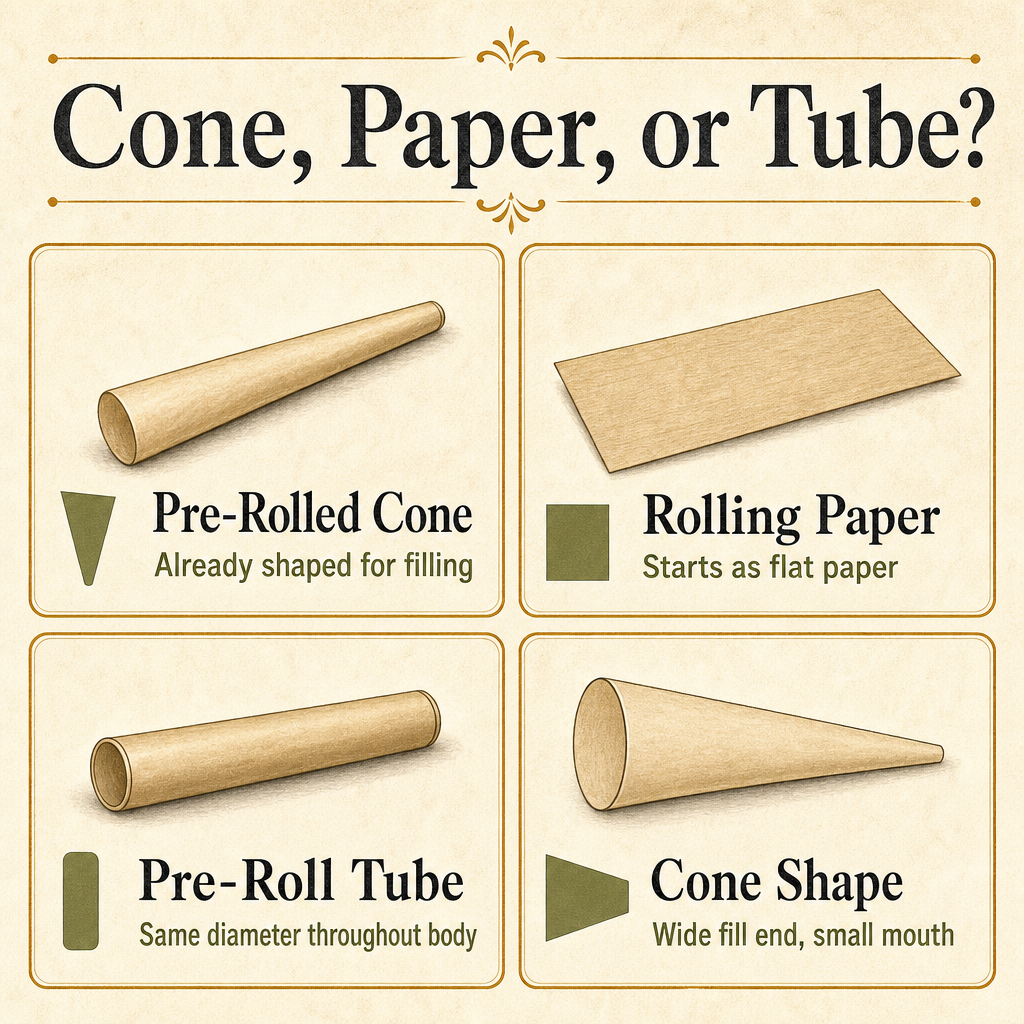
Pre-rolled cones, flat rolling papers, and straight pre-roll tubes can look related, but they solve different problems. A flat rolling paper gives you the most control because you shape it yourself. A pre-rolled cone saves that step. A straight tube keeps the same diameter along the body instead of tapering from a wide fill end to a smaller mouth end. Custom Cones USA explains that cone-versus-tube difference by shape: cones taper, while tubes stay the same width along the body. [5]
That shape difference changes the buying decision. With flat papers, you choose the paper and then use your own rolling skill. With cones, you choose the cone style and focus on filling it evenly. With tubes, you get a straight form that may make sense for specific packing setups, but it is not the same as the classic cone shape.
If you are shopping online, start with the category that matches the job. A dedicated Pre-Rolled Cones section is useful because it keeps cone sizes, paper types, and pack counts together instead of mixing them with every rolling item on the shelf.
The biggest tradeoff is control versus convenience. Flat papers let you adjust almost everything by hand. Cones give you a ready shape and a simpler filling routine. Tubes are their own format, and the straight body is the main visual clue.
- Pre-rolled cones: already shaped, usually tipped, and built for filling from the wide end.
- Rolling papers: flat sheets that give you more control but require rolling skill.
- Pre-roll tubes: straight forms with the same diameter through the body.
- Best for speed: cones usually win because the paper is already formed.
- Best for custom shape: flat papers usually win because you form them yourself.
| Format | Best fit | Main tradeoff |
|---|---|---|
| Pre-rolled cone | Fast filling with a ready shape | Less custom shaping than flat papers |
| Rolling paper | Maximum control over shape and feel | Requires rolling skill and more setup time |
| Pre-roll tube | Straight-body packing setups | Not the same tapered cone shape |
Are pre-rolled cones worth it for beginners and casual shoppers?
For many beginners, yes, pre-rolled cones are worth it. The main value is not fancy packaging. It is the time and trouble you skip. Zig-Zag lists beginner-friendly reasons such as no rolling skills needed, built-in tips on most cones, a uniform shape, less mess, and time savings. [4]
They are also useful for casual shoppers who do not want every session to begin with a small craft project. You can keep a pack with your rolling tray, grinder, and other supplies, then fill one when needed. That makes cones easy to understand, easy to share with another adult shopper, and easy to compare by size and price.
The tradeoffs are real, though. Futurola frames the choice clearly: cones can be convenient, beginner-friendly, consistent in size and shape, and portable, but they may cost more than loose materials, offer less customization, vary in paper and filter quality, and create single-use waste. [6] If you already enjoy rolling and want the lowest cost per paper, cones may feel unnecessary.
A deeper comparison, like Pre-Rolled Cones vs Rolling Papers: Which Should You Choose?, can help if you are stuck between cones and loose papers. For this guide, the quick answer is simple: buy cones for ease and repeatability; buy papers for control and budget.
- Cones are worth it when you want an easier start and do not want to learn hand-rolling first.
- Cones are worth it when you want the same basic size and shape each time.
- Cones are worth it when you are packing several at once and want a cleaner setup.
- Flat papers may be better when price matters most and you already know how to roll.
- Flat papers may be better when you want to change the shape, paper amount, or tip every time.
What pre-rolled cone size should you choose?
Cone sizing can be annoying because brands do not always use the same language. RAW lists many cone families and names, including Classic, Organic Hemp, Black, mini, single size, 1¼, lean, 98 Special, Peacemaker, Emperador, and larger novelty sizes. [2] Zig-Zag also shows a 1¼ organic hemp cone product with several pack-count choices, including 3, 6, 8, and 24 cones per box. [3]
Do not guess from the name alone. A size name helps, but the listing details matter more. Look at the actual size, cone count, paper type, and whether the tip is included. If a brand gives a chart, use it. If a listing is thin on details, choose a smaller pack first so you can test the format without buying too many.
For most shoppers, size choice is really routine choice. Are you buying for occasional use, keeping a few in a drawer, or restocking a setup you already like? A small fashion-forward pack such as Edie Parker Cones may make sense for one buyer, while another buyer may prefer plain bulk cones with the same size every time.
The best size is the one you can fill neatly, store easily, and use before the pack gets crushed or stale from bad storage. Keep cones in their packaging or a firm case so the tips and paper bodies do not bend.
- Check the size name first, such as 1¼, king size, mini, lean, or another brand term.
- Read the actual listing details because size names can vary by brand.
- Choose a pack count that matches your routine, not just the lowest price on the page.
- Start with a smaller pack if you are testing a new paper type, size, or tip style.
- Store cones where the open ends will not crush, bend, or collect loose dust.
How do you fill a pre-rolled cone without packing it too tight?
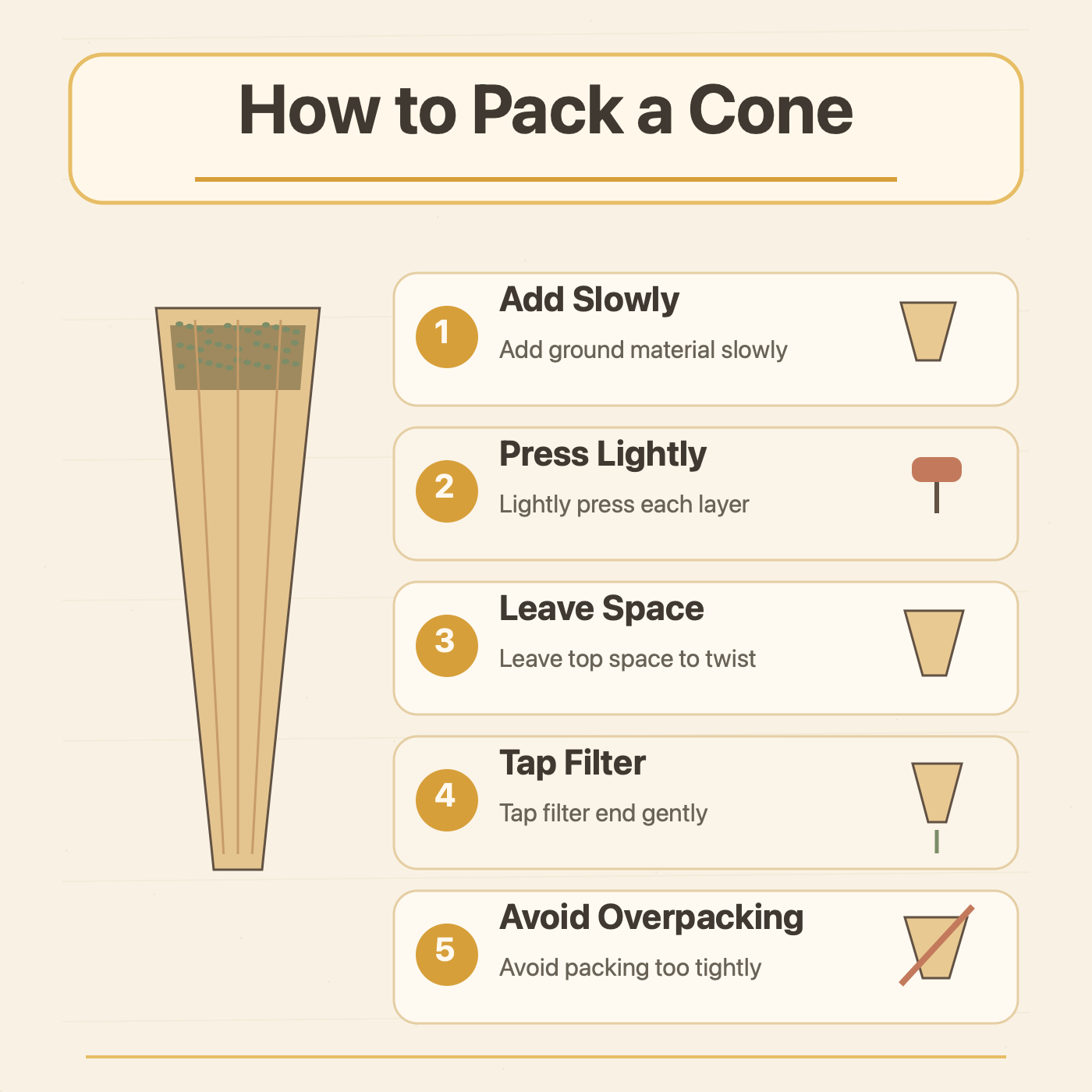
Filling a cone is easy, but it still takes a light hand. The goal is an even fill from the tip upward, not a hard plug of material. Zig-Zag’s packing advice is to add ground material slowly, lightly press each layer, leave space at the top to twist closed, tap the filter end to settle the fill, and avoid overpacking because too much material can hurt airflow. [4]
Start with material that is evenly broken up. Large chunks can leave empty pockets, while powdery material can settle too tightly. Add a little at a time, then use a packing stick or clean narrow tool to press gently. You are guiding the material into place, not forcing it down like a fence post.
If the cone bends, wrinkles, or starts to feel stiff from top to bottom, slow down. Tap the tip end on a tray to settle the fill before adding more. Leave enough paper at the top to twist it closed. If you also keep larger accessories around, such as SILICONE BEAKER BONG WITH REMOVABLE GLASS BOWL, store cones separately so small paper pieces do not get bent under heavier items.
The most common mistake is rushing the last third. People see empty space and try to finish fast. A better move is to add a small amount, press lightly, tap, and repeat until the cone feels evenly filled but not packed hard.
- Break up the material evenly before you start filling the cone.
- Add a small pinch at a time instead of dumping everything in at once.
- Press each layer lightly with a packing stick or clean narrow tool.
- Tap the filter end gently on a tray to help the fill settle.
- Leave enough space at the top so you can twist the paper closed.
What should you check before buying pre-rolled cones online?
A good cone listing should tell you more than the brand name. Look for the paper type, size, tip style, pack count, and packaging. Custom Cones USA groups cone decisions around paper choice, cone size, and filter tip style, including standard paper tips plus wood, glass, ceramic, spiral, and other specialty tips. [5]
Paper type is a preference choice. Some shoppers like classic-style papers, some look for hemp papers, and some choose thinner papers from familiar brands. RAW’s cone catalog shows that one brand alone can offer several paper families and many named sizes. [2] That is why comparing listings is smarter than assuming every cone in a category is the same.
Tip style matters because it changes the feel and structure of the cone. A standard paper tip is common and simple. Specialty tips may cost more, and they are not always needed. If you are shopping for a broader setup, an educational guide like What Are Specialty Pipes and How Do You Choose the Right One? can help you compare accessories without treating every item like it does the same job.
Also check shipping and cart value. If you are already buying rolling supplies, adding cones can help round out the order, and Treehouse Lifestyle offers free shipping on orders $150+. Still, do not buy a huge pack just to chase a deal if you have never tried that size or paper before. Start with the product that fits your routine, then scale up after you know you like it.
Before you reorder, do one last practical check: match the cone to the way you actually set up your tray. If you fill cones at home, a larger pack or bulk box can be tidy and easy to restock. If you carry a few pieces with you, sturdy packaging may matter more than the lowest per-cone price. If you are still comparing paper types, buy fewer cones first. That small test keeps the choice simple and helps you avoid a drawer full of cones you do not enjoy using.
- Confirm the paper type, such as classic-style, hemp, rice, or another listed material.
- Confirm the cone size and do not rely only on a short nickname.
- Check whether the cone includes a tip or crutch, and what style it uses.
- Compare pack count against your actual routine so you do not overbuy.
- Look at packaging if you plan to carry or store the cones for later.
Frequently Asked Questions
Do pre-rolled cones usually come with filter tips?
Most cones are described as having built-in tips, but you should still check the product listing. Tip style and quality can vary by brand, size, and product line.
Are pre-rolled cones easier than rolling papers?
Yes, for many beginners. The cone is already shaped and ready to fill, while a flat rolling paper still has to be formed by hand. The tradeoff is less control over the final shape.
Are pre-rolled cones more expensive than rolling papers?
They can cost more than loose rolling materials. The choice comes down to whether saved time, easier setup, and a consistent shape are worth the extra cost for your routine.
What is the difference between a cone and a pre-roll tube?
A cone has a wider fill end and a smaller mouth end. A straight pre-roll tube keeps the same diameter along the body.
Can you overpack a pre-rolled cone?
Yes. Add material slowly, press lightly, tap the filter end to settle the fill, leave room at the top, and avoid packing it too tightly.
So, are pre-rolled cones worth adding to your rolling setup?
Pre-rolled cones are worth it when convenience matters. They remove the hand-rolling step, help beginners get started faster, and make it easier to keep the same basic size and shape. They are especially handy if you want a simple fill-and-pack routine instead of turning every session into a rolling lesson.
They are not the perfect choice for everyone. Flat papers still make sense if you want the lowest cost, more control, or a custom shape each time. The smart move is to buy based on your routine: choose cones for speed and ease, choose papers for flexibility, and always read the listing closely before you stock up.
Sources
- RAWthentic: RAW Classic Kingsize Cones
- RAWthentic: RAW Cones
- Zig-Zag: Organic Hemp Pre Rolled Cones 1 1/4
- Zig-Zag: How to Pack a Perfect Cone Without a Filler Tool
- Custom Cones USA: The Ultimate Guide to Pre Rolled Cones
- Futurola: Are Pre-Rolled Cone Filters Worth It? The Pros and Cons
- Centers for Disease Control and Prevention: Cannabis Health Effects