
The best flavored rolling papers match your rolling style, flavor preference, and format needs. Choose by paper material, sheet size, gum, freshness, and whether you want loose papers, wraps, cones, or rolls. Smooth here means easy handling, steady sealing, balanced flavor, and clear product details, not a body-impact promise.
What Are Flavored Rolling Papers, and How Are They Different From Regular Papers?
Flavored rolling papers are thin sheets made for rolling, with added flavor or flavor-forward design. Regular unflavored papers focus mostly on paper material, size, gum, and burn description. Flavored papers add one more choice: what kind of taste or aroma note the shopper wants with the roll.
The tricky part is that brands do not all mean the same thing when they say flavored. Juicy Jay’s describes its papers as fully flavored, not just flavored on the gum strip. RAW describes a Lyrical Lemonade collaboration as organic hemp paper with acacia gum and flavor-enhancing techniques that include terpenes. Skunk Brand lists flavored papers with flavor freshness packaging, gum, and a run-preventing watermark. [1] [2] [3]
Zig-Zag is useful here because it draws a clear line. The brand says it does not make flavored rolling papers, but it does offer flavor-forward hemp wraps, palm rolls, and terpene-infused cones. That is why a shopper looking for flavored rolling papers may also see cones and wraps in the same shopping area. They are related, but they are not identical product types. [4]
If you are browsing Treehouse Lifestyle, start by deciding whether you want thin sheets, a ready-to-fill cone, or a wrap-style product. For example, Juicy Terp Infused Squeeze Cones | Maui Wowi | 30pk Display is a cone product, not a loose rolling paper pack, so it belongs in a different choice bucket even though the flavor idea overlaps. That small distinction saves a lot of shopping confusion.
- Fully flavored papers: the flavor is part of the paper experience, not just a note on the strip.
- Flavor-enhanced hemp papers: the paper base still matters, but added flavor methods may be part of the design.
- Flavored wraps: a different, usually thicker format that shoppers may compare with papers.
- Palm rolls and terpene-infused cones: ready-to-use formats that can carry flavor notes without being loose paper sheets.
- Unflavored papers: a simpler choice when you want paper material, size, and seal to matter more than added flavor.
| Product type | What it means | Best shopping use |
|---|---|---|
| Fully flavored papers | Thin rolling sheets with flavor across the paper experience | When you want flavor in a loose paper format |
| Flavor-enhanced hemp papers | Hemp papers with added flavor methods or terpene-style notes | When you want hemp paper plus a flavor angle |
| Wraps, palm rolls, and cones | Related rolling formats that may carry flavor notes | When convenience or wrap feel matters more than loose sheets |
Which Flavored Rolling Paper Features Matter Most When You Shop?
A good buying choice starts with product details, not hype. Flavor is important, but it is only one part of the pack. The paper base, sheet size, gum strip, package freshness, and format all shape whether the product fits the way you like to roll.
Regulators also list rolling paper details as real product descriptors. FDA roll-your-own guidance lists features such as package type, package quantity, sheet length, sheet width, characterizing flavor, and other identifying properties. That supports a simple shopping idea: look at the label details before you judge a pack by flavor name alone. [9]
Flavor strength is the first question, because not everyone wants the same level. A fruit-forward paper, a dessert-style paper, and a lightly flavored paper can feel very different in a shopping sense. Some people want the flavor to stand out. Others only want a small note that does not crowd the rest of the setup.
Material comes next. Hemp, rice-style, and wood pulp papers can handle differently, and that handling may matter more than the flavor if you are new to rolling. If you want a simple house-paper option to compare against flavored packs, Treehouse Hemp Rolling Papers is a useful reference point because it lets you think about paper material first and flavor second.
Seal and freshness matter too. Skunk Brand points to plant-based natural gum and individually wrapped papers as product details. Smoking Paper notes that many regular papers use vegetable gum and that its lines include slow-burning and fast-burning options. Those details are more useful than vague claims because they tell you what to check on the pack. [3] [6]
This is also the section where free shipping on orders $150+ can matter. If you are stocking up on papers, tips, trays, and other small accessories, shipping can become part of the total value. Just do the math by cart total, not by one pack alone.
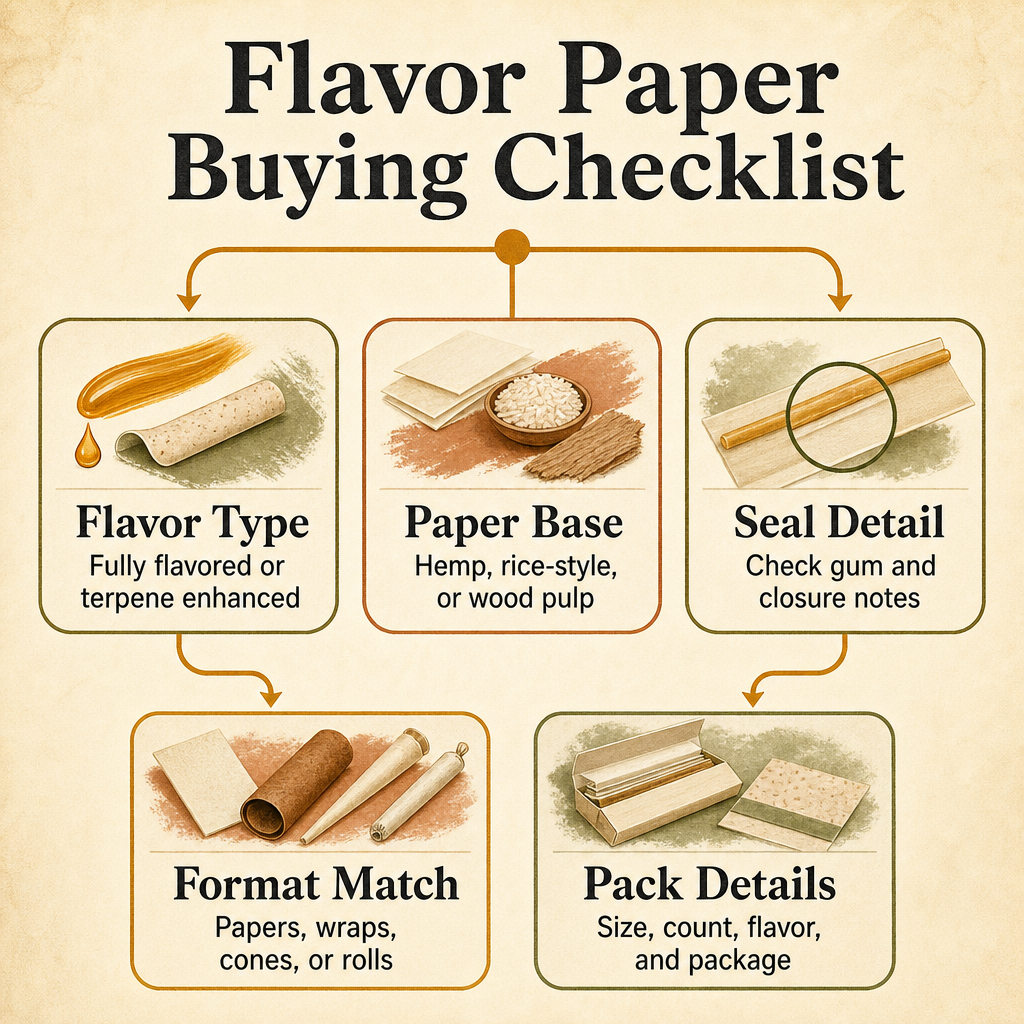
- Pick the format first: loose papers, cones, wraps, or rolls.
- Choose the flavor level: bold, light, fruit-style, dessert-style, mint-style, or mostly neutral.
- Compare the paper base: hemp, rice-style, wood pulp, or another listed material.
- Check size and count: 1 1/4, king size, wide sheets, pack quantity, or display count.
- Read the seal details: gum type, closure notes, and whether the product description mentions easy sealing.
- Look for freshness clues: sealed packs, individual wrapping, or clear storage notes.
How Do Hemp, Rice-Style, and Wood Pulp Papers Change the Rolling Experience?
Paper material is one of the biggest choices because it changes how the sheet feels in your fingers. Flavor may catch your eye first, but the paper base often decides whether the pack feels friendly or fussy. That is especially true for beginners who are still learning how much pressure to use.
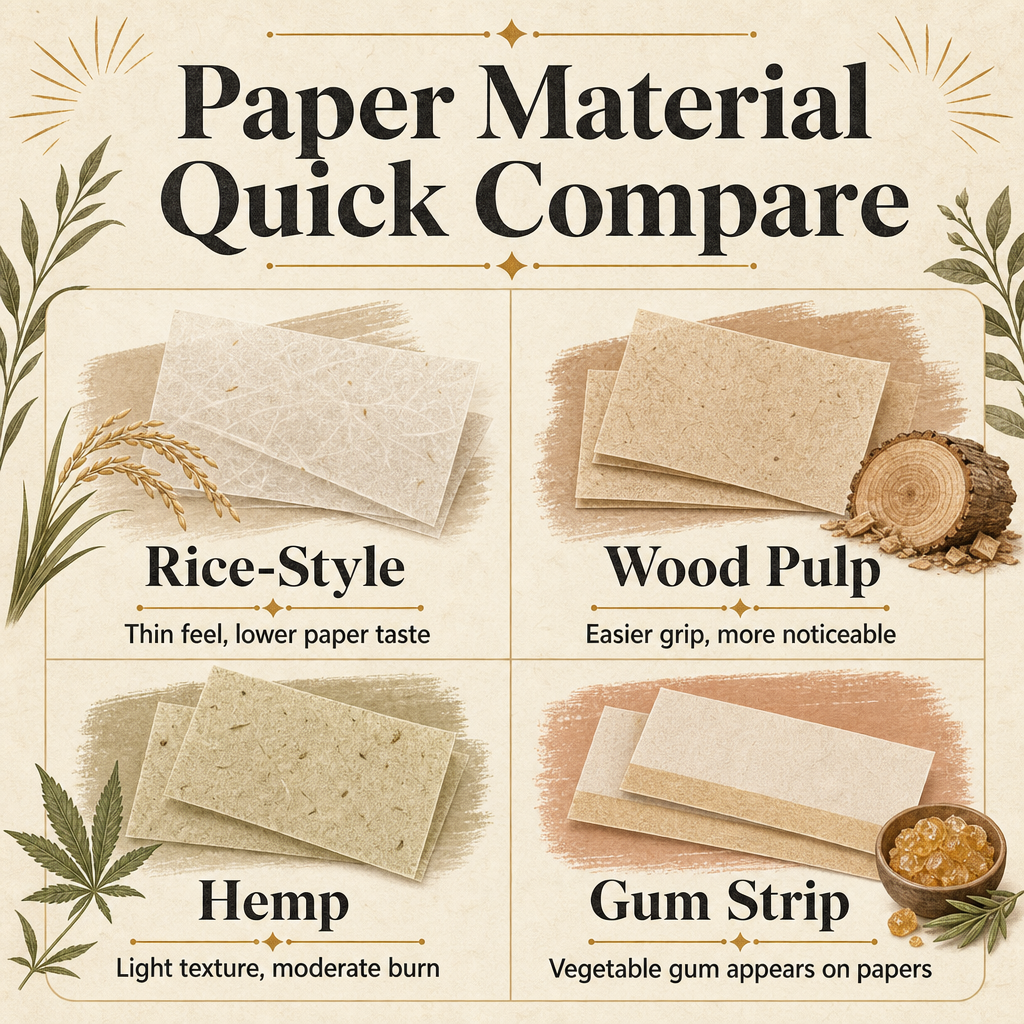
Zig-Zag compares common materials in practical terms. Rice-style papers are often thin and low-taste, but they can be harder to handle. Wood pulp papers are usually easier to grip, though the paper feel may be more noticeable. Hemp papers often sit in the middle, with light texture and a moderate burn description. [5]
Smoking Paper also frames paper lines by format and handling details, including gum and burn style. That matters because two flavored papers can share a fruit name while using very different paper bases. One may feel thin and delicate. Another may feel sturdier and easier to shape. [6]
For a deeper comparison, the related guide Hemp Rolling Papers vs Regular: What’s Actually Different? is worth reading before you buy several packs. It helps separate material choice from flavor choice. That makes the flavored paper decision cleaner: first choose a paper type you can roll well, then choose the flavor that fits the moment.
Do not assume thinner always means better or thicker always means easier. Thin papers may appeal to experienced rollers who like less paper feel. Thicker or grippier papers may help someone who wants more control. Hemp may be the middle path when you want a plant-based paper feel without jumping straight to the thinnest sheet.
- Rice-style papers: usually thin and lower in paper taste, but they may be less forgiving for new rollers.
- Wood pulp papers: often easier to grip and shape, but the paper presence may stand out more.
- Hemp papers: often a balanced middle choice with light texture and moderate handling.
- Flavored versions: still depend on the base paper, so flavor alone should not decide the pack.
- Beginner choice: start with a sheet you can handle comfortably before chasing rare flavors.
| Material | Typical feel | Who may prefer it |
|---|---|---|
| Rice-style | Thin and lower in paper taste, but less forgiving | Experienced rollers who like a lighter sheet |
| Wood pulp | More grip and structure, with more paper presence | Beginners who want easier handling |
| Hemp | Light texture with moderate handling | Shoppers who want a middle-ground paper base |
What Flavors and Formats Are Common in Flavored Rolling Products?
Common flavor families include fruit, citrus, grape, tropical, dessert, coffee-style, chocolate-style, cherry-style, vanilla-style, coconut-style, and mint or menthol-style language. These are broad examples, not a promise that every brand sells every flavor. The FDA import guidance lists several characterizing flavor examples in cigarette and component-part contexts, including strawberry, grape, orange, clove, cinnamon, pineapple, vanilla, coconut, licorice, cocoa, chocolate, cherry, and coffee. [8]
That regulatory context does not mean every cannabis accessory product is treated the same way. It does mean flavor words can carry more weight than shoppers may think, especially when a product fits a cigarette or roll-your-own tobacco definition. For a retail buying guide, the safest move is to talk plainly about the label, the format, and the product description without making broad legal claims.
Formats are just as important as flavors. Thin papers are one lane. Wraps are another. Research on tobacco-free blunt wraps notes that products can be made from materials such as hemp, banana leaf, palm leaf, and rose petal, and that they are often marketed in many flavors. That explains why flavored papers and flavored wraps often get mixed together in search results. [10]
Zig-Zag’s own framing adds the same point from a brand angle. It says it does not make flavored rolling papers, while offering related flavor-forward hemp wraps, palm rolls, and terpene-infused cones. If you are browsing a product like King Palm Hand-Rolled Leaf Wraps | Mini | 2pc | 10pk Display, view it as a wrap-style comparison, not as a direct substitute for thin rolling papers. [4]
The easiest way to avoid confusion is to name both parts of the product: the flavor family and the format. Saying grape paper, tropical cone, or palm leaf wrap gives more useful information than saying flavored rolling product. That extra word helps you buy the thing you actually meant to buy.
- Fruit flavors: strawberry, grape, cherry, orange, pineapple, and other bright flavor names.
- Dessert flavors: vanilla, chocolate, cocoa, coffee, coconut, and similar sweet-style names.
- Spice or mint-style flavors: clove, cinnamon, licorice, menthol-style, or cooling flavor language.
- Paper formats: loose sheets in regular, 1 1/4, king size, wide, or other listed sizes.
- Non-paper formats: hemp wraps, palm rolls, leaf wraps, terpene-infused cones, and other ready-to-use options.
| Format | Common flavor context | How to compare it |
|---|---|---|
| Loose papers | Fruit, dessert, mint-style, or lightly flavored options | Compare size, gum, material, and sheet count |
| Wraps | Often sold in many flavor families | Compare wrap material and thickness separately from papers |
| Cones and rolls | May use flavor-forward or terpene-style positioning | Compare convenience, fill size, and format before flavor |
How Should Beginners Choose Flavored Papers That Roll and Seal Well?
Beginners should not start with the wildest flavor on the shelf just because it sounds fun. Start with the product format, then the size, then the paper material, then the gum or seal description. Flavor should come after those basics because a great flavor will not help much if the sheet feels hard to manage.
A 1 1/4 style sheet is often a normal starting point for many rollers, while king size or wide papers can give more room but may feel like more paper to control. Cones can also be easier for some shoppers because they remove the rolling step. That is not better or worse. It is just a different format choice.
Seal details are worth reading. Skunk Brand describes plant-based natural gum and individually wrapped papers, while Smoking Paper describes glue strips made with 100% natural vegetable gum on many papers. Those are the kind of pack details a beginner can actually use when comparing products. [3] [6]
Storage is simple but important. Keep papers flat, dry, and away from heat. If a pack is flavored, closing it well after use can help preserve the product as the brand intended. Individually wrapped products may help with freshness, but you should still store the full pack with care.
If you are still building your basic kit, read What Is the Best Smoking Piece for a Beginner? after you choose papers. A good beginner setup is not only about papers. It also includes a tray, tips or filters if you use them, a grinder if needed, and a place to keep small accessories from getting bent or lost.
- Choose the format: decide between loose sheets, cones, wraps, or palm rolls before picking a flavor.
- Choose the size: start with a size you can control, then try larger sheets later if needed.
- Choose the material: use hemp, rice-style, or wood pulp based on grip and handling, not just flavor name.
- Check the gum: look for clear seal details such as natural gum, vegetable gum, or acacia gum notes.
- Check freshness: look for sealed packs, individual wrapping, or packaging that keeps sheets flat and protected.
- Buy one test pack first: try the flavor and handling before loading your cart with multiples.
What Should Shoppers Know About Claims, Regulations, and Realistic Expectations?
Flavored rolling papers should be discussed as accessories, not wellness products. A useful product page can talk about flavor, size, material, gum, pack count, and format. It should not make body-impact promises unless a specific verified source proves the exact statement.
A 2024 ACS Omega study looked at elemental composition in commercially available cannabis rolling papers. The authors reported that the composition of rolling papers is largely unregulated and that some products had elevated levels of elements such as copper, chromium, and vanadium. That does not tell you which pack to buy from a retail shelf, but it does show why broad risk claims do not belong in a simple shopping guide. [7]
Regulatory language matters too. FDA import guidance says cigarettes and component parts, including paper, may not contain a characterizing artificial or natural flavor other than tobacco or menthol when the product meets the cigarette definition. That is a specific tobacco-related context, not a blanket statement about every cannabis-accessory listing. [8]
The best expectation is practical: flavored papers can add a flavor note, but the final experience also depends on the paper base, the roll, the seal, the size, and the format. Read the product description like a checklist. If it does not tell you the material, count, size, or format, you are missing details that may matter more than the flavor name.
For a broader accessory-shopping mindset, What Should You Look for When Buying Smoking Accessories Online? is the right next read. It helps you judge online listings by real details instead of flashy wording. That is the same habit that helps with flavored papers: trust clear specs, verified descriptions, and honest limits.
- Do compare flavor type, sheet size, count, gum, material, and format before buying.
- Do read whether the product is a paper, wrap, cone, palm roll, or other rolling format.
- Do use regulatory flavor examples as context, not as personal legal advice.
- Do avoid body-impact promises in a flavored rolling paper buying guide.
- Do not assume a bold flavor name tells you anything about paper quality, seal, or handling.
- Do not confuse flavored thin papers with thicker flavored wraps or ready-to-fill cones.
Frequently Asked Questions
Are flavored rolling papers the same as flavored wraps?
No. Flavored rolling papers are thin paper sheets, while flavored wraps can be a different format made from materials such as hemp, banana leaf, palm leaf, or rose petal. Some brands also sell flavored palm rolls or terpene-infused cones instead of flavored rolling papers.
Do all flavored rolling papers add flavor the same way?
No. Juicy Jay’s describes fully flavored papers, RAW describes a hemp paper collaboration using flavor-enhancing techniques including terpenes, and other brands may focus on wraps, cones, gum details, scent, or flavor-forward formats.
What paper material is easiest for beginners to roll?
Wood pulp papers are often described as easier to grip, rice-style papers are often thinner and harder to handle, and hemp papers often sit between them. Beginners should compare grip, sheet size, seal, and paper feel before choosing by flavor alone.
How should a guide handle flavored rolling paper claims?
A buying guide should stick to verified shopping details like flavor, size, material, gum, pack count, and format. Broad body-impact promises do not belong unless a specific verified source supports the exact wording.
What does smooth mean in this flavored paper guide?
Smooth means easy to handle, balanced in flavor, simple to seal, and steady in product description. It is a shopping description for feel and usability, not a body-impact promise.
Which Flavored Rolling Papers Should You Try First?
Try the flavored rolling papers that match your real rolling habits first. If you are new, choose a manageable size, a paper material you can grip, and a flavor that sounds pleasant without being the only reason you buy the pack. If you already know what paper base you like, then flavor becomes the fun part instead of the whole decision.
The smartest choice is not always the loudest flavor. It is the pack with clear details: paper type, sheet size, count, gum, format, freshness notes, and honest flavor language. Use those details, compare papers with wraps and cones when needed, and build a cart that fits how you actually roll.
Sources
- Juicy Jay’s: Juicy Jays: Home
- RAWthentic / RAW: RAW x Lyrical Lemonade Papers
- Skunk Brand: Flavored Papers
- Zig-Zag: Flavored Rolling Papers for Every Generation
- Zig-Zag: Which Rolling Paper Material Is Right for You? Rice, Wood, and Hemp Compared
- Smoking Paper: Regular size rolling papers
- ACS Omega via PubMed Central: Elemental Composition of Commercially Available Cannabis Rolling Papers
- U.S. Food and Drug Administration: Import Alert 98-01: Detention Without Physical Examination of Flavored Cigarettes, Including Cigarette Component Parts, Cigarette Tobacco, Roll-Your-Own Tobacco and Roll-Your-Own Tobacco Component Parts
- U.S. Food and Drug Administration: Appendix: Information to Consider for Roll-Your-Own Tobacco Products
- Tobacco Control via PubMed Central: Tobacco-Free Blunt Wraps: A Regulatory Conundrum